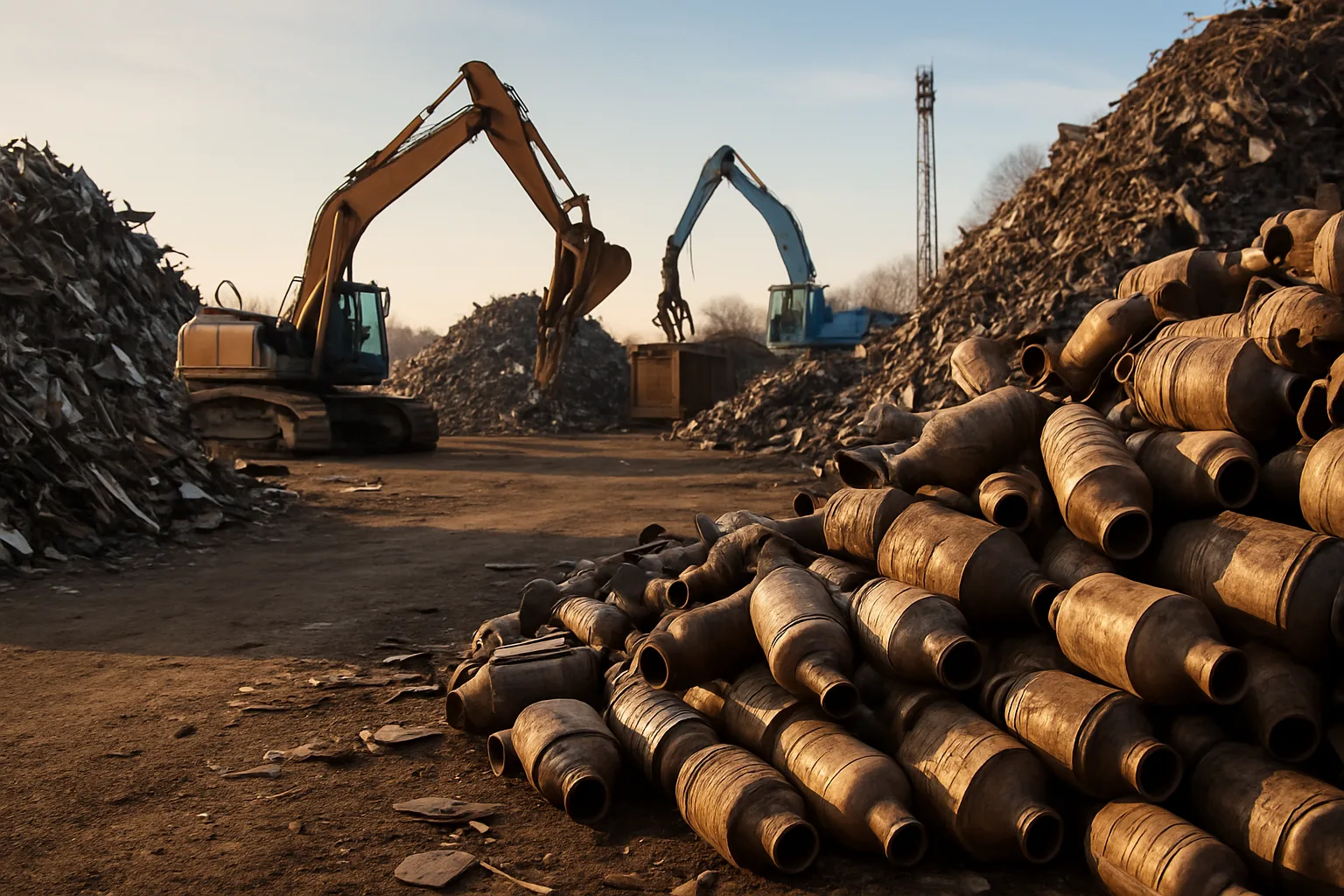
Why Your Catalytic Converter Might Be Worth More Than You Think — Or Less
Most people tossing a dead cat into the scrap pile have no idea what they're actually holding. A catalytic converter isn't just an exhaust part — it's a small container of precious metals that can swing wildly in value depending on the make, model, and what's happening in the global metals market. If you're trying to sell scrap metal in Prince George and you've got converters sitting in a pile, understanding how the recycling process works can mean the difference between leaving money on the table and actually getting paid what the metal is worth.
Catalytic converter recycling is one of the most misunderstood corners of the scrap world. Prices vary more than almost any other scrap category — and that's not random. There are real, structural reasons why two converters sitting side by side might fetch completely different prices. This article breaks it down.
What's Actually Inside a Catalytic Converter — and Why It Matters for Scrap Metal Recycling Canada
The value of a catalytic converter doesn't come from the steel shell. It comes from the ceramic or metallic substrate inside, which is coated with platinum group metals (PGMs) — specifically platinum, palladium, and rhodium. These are rare. They're also essential for the converter to do its job of reducing harmful emissions.
When a converter reaches end of life, recyclers don't just melt the whole unit down. The process is more involved:
- Identification and sorting — Each unit is identified by serial number or visual characteristics. Not all converters are equal. A cat from a high-displacement truck engine typically contains more PGM loading than one from a compact sedan.
- Decanning — The steel shell is removed to expose the substrate inside. The steel itself has scrap value, but it's secondary.
- Assaying — The substrate is processed and sampled to determine the exact PGM content. This is where the real number gets set.
- Smelting and refining — The PGMs are extracted through high-temperature processing and refined to commercial-grade metal.
The final payout to the original seller is based on those assay results — which is why quoting a converter before it's been processed is always an estimate, not a guarantee. Reputable platforms and buyers use market data and serial number databases to produce informed estimates, but the actual value is confirmed downstream.
Why Catalytic Converter Prices Vary So Much
If you've priced out converters and gotten wildly different quotes from different buyers, you're not imagining it. The variation is real, and it has several causes.
PGM spot prices move constantly. Platinum, palladium, and rhodium all trade on global commodity markets. Rhodium in particular has seen some of the most dramatic price swings of any traded metal over the past decade — at times trading at multiples of gold's price per troy ounce. When PGM prices spike, cat values spike. When they drop, payouts follow. This is completely outside the control of any buyer or seller.
Converter type and loading vary enormously. An aftermarket replacement converter typically has far less PGM loading than the original equipment manufacturer (OEM) unit. A diesel oxidation catalyst works differently than a three-way gasoline catalyst and contains different metals in different concentrations. High-emission vehicles and luxury brands often require higher-loaded converters to meet emissions standards — and those units pay more.
Condition matters. A converter that's been overheated, physically damaged, or "foiled" (substrate removed and replaced with foil to fake weight) will pay significantly less — or nothing at all. The scrap industry has strict processes for identifying tampered units, and attempting to pass one off is both bad business and potentially illegal.
The buyer's refining relationship matters. A buyer with a direct relationship to a major refiner can often return more value than a middleman stacking margins. This is why getting competitive bids — not just calling one buyer — matters. SMASH Recycling — where verified buyers bid on your metal — is built exactly for this. Instead of accepting the first number you're offered, you get real competition on your load.
What Sellers in Prince George and British Columbia Should Know Before They Sell
If you're managing scrap inventory in Prince George or anywhere across British Columbia, a few practical points will help you get better outcomes on your cats and other non-ferrous material.
Document before you sell. Photos, serial numbers, vehicle VINs — all of it matters. Detailed documentation gives buyers confidence. It also protects you if there's ever a dispute about what was in the load. Platforms like SMASH use photo documentation and serial tracking as standard practice, not an afterthought.
Don't assume all buyers price the same way. Some buyers quote on a per-unit flat rate. Others work from assay returns. The flat-rate model is simpler but often captures less value for high-grade converters. The assay model takes longer but generally returns more for quality material. Ask your buyer how they're pricing before you commit.
Timing matters — but don't try to time the market. Yes, PGM prices move. No, you probably can't predict where rhodium is going to be in three months. A better strategy is to sell in a competitive environment so the price you get reflects the actual market, not one buyer's margin calculation. That's true whether you're in Prince George, Vancouver, or anywhere else in Canada.
If you're newer to selling converters specifically, take time to explore Canadian scrap metal guides — understanding how different metals are valued makes you a sharper seller across every category, not just cats.
Cats Aren't the Only Non-Ferrous Metal Worth Getting Right — Aluminum Scrap Price Today
While catalytic converters get a lot of attention, aluminum is the workhorse of non-ferrous scrap. It's everywhere — rims, extrusions, sheet, cast parts — and if you're moving volume in Prince George, it adds up fast. The aluminum scrap price today varies by alloy and form, but it consistently makes up a significant portion of most mixed non-ferrous loads.
For context, aluminium scrap value per kg in Canada fluctuates with LME aluminum prices, the Canadian dollar, and regional demand. Cast aluminum, sheet aluminum, and extrusion grades all pay differently. Clean, sorted material always commands a premium over mixed or contaminated loads. If you're sending out mixed aluminum, taking an hour to sort it by grade before it leaves your yard is typically worth doing.
Copper tells a similar story. Scrap copper pricing is tiered — bright bare copper, insulated wire, bus bar, and tubing all sit at different price points. Contamination with solder, insulation, or other metals pulls the grade down. Understanding these distinctions across your non-ferrous inventory is how you sell your scrap metal in Canada on SellYourScrap with confidence, not guesswork.
How a Competitive Auction Model Changes What You Actually Get Paid
Here's the old way: you call one buyer, they quote you a number, you take it or leave it. You have no idea if that number reflects the market. You have no leverage. You're guessing.
Here's the better way: you document your load properly, list it where vetted buyers can see it, and let competition do the work. When multiple buyers are looking at the same load and bidding against each other, the price tends to move toward what the material is actually worth. That's not a guarantee — some loads attract more interest than others — but more buyers means better price discovery. That's not a marketing line. That's how markets work.
This matters especially for high-value, variable-priced material like catalytic converters. One buyer's assessment of what your cats are worth can differ substantially from another's. Letting them compete removes the information asymmetry that the old way exploits.
For scrap metal recycling Canada-wide, the infrastructure to do this properly is now accessible to individual yards and sellers — not just the largest operators. Whether you're running a small yard in British Columbia or managing industrial scrap volumes, the tools exist to sell smarter.
When you're ready to move your material, get a fair price for your scrap today — and do it through a process that puts real market competition behind your load, not just one buyer's offer.
You can also check out Prince George scrap metal services if you want a local starting point for getting your material picked up and valued properly.
Disclaimer: All metal prices referenced in this article are general in nature. Actual scrap metal prices — including catalytic converter values and aluminum scrap rates — fluctuate daily based on commodity markets, grade, condition, and buyer demand. Always verify current rates before selling.
Frequently Asked Questions
Q: How do I know if my catalytic converter is worth selling as scrap in Prince George?
If the converter is OEM (original equipment, not aftermarket) and the substrate inside is intact, it likely has meaningful scrap value. The best way to find out is to document it with photos and a serial number, then get competitive quotes from vetted buyers. Damaged, foiled, or aftermarket units will return less — but they still contain some recoverable material in most cases.
Q: Why do different scrap buyers offer different prices for the same catalytic converter?
Buyers price based on their own assay data, their refining relationships, and the margin they need to build in. A buyer who works directly with a refiner can often return more than one who sells to an intermediary. Getting multiple bids — rather than accepting the first offer — is the most reliable way to understand what your material is actually worth on the current market.
Q: What is the aluminum scrap price per kg in Canada right now?
Aluminum scrap prices in Canada change regularly based on LME aluminum spot prices, the CAD/USD exchange rate, and local demand. Cast, sheet, and extrusion grades all price differently. We don't publish live rates here — check with a current buyer or platform for today's numbers, and always factor in grade and cleanliness when comparing quotes.
Q: Is it legal to sell catalytic converters as scrap in British Columbia?
Yes, selling legitimate catalytic converters as scrap is legal in British Columbia. However, provincial and federal regulations around the purchase and sale of converters have tightened in recent years to address theft. Sellers are typically required to provide proof of ownership or documentation linking the converter to a vehicle. Keep your paperwork in order and work with reputable, vetted buyers.
Q: How does SMASH help me sell scrap metal in Prince George?
SMASH connects sellers with vetted buyers who compete for your material through an auction format. Instead of calling one buyer and hoping the price is fair, you document your load — with photos, serial numbers, and inventory details — and let multiple buyers bid. It's built for yards and sellers who want the market to set the price, not a single buyer's margin target.
---Ready to stop guessing what your scrap is worth? Whether you're clearing catalytic converters, aluminum, copper, or mixed non-ferrous loads, the process starts with documentation and ends with competition. Head to sellyourscrap.ca to request a pickup and get your material in front of buyers who are actually motivated to pay for it.
Stay current on PGM markets, aluminum pricing, and scrap metal trends across Canada — follow SMASH on LinkedIn for regular industry updates and market insights worth reading.