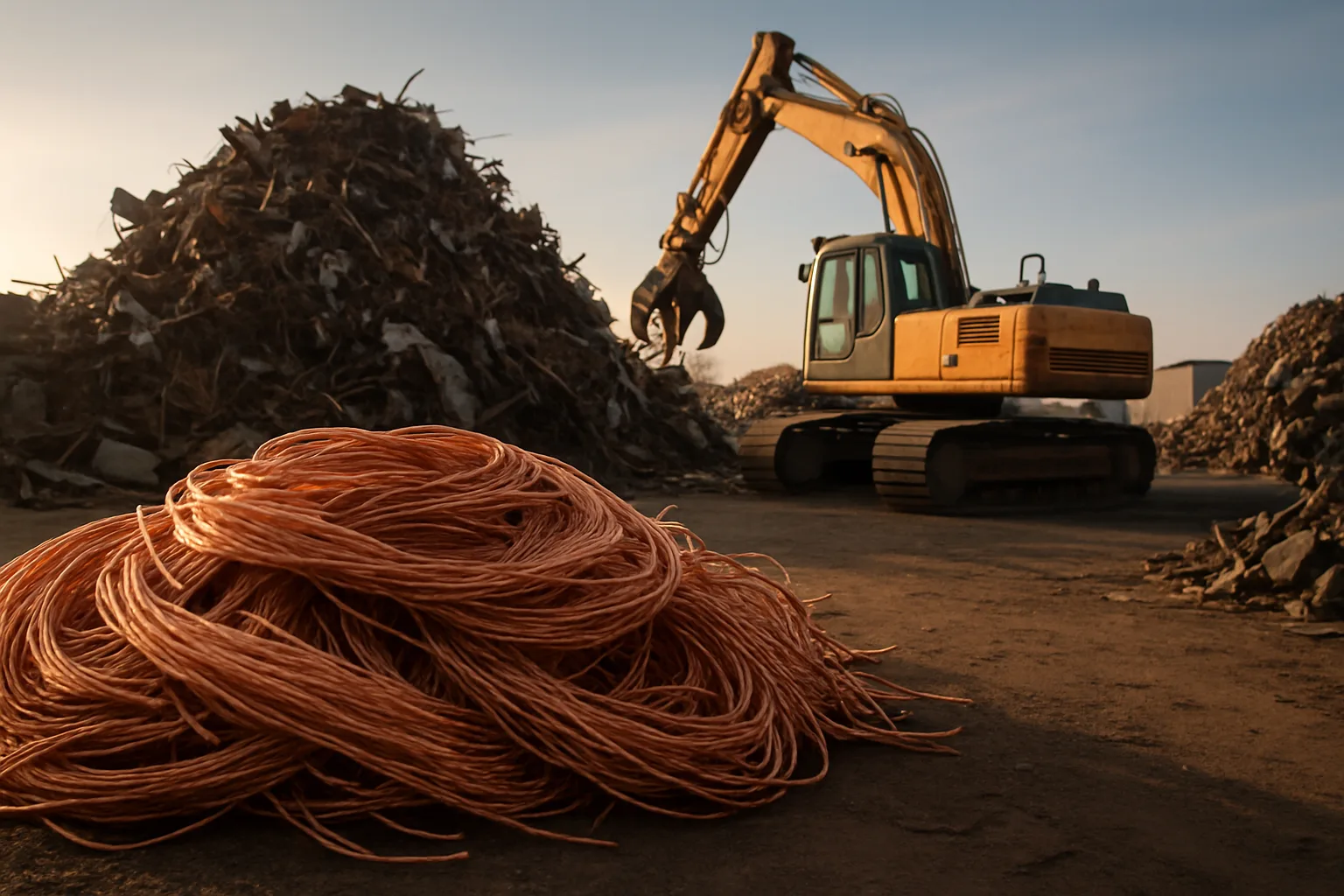
Copper Scrap Prices in Canada: What Every Seller Needs to Know Before They Call a Buyer
Most people selling scrap copper leave money on the table — not because the market is bad, but because they don't know what grade they're holding. Copper is one of the most valuable non-ferrous metals in the recycling stream, but the difference between bare bright and contaminated #2 can mean dollars per pound. That gap adds up fast when you're moving serious weight.
Whether you're a contractor clearing job sites, a yard operator in Barrie sorting loads, or a business generating scrap copper regularly, understanding price trends and grading standards isn't optional. It's the difference between a fair deal and a bad one. Platforms like the SMASH Recycling auction platform are changing how sellers access buyers and price discovery — but you still need to know what you're selling before you put it on the market.
Why Copper Scrap Prices in Ontario Fluctuate (And What's Driving Them in 2026)
Copper pricing isn't random. It tracks the London Metal Exchange (LME), moves with the Canadian dollar, and responds to global demand signals — particularly from manufacturing, electrical infrastructure, and EV production. In 2026, demand for copper in electric vehicle wiring, grid modernization projects, and data centre buildouts continues to put upward pressure on refined copper prices.
But here's what most casual sellers miss: scrap copper doesn't trade at LME prices. You're selling processed or unprocessed secondary material. The spread between the LME benchmark and what a yard pays reflects processing costs, contamination risk, and how confident a buyer is in what they're getting. If your copper is clean, documented, and consistently graded, buyers compete harder for it. If it's a mixed pile of unknown origin, expect a steep discount.
For sellers in Barrie scrap metal services, local market dynamics also matter. Proximity to buyers in the Greater Toronto Area and Southern Ontario industrial corridor means Barrie-area sellers generally have access to competitive regional pricing — especially when they're using a B2B scrap metal marketplace that opens their loads to multiple vetted buyers rather than a single phone call.
- LME copper price movements set the ceiling — but your grade determines where you fall below it
- CAD/USD exchange rate affects realized Canadian dollar payouts on every trade
- Contamination level is the single biggest controllable factor in what you're offered
- Buyer competition closes the gap between what a single yard offers and actual market value
The Copper Grading System: Know What You're Holding
Copper is graded by purity, condition, and contamination. The grades aren't universal across every buyer, but the industry has widely accepted standards. Getting this wrong means either underselling clean material or overestimating what contaminated loads are worth.
Here's a practical breakdown of the most common grades you'll encounter when you sell your scrap metal in Canada on SellYourScrap:
Bare Bright Copper (#1 Bright)
This is the top grade. Uncoated, unalloyed, unoxidized copper wire — no insulation, no solder, no corrosion. Minimum 16 gauge. It pays the highest price per pound because it goes straight to the smelter with minimal processing. Clean job-site wire pulls, new copper plumbing offcuts, and unused wire all qualify here if stripped properly.
#1 Copper
Clean, unalloyed copper pipe, wire, and bus bars with no excessive oxidation or solder. Some tarnish is acceptable. This grade includes clean copper tubing from HVAC and plumbing work. It pays slightly less than bare bright but is still a premium grade. A lot of what contractors pull off commercial jobs lands here.
#2 Copper
This is where most mixed loads end up. Copper with light coatings, solder joints, small amounts of oxidation, or minor contamination. Pipe fittings, old electrical copper, and salvage material from demolition typically grades as #2. The price spread between #1 and #2 can be meaningful on larger loads, so sorting pays off.
Insulated Copper Wire
Graded by the estimated copper recovery percentage — recovery rate determines price. Heavy-insulated wire (thick plastic jacketing, low copper content) pays significantly less than light-insulated or thin-jacketed wire. Buyers will estimate or use a standard recovery table. If you're moving volume, it's worth stripping where it makes sense economically.
Copper Alloys (Brass, Bronze)
Technically not pure copper, but copper-based alloys trade in a similar market. Brass plumbing fittings, bronze bushings, and mixed alloy loads get their own pricing. Don't mix these into your copper piles — keep them separate to maximize value on both streams.
How to Sort and Document Copper for Maximum Value
Sorting isn't just about being organized. It's about giving buyers confidence — and confident buyers bid higher. When you show up with a mixed pile and no documentation, every buyer assumes worst-case contamination. When you show up with clean, separated, photographed material with weight estimates, you change the conversation.
This is exactly where a B2B scrap metal marketplace like SMASH changes the dynamic. Photo documentation, accurate grade descriptions, and competitive bidding mean your sorted material gets evaluated on its merits — not on a buyer's risk margin for mystery loads.
- Separate by grade — bare bright, #1, #2, and insulated wire all go in different bins or bags
- Remove iron and steel — even small amounts of ferrous contamination downgrade copper loads
- Strip wire where it makes economic sense — a quick calculation on your time vs. price uplift is worth doing
- Photograph everything before it leaves your facility — disputes are rare when documentation is solid
- Weigh on a certified scale if possible — accurate weight claims support stronger bids
- Note the source where relevant — electrical, plumbing, HVAC, and demolition copper all have different typical contamination profiles
If you're in Barrie or anywhere in Ontario generating consistent copper volume, this kind of operational discipline is what separates sellers who get called back from those who don't. Explore Canadian scrap metal guides to go deeper on sorting best practices for other metals too.
Selling Copper Through a B2B Scrap Metal Marketplace vs. a Single Buyer
The old way: call your one buyer, take their offer, ship the load. No comparison. No leverage. No idea if you left money on the table. The problem isn't that your buyer is dishonest — it's that without competition, there's no market. There's just one person's opinion of your copper's value on that day.
A B2B scrap metal marketplace flips that. Multiple vetted buyers see your load description, photos, and grade. They bid against each other. Competition reveals the actual market price for your material — not one buyer's margin-protected offer. More buyers means better price discovery. Documented inventory gives buyers more confidence, and more confidence means tighter bids.
SMASH connects sellers across Canada — including yards and businesses in Barrie — with buyers who are actively looking for specific grades. No subscription fees. No guessing. When your load sells, SMASH earns a cut. When it doesn't, neither does SMASH. That alignment matters. Get a fair price for your scrap today and stop leaving the spread on the table.
Aluminum Scrap Value and Other Non-Ferrous Metals: Don't Overlook What's in the Pile
Copper gets the headlines, but aluminum scrap value per pound has also been strong in 2026, driven by automotive lightweighting trends and packaging demand. If you're sorting copper loads, you're probably pulling aluminum out of the mix anyway — don't let it go to the general pile. Clean aluminum extrusion, cast aluminum, and sheet aluminum all trade at different prices and deserve the same grading discipline as copper.
The same logic applies to catalytic converters. If your operation touches vehicles or heavy equipment, those cats have real value — and like copper, the spread between what a single buyer offers and what a competitive auction returns can be significant. A catalytic converter auction through a vetted platform means serial tracking, photo documentation, and buyer competition on every unit. That's a different outcome than a cold call to a single smelter contact.
The bottom line: whether you're moving scrap copper, aluminum, or cats, the mechanics are the same. Grade it accurately, document it thoroughly, and get it in front of more than one buyer. That's how scrap metal recycling Ontario operations build margin — not by chasing the market, but by running a tighter process.
Disclaimer: Scrap metal prices fluctuate daily based on commodity markets, exchange rates, and local supply and demand. Always check current rates before making selling decisions.
Frequently Asked Questions
Q: What's the difference between #1 and #2 copper scrap in Canada?
#1 copper is clean, unalloyed material with minimal oxidation — pipe, wire, and bus bars in good condition. #2 copper includes material with light coatings, solder joints, or minor contamination. The price difference between the two grades can be significant on larger loads, so sorting before you sell is worth the effort.
Q: How does a B2B scrap metal marketplace work for copper sellers?
A B2B scrap metal marketplace like SMASH lets you list your copper load — with photos, grade descriptions, and weight — and receive competitive bids from multiple vetted buyers. Instead of taking one offer, you see what the market will actually pay. No subscription fees; SMASH earns when your load sells.
Q: What are scrap metal prices in Ontario today for copper?
Copper scrap prices in Ontario fluctuate daily with the LME benchmark and CAD/USD exchange rate. Bare bright copper consistently commands the highest price per pound, with #1 and #2 grades paying progressively less. Check current rates through a live marketplace or local yard — never rely on prices from even a few weeks ago.
Q: Can I sell scrap copper in Barrie without a business account?
Yes. Both individual sellers and businesses can access scrap metal selling services in the Barrie area. If you're generating consistent volume, a B2B platform gives you more leverage and better price discovery than one-off yard visits. For local options, check out Barrie scrap metal services for details on pickup and pricing.
Q: Is it worth stripping insulated copper wire before selling?
It depends on the wire gauge, insulation thickness, and your time cost. Heavy-insulated wire with low copper recovery often doesn't justify stripping labor. Light-insulated or thin-jacketed wire with high copper content usually does. Run a quick calculation: compare the stripped bare bright price against the insulated wire price per pound multiplied by your estimated recovery percentage.
If you're sitting on copper, aluminum, or other non-ferrous scrap in Ontario, the worst thing you can do is wait for one buyer to call back. Grade it, document it, and put it in front of a competitive market. That's how you find out what your scrap is actually worth — not what one buyer wants to pay for it. When you're ready to move your material, sell your scrap metal in Canada on SellYourScrap and connect with vetted buyers through a platform built for yards and businesses like yours.
Follow SMASH on LinkedIn for ongoing scrap metal market insights, price trend updates, and industry news across Canada.