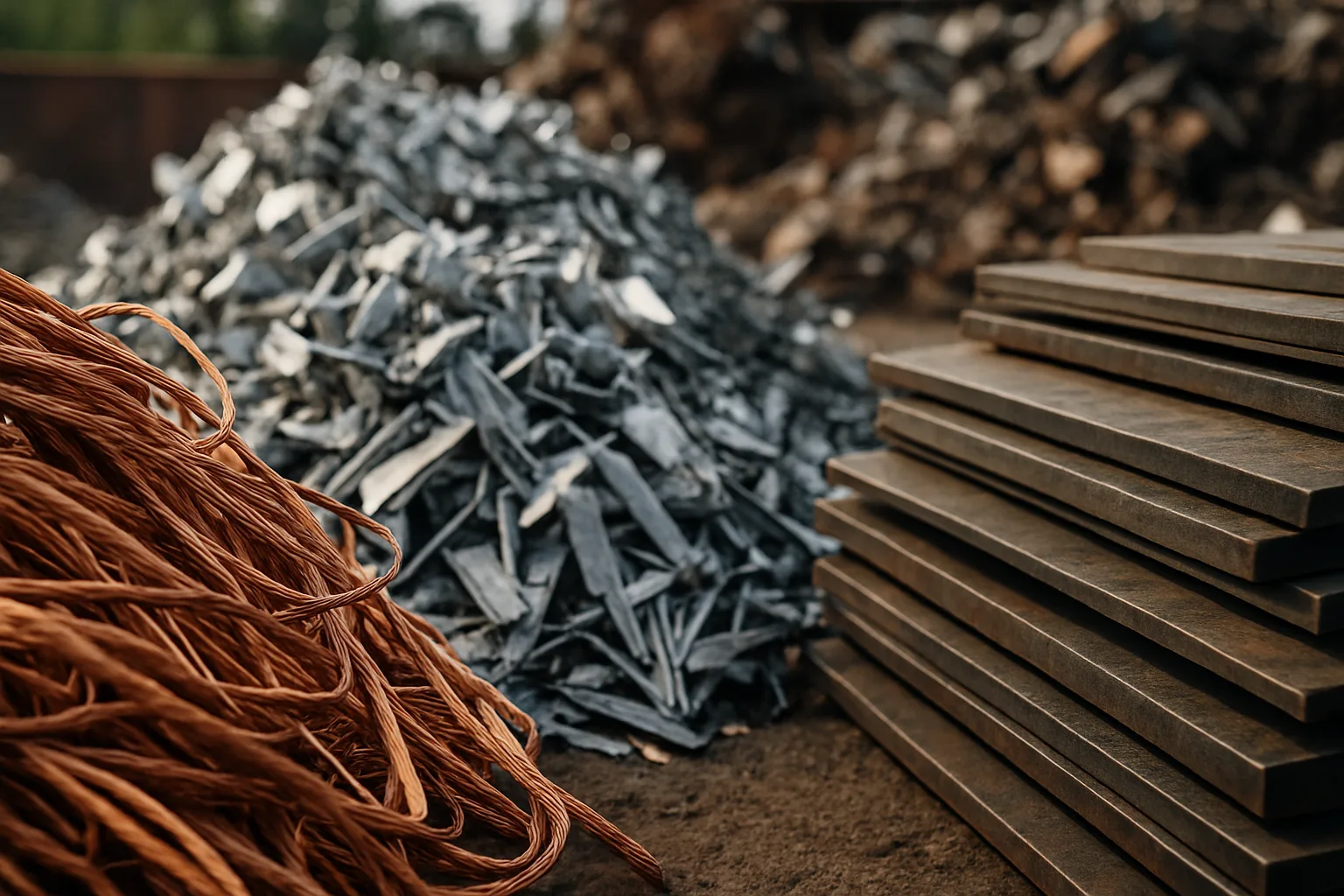
Most people treat a dead laptop or broken smartphone like garbage. They shove it in a drawer, toss it in a box, or worse — drop it in a landfill bin. But here's what they're missing: that device contains copper, gold, silver, palladium, and aluminum. Real metals. Metals that have real value when scrap metal prices today are factored in. In 2026, the global push for critical mineral recovery has made e-waste one of the most talked-about topics in the recycling industry — and for good reason.
If you're sitting on a pile of old electronics in Abbotsford or anywhere across British Columbia, this article tells you what's actually inside those devices, what it's worth, and how platforms like the SMASH Recycling auction platform are changing how recyclers and yards handle these loads.
---Why E-Waste Has Become a Serious Source of Recoverable Metals
Electronics are not designed to be recycled easily. Manufacturers pack them full of layered components — circuit boards bonded with epoxy, connectors plated with gold, wiring wrapped in insulation. But strip all that away, and you're looking at a surprisingly dense concentration of non-ferrous metals.
A single tonne of circuit boards can contain more gold than a tonne of gold ore. That's not a marketing line — it's a documented reality the mining and refining industries have been responding to for years. In 2026, with gold prices elevated and silver demand growing from the solar and electronics manufacturing sectors, the economics of e-waste recovery have never made more sense.
Here's a breakdown of what's commonly found in old consumer electronics:
- Copper: Found in wiring, motors, PCB traces, and power supplies. One of the highest-volume recoverable metals in e-waste.
- Aluminum: Enclosures, heatsinks, laptop chassis, tablet frames.
- Gold: CPU pins, edge connectors, SIM contacts — present in small but concentrated amounts.
- Silver: Contacts, switches, some solder points.
- Palladium: Found in capacitors, particularly in older telecom equipment.
- Steel: Drive casings, brackets, server racks.
When you're tracking scrap metal prices today, non-ferrous metals like copper and aluminum are the ones driving most of the value. But for larger e-waste processors, the precious metal content — gold, silver, palladium — is what separates a good load from a great one.
---Scrap Metal Prices Today: What E-Waste Metals Are Trading At
Pinning down a single price for e-waste is difficult because the value depends heavily on the grade and composition of the material. A bin of mixed e-waste is worth far less per pound than sorted, clean copper wire or refined circuit boards. Grading matters.
In general terms, here's how e-waste-derived metals tend to stack up in the current Canadian market:
- Scrap copper (from wire and PCBs) remains one of the stronger non-ferrous categories. Clean copper wire grades significantly higher than insulated or contaminated material.
- Scrap aluminum from device enclosures and heatsinks trades at lower per-pound values than copper, but volume can add up quickly when processing commercial electronics.
- Circuit boards are typically priced by the buyer based on perceived precious metal content. High-grade boards (telecom, server-class hardware) fetch more than consumer-grade boards.
- Mixed e-waste / WEEE (Waste Electrical and Electronic Equipment) is usually sold at a lower blended rate, with buyers factoring in processing costs.
Disclaimer: Metal prices fluctuate based on global commodity markets, exchange rates, and local buyer conditions. Always check current rates before selling. The figures above are general market context, not guaranteed purchase prices.
For anyone looking to sell your scrap metal in Canada on SellYourScrap, the most important step is sorting your material before you sell. Mixed loads always yield lower per-pound returns. Clean, sorted material gives buyers confidence — and that confidence translates into better price discovery.
---British Columbia's E-Waste Regulations in 2026 — What Sellers Need to Know
British Columbia has one of the more structured e-waste programs in Canada, operating under the Recycle BC and Electronic Stewardship Association of BC (ESABC) frameworks. In 2026, the regulatory pressure on proper e-waste handling has intensified, with extended producer responsibility (EPR) rules placing more accountability on both manufacturers and processors.
What does this mean practically for someone in Abbotsford with a truckload of old electronics?
- You cannot legally dump electronics in landfill in most BC municipalities. This applies to TVs, computers, monitors, printers, and phones.
- Approved drop-off locations exist across the Lower Mainland and the Fraser Valley, but they do not pay you for the material — they handle compliant disposal only.
- Commercial e-waste processors who buy your material operate under separate licensing and are required to document chain of custody, especially for data-bearing devices.
- Data destruction is a legal and business risk. If you're selling old hard drives or servers from a business, confirm your buyer provides certified data destruction documentation.
The regulatory environment doesn't make selling harder — it actually creates a cleaner, more professional market. Yards and processors who operate compliantly are the ones worth working with. That's why vetted buyer networks matter, whether you're selling a single laptop or a commercial fleet refresh worth a full pallet of equipment.
---How SMASH Helps Yards and Processors Sell E-Waste Competitively
If you run a recycling yard or processing operation in the Fraser Valley, you already know the problem. You get a load of e-waste. You call one buyer. They give you a price. You take it or leave it — usually with no idea whether that price reflects the actual market or just what that buyer wants to pay today.
That's the old way. It hasn't served sellers well.
SMASH is an auction-based platform that connects vetted buyers with recyclers and yards across North America. Instead of one phone call and one number, your load goes in front of multiple qualified buyers who compete. Competition is what drives price discovery. More eyes on a load means a price that actually reflects what the material is worth — not what a single buyer decides it's worth on a slow Tuesday.
For e-waste specifically, SMASH's inventory tools — photo documentation, serial tracking, and detailed packing lists — give buyers the confidence to bid aggressively on material they can actually evaluate. When a buyer can see exactly what's in a load, they don't need to build in a mystery discount.
Platforms like SMASH make it significantly easier for Abbotsford-area yards and recyclers to reach buyers beyond their local network. Whether it's high-grade circuit boards, scrap copper wire, or non-ferrous mixed loads, the auction format removes the guesswork. No subscription fees. SMASH only wins when the seller wins.
You can explore how Canadian scrap metal guides break down different material types — including how e-waste grades are evaluated and what documentation buyers typically require.
---Sorting Your Electronics Before You Sell — A Practical Guide
If you're a homeowner in Abbotsford clearing out a garage full of old tech, or a business IT manager decommissioning a server room, sorting before selling is the single best thing you can do to maximize your return. Buyers pay more for sorted material because it's easier to process and value.
Here's a practical sorting approach:
- Separate ferrous from non-ferrous. Steel brackets, drive casings, and rack hardware go in one pile. Copper wire, aluminum chassis, and boards go in another. Never mix them.
- Grade your copper. Bare bright copper wire is the highest grade. Insulated wire is lower. Copper from inside devices (transformers, motors) grades differently than clean wire.
- Pull the aluminum enclosures. Laptop shells, tablet frames, and desktop cases are usually clean cast or sheet aluminum. These sell separately from mixed e-waste.
- Separate your circuit boards by type. High-grade boards (server motherboards, telecom cards) versus low-grade consumer boards (old game consoles, cheap printers) have very different values.
- Set aside precious metal-dense components. CPUs, gold-finger connectors, and RAM sticks are often worth more sold as a separate category.
- Document everything. Photos, weights, and descriptions help buyers evaluate loads remotely — which matters more than ever in 2026's increasingly digital trading environment.
It takes time. But the price difference between a sorted load and a mixed-bin dump is real — and it compounds quickly when you're dealing with commercial volumes. If you're ready to get a fair price for your scrap today, start with sorting. Then let competitive buyers do the rest.
For yards and commercial sellers in the Fraser Valley using Abbotsford scrap metal services, the combination of proper sorting and an auction-based selling platform is the clearest path to consistent, market-reflective pricing on every load.
---The Bottom Line on E-Waste and Precious Metal Recovery
E-waste isn't garbage. It's a metal resource that most people undervalue because it doesn't look like a copper pipe or an aluminum sheet. But the metals are there — copper, aluminum, gold, silver, palladium — and in 2026, the market infrastructure to recover and sell those metals is better than it's ever been.
Whether you're a homeowner with a box of dead laptops or a yard operator handling commercial e-waste loads in British Columbia, the principles are the same: sort your material, document it properly, and sell it to buyers who compete for it. That's how you stop leaving money on the table.
If you have scrap metal to sell — electronics or otherwise — sellyourscrap.ca makes it straightforward to connect with buyers who pay fair Canadian market prices. Request a pickup, get your material assessed, and see what a competitive process actually looks like. You don't need to guess at pricing when the market can speak for itself.
---Frequently Asked Questions
Q: What are scrap metal prices today for electronics and e-waste in Canada?
Prices for e-waste-derived metals vary based on material type, grade, and current commodity markets. Copper wire and clean aluminum tend to fetch the best per-pound returns from electronics. Circuit boards are priced based on precious metal content. Always verify current rates with your buyer before selling — prices move with global markets and can shift week to week.
Q: Where can I sell scrap metal near me in Abbotsford?
Abbotsford and the broader Fraser Valley have several scrap and recycling options for both residential and commercial sellers. For competitive pricing, platforms like SMASH connect sellers with multiple vetted buyers rather than locking you into a single quote. Check sellyourscrap.ca to request a pickup or learn more about local options.
Q: Is it legal to sell old electronics as scrap in British Columbia?
Yes, with conditions. BC has regulated e-waste handling under extended producer responsibility frameworks, and electronics cannot be landfilled. Selling to a licensed scrap processor or e-waste recycler is both legal and encouraged. For data-bearing devices, ensure your buyer provides documented data destruction.
Q: How do I know if my circuit boards or CPUs have gold in them?
Most circuit boards from computers, servers, and telecom equipment contain trace amounts of gold on connectors, pins, and plating. Server-class and telecom hardware typically carries higher precious metal concentrations than consumer electronics. A reputable e-waste buyer or precious metal refiner can assess the grade of your boards before purchase.
Q: Does SMASH handle e-waste loads, or only traditional scrap metal?
SMASH works with recycling yards and commercial sellers handling a wide range of non-ferrous and specialty loads, including those with electronics components. The platform's photo documentation and inventory tools make it well-suited for complex or mixed loads where detailed documentation helps buyers evaluate and bid confidently.
---Stay current on scrap metal market trends and industry news by following SMASH on LinkedIn — practical insights for recyclers and yard operators across North America, posted regularly.