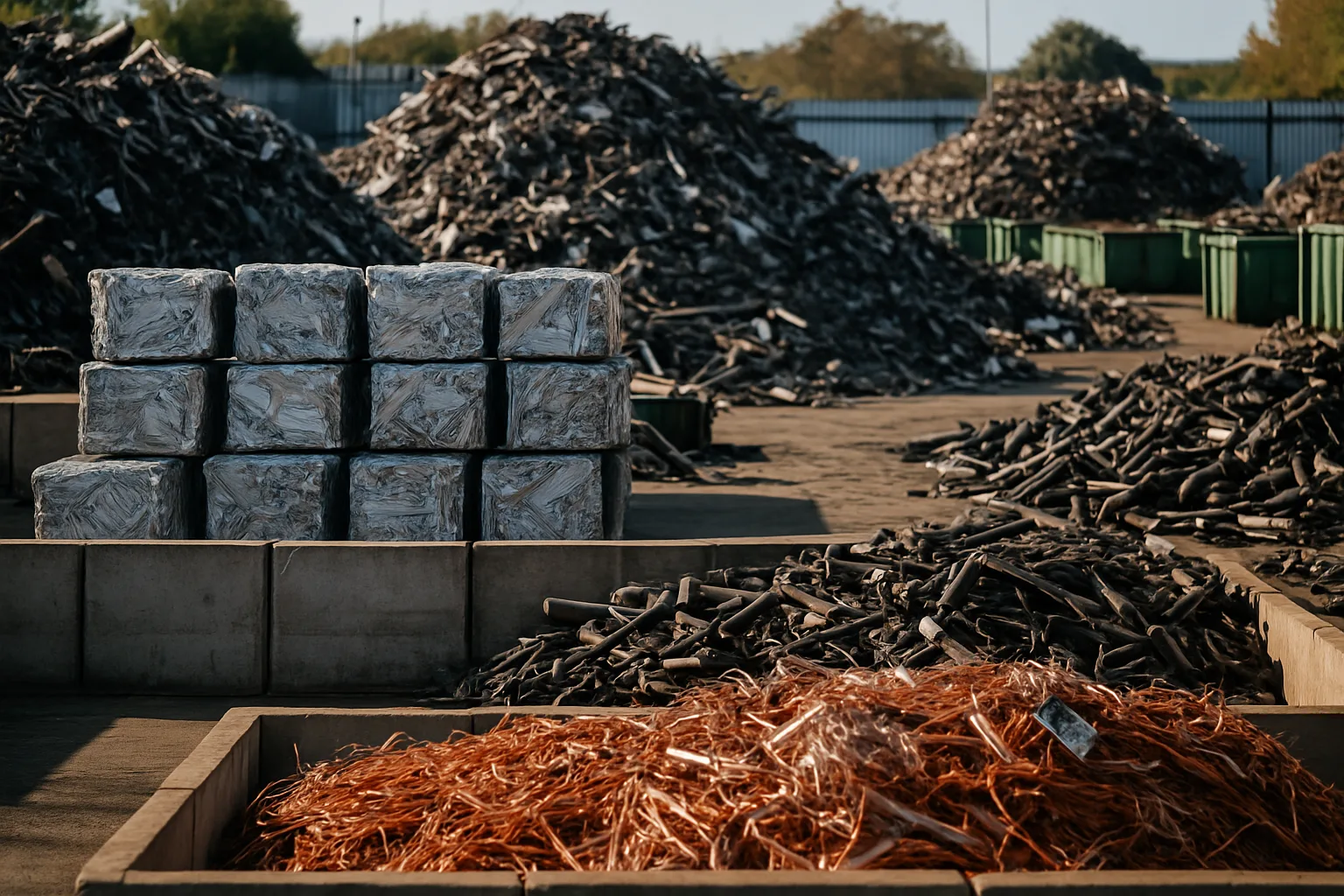
Think your local scrap yard sets its own prices? It doesn't. The number on the board when you pull up with a load of copper or aluminum is the result of decisions made in Shanghai, policy shifts in Washington, and currency moves that happened overnight. If you're selling scrap metal in Canada — whether you're an individual with a truck bed full of copper pipe or a business moving tons of aluminum monthly — understanding what drives that price is worth your time.
This week's roundup breaks down how the global economy filters down to your local yard, and what it means when you're trying to sell your scrap metal in Canada on SellYourScrap.
The Global Commodity Market: What It Is and Why It Controls Your Price
Scrap metal isn't priced locally. It's priced globally. Copper, aluminum, steel, and nickel all trade on international commodity exchanges — the London Metal Exchange (LME) and the Chicago Mercantile Exchange (CME) are the two biggest reference points. When buyers at your local yard quote you a price for scrap copper, they're working backward from those global benchmarks, not pulling a number out of thin air.
The ripple effect is real and it moves fast. A manufacturing slowdown in China — the world's largest consumer of raw and recycled metals — can drop copper demand within days. That drop hits the LME price. That LME price drop hits your Canadian yard by the next morning. What looked like a good time to sell last week might be a mediocre time to sell this week, based entirely on economic data released on the other side of the planet.
- Copper is particularly sensitive to construction and manufacturing activity in Asia and Europe.
- Aluminum tracks aerospace, automotive, and packaging demand — sectors that shift with consumer spending cycles.
- Catalytic converters (cats) are tied to platinum group metals (PGMs), which are influenced by auto production forecasts and emissions regulation timelines.
- Steel and ferrous metals track infrastructure spending, particularly in large economies running major construction programs.
None of these are local variables. They're all global. And they all land on your local price board.
The CAD/USD Exchange Rate Has a Direct Impact on Scrap Prices in Canada
Here's something that doesn't get talked about enough in the scrap world: the Canadian dollar exchange rate matters as much as the commodity price itself. Global metals are priced in USD. Canadian yards buy and sell in CAD. That spread — whatever the loonie is doing against the US dollar — gets baked into every quote you receive.
When the Canadian dollar weakens against the USD, Canadian scrap becomes cheaper for foreign buyers. That can actually support local prices because export demand picks up. When the CAD strengthens, the math works the other way — your scrap is more expensive for export buyers, which can soften what yards are willing to pay domestically.
In 2026, currency volatility tied to North American trade dynamics has added another layer of unpredictability to this equation. The takeaway for sellers isn't to become a forex trader. It's to understand that your price isn't arbitrary — and that using a B2B scrap metal marketplace with multiple vetted buyers creates competition that works in your favour regardless of which direction the dollar moves that week.
Trade Policy, Tariffs, and Why They Hit Scrap Yards Hard
Trade policy is another global lever that lands directly on local scrap prices. When major economies impose tariffs on raw materials or finished metal products, it reshapes where scrap flows and who's buying it. A tariff on imported steel, for example, can push domestic mills to source more from recycled scrap — which briefly tightens supply and lifts prices. But retaliatory tariffs on exports can close off markets that Canadian scrap processors relied on.
The scrap industry in Ontario — and across Canada — has navigated multiple rounds of trade disruption over the past several years. Yards that adapted by diversifying their buyer networks came out better. Yards that depended on one or two export relationships took a harder hit. This is exactly why selling through a competitive auction model matters. A scrap metal auction platform like SMASH connects you to vetted buyers across North America, which reduces your exposure to any single buyer or market relationship going cold because of a policy change you had no control over.
For sellers in London, Ontario, this isn't abstract. It's the difference between getting a fair price for your aluminum or accepting whatever one buyer feels like paying that day because you don't have a comparison point.
How This Plays Out Week to Week in Canadian Scrap Metal Markets
Let's ground this in reality. In any given week, your local scrap price is shaped by a stack of overlapping signals:
- LME closing prices — updated daily, watched by every yard buyer in Canada.
- USD/CAD exchange rate — shifts the effective value of your load in real time.
- Regional demand — local mills and processors may be running hot or light depending on their order books.
- Export demand — overseas buyers bidding on Canadian scrap affect what domestic buyers have to offer to stay competitive.
- Freight costs — when diesel prices spike, the cost to move your load eats into what buyers can pay at the gate.
No single yard operator controls any of these factors. But the yard that sees the most competition for your material — the one running against other buyers in a live auction format — is the one most likely to sharpen its pencil. That's the core reason platforms like SMASH matter in a market this complex. More buyers, better price discovery. That's not a marketing line — it's how competitive markets work.
If you're selling scrap in London or anywhere across scrap metal recycling Ontario and you're not comparing bids, you're leaving money on the table. Not because the yard is dishonest — but because they're in business too, and they'll pay what they have to, not more.
What Sellers Can Do About It
You can't control commodity prices. You can't control the exchange rate. You can control how you sell. A few practical moves that matter:
- Document your loads properly. Photo documentation, serial tracking for cores and cats, accurate weight estimates — all of this gives buyers the confidence to bid higher. Uncertainty gets priced in against you.
- Separate your materials. Mixed loads get quoted at the lowest-value metal in the mix. Clean, sorted loads of copper, aluminum, or non-ferrous get priced individually — which almost always means more per pound.
- Watch the market before you move. If commodity prices dropped significantly this week, it's worth knowing before you load the truck. Timing isn't everything, but it's not nothing either.
- Use a platform with multiple buyers. A B2B scrap metal marketplace gives you real competition for your load. That's the structural advantage that individual negotiations with a single buyer can't replicate.
- Work with vetted buyers. In a volatile market, the buyer who wins the auction needs to actually complete the transaction. SMASH vets its buyers so sellers aren't left holding a BOL and waiting for payment that doesn't arrive.
If you're ready to stop guessing and start getting competitive bids, get competitive bids for your scrap in Canada through SMASH's vetted buyer network.
London, Ontario Sellers: The Global Market Lands Here Too
London isn't immune to any of this. The automotive and manufacturing corridor that runs through southwestern Ontario is directly tied to the global commodity cycle. When North American auto production runs strong, demand for catalytic converter cores, aluminum extrusion, and steel offcuts picks up locally. When it slows, that demand softens — and so does your offer at the gate.
The good news for sellers in London is that the geography works in your favour. You're within range of major mills, export terminals, and processing facilities. That means there are real buyers who want your material — and a competitive process to surface what they'll actually pay.
London scrap metal services through SellYourScrap connect local sellers to that buyer network — with the documentation, auction process, and transparency that the old phone-call model never provided. Whether you've got a pallet of scrap copper, a pile of aluminum extrusion, or a stack of cats, the process is the same: documented, competitive, and settled properly.
Take a few minutes to explore Canadian scrap metal guides for more context on pricing, timing, and how to get more from every load you sell.
Disclaimer: Scrap metal prices fluctuate daily based on global commodity markets, exchange rates, and local demand. Always check current rates before selling. The price ranges mentioned in any market recap reflect general market conditions and are not guaranteed offers.
Frequently Asked Questions
Q: Why do scrap metal prices change so often in Canada?
Scrap metal prices are tied to global commodity exchanges like the London Metal Exchange, which updates prices daily. Changes in manufacturing demand, currency exchange rates, and trade policy all shift prices quickly. A load worth a certain amount this Monday might be quoted differently the following week — which is why timing and using a competitive sales process both matter.
Q: How does a B2B scrap metal marketplace work for individual sellers?
A B2B scrap metal marketplace connects sellers — including individuals and smaller operations — with vetted commercial buyers who compete for the load through an auction process. You document what you have, buyers bid, and the best offer wins. It's a more transparent process than calling one yard and accepting their quote. Platforms like SMASH handle the documentation, invoicing, and buyer verification.
Q: Is it worth selling scrap metal in London, Ontario specifically, or should I look for buyers elsewhere?
London's location in southwestern Ontario puts it within reach of major mills and processors. Local buyers are competitive, but that doesn't mean the first quote you receive is the best one. Using a scrap metal auction platform gives you access to buyers beyond your immediate geography, which can surface better prices — especially for high-value non-ferrous loads like copper or catalytic converters.
Q: What types of scrap metal are most affected by global economic changes?
Copper, aluminum, and platinum group metals (PGMs) — found in catalytic converters — are the most sensitive to global economic signals. Steel and ferrous metals also fluctuate but tend to be more stable on a day-to-day basis. If you're holding a large volume of copper or cats and global prices are volatile, it's worth watching the market before committing to a sale.
Q: How do I know I'm getting a fair scrap price near me for cash?
The best way to know if you're getting a fair price is to have more than one buyer involved. A single quote from a single yard has no competitive pressure behind it. Using a marketplace that runs multiple buyers against each other — with your load properly documented — gives you a real reference point for what the market will actually pay. That's what price discovery looks like in practice.
---The global economy is moving whether you track it or not. What you can control is how you sell. If you're ready to move your material with proper documentation, competitive bids, and a process that doesn't rely on guessing, get a fair price for your scrap today at SellYourScrap. Request a pickup and let the market work for you.
Follow SMASH on LinkedIn for weekly scrap metal market updates, industry insights, and tips on getting more from every load you sell.