Why Knowing Your Metal Before You Sell Is Worth Real Money
Most people who show up at a recycling yard with a mixed pile of metal leave money on the table. Not because they got cheated — because they didn't know what they had. Copper scrap price today is dramatically higher than aluminum. Steel pays fractions of what non-ferrous metals do. If you can't tell the difference before you load the truck, you can't negotiate, you can't sort, and you can't get paid what your pile is actually worth.
This guide gives you the practical tools to identify common scrap metals using two things you probably already own: your eyes and a magnet. No lab equipment. No metallurgy degree. Just a few reliable tests that work in a driveway, a shop, or a jobsite.
Whether you're a homeowner clearing a renovation, a contractor managing demo waste, or a small yard in Chilliwack sorting incoming loads — understanding what you're looking at is the first step to getting paid properly. Platforms like compare scrap metal bids from Canadian buyers can help you go further, but identification comes first.
The Magnet Test: Your First and Fastest Filter
Grab any magnet — even a fridge magnet works in a pinch. The magnet test splits your pile into two groups instantly: ferrous (iron-based) metals and non-ferrous metals. Ferrous metals stick to a magnet. Non-ferrous metals don't. That single distinction determines which price category your material falls into.
Ferrous metals that stick to a magnet:
- Steel — the most common scrap metal. Structural beams, appliances, car bodies, rebar. Pays the lowest per-pound rate but moves in high volume.
- Cast iron — heavier than steel, often found in old radiators, engine blocks, wood stoves, and plumbing fittings. Slightly higher value than light steel.
- Wrought iron — older fencing, gates, ornamental work. Similar pricing to cast iron depending on grade.
Non-ferrous metals that won't stick:
- Copper
- Aluminum
- Brass
- Bronze
- Stainless steel (most grades are non-magnetic — but verify visually)
- Lead
- Zinc
One important note: stainless steel doesn't behave like regular steel with a magnet. Most stainless grades are non-magnetic or only weakly magnetic. If your magnet barely grabs something shiny and silver, stainless is your likely candidate. Confirm with a visual check — stainless has a brushed or mirror finish and won't rust the way mild steel does.
Visual Identification: What Each Metal Actually Looks Like
Once you've sorted ferrous from non-ferrous, your eyes do the next round of work. Color, texture, weight, and corrosion patterns all give you clear signals. Here's what to look for with the metals that pay best.
Copper
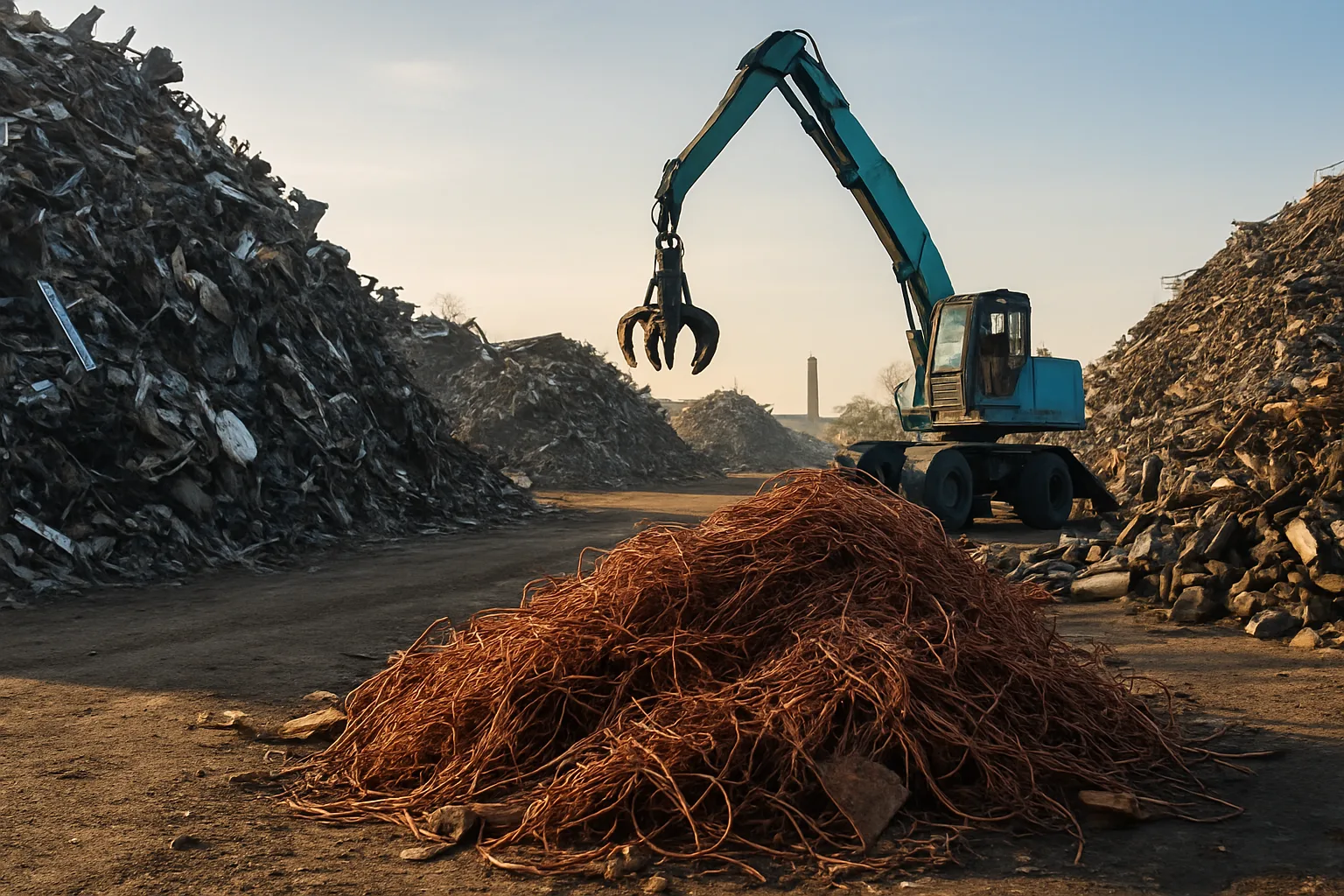
Copper is the one that pays. When checking the copper scrap price today, you'll notice it sits significantly above aluminum and well above steel. Fresh copper is a warm, salmon-pink or reddish-orange color. Exposed copper oxidizes to a dull brown, and with enough time and moisture, it develops a blue-green patina called verdigris — that's the color you see on old copper roofing and outdoor statuary.
Common copper scrap sources include:
- Electrical wire and cable (the copper core inside insulated wire)
- Plumbing pipe (type L and type M copper pipe used in residential construction)
- Copper fittings, elbows, valves
- Transformer windings
- Bus bars from electrical panels
- Coils from air conditioning and refrigeration units
Grades matter for copper. Bare bright copper (clean, uncoated, unalloyed wire) commands the highest price. #1 copper includes clean pipe and solid copper with no fittings or solder. #2 copper may have paint, solder, or small attachments. Insulated wire is priced separately and lower, based on estimated copper yield. Sorting your copper by grade before you sell is one of the simplest ways to increase your payout.
Aluminum
Aluminum is lightweight and silver-grey. It's one of the easiest metals to identify because of its weight — if you pick up a piece of metal and it feels surprisingly light for its size, aluminum is almost certainly what you have. It doesn't rust, but it does oxidize to a chalky or dull grey surface over time.
Common aluminum scrap includes:
- Aluminum cans (the lowest-grade aluminum scrap by weight)
- Aluminum extrusions — window frames, door frames, curtain wall systems
- Cast aluminum — engine parts, transmission housings, lawn furniture
- Aluminum sheet — siding, roofing panels, signage
- Aluminum wire
- Rims and wheels from vehicles
Aluminum price per pound is considerably lower than copper but still meaningfully higher than steel. A load of clean aluminum extrusion from a window replacement job is worth sorting out separately rather than mixing into a general metal pile.
Brass and Bronze
Brass is yellow-gold in color. It's an alloy of copper and zinc and is denser than aluminum. Common sources: plumbing valves, faucets, fittings, musical instruments, shell casings, decorative hardware. If something looks gold but is clearly not jewelry and is heavy, test with a magnet. If it doesn't stick and has that yellow tone, you're likely looking at brass.
Bronze is similar to brass but has a warmer, more reddish-brown color. It's an alloy of copper and tin. You'll find it in bearings, bushings, marine hardware, bells, and some art or statuary. Both brass and bronze price closer to copper than aluminum, making them worth separating from a mixed pile.
Lead
Lead is heavy — noticeably heavier than steel for the same volume. It's dull grey, very soft (you can scratch it with a fingernail), and bends easily. Common scrap sources include old pipe, wheel weights, roofing flashing, and lead-acid battery plates. Handle lead with care: use gloves, don't cut or grind it without proper ventilation, and check local regulations. In British Columbia, there are specific handling requirements for lead from batteries and old pipe.
Harder Calls: Stainless, Zinc, and Mixed Alloys
Some metals require a closer look. Stainless steel, zinc, and various alloys don't always declare themselves obviously. Here's how to work through the harder identifications.
Stainless steel: Silver, often with a brushed finish. Won't rust. Weakly magnetic or non-magnetic depending on grade. Heavier than aluminum. Common in commercial kitchen equipment, sinks, tubing, and food processing machinery. 304 stainless is the most common grade. 316 (marine grade) is worth more. Pricing sits between aluminum and copper depending on grade and market conditions.
Zinc: Dull grey, similar to lead but lighter. Often found as die-cast parts — door hardware, carburetors, older toy cars, small mechanical components. Zinc corrodes with a chalky white surface oxidation. If you're unsure between lead and zinc, weight is your test: lead is significantly heavier for the same size.
Pot metal / mixed die-cast: Many inexpensive cast parts are mixed alloys that don't grade cleanly. Yards will often take these as mixed non-ferrous or low-grade material. If you can't identify it cleanly, be upfront — a good buyer will tell you what they're seeing.
How Sorted Metal Translates to Better Scrap Metal Prices Today
Here's the practical reality: a sorted load pays better than an unsorted one. When a buyer looks at mixed metal, they price it to the lowest grade in the pile because they have to account for sorting labor and uncertainty. When you show up with copper separated from aluminum, aluminum separated from steel, and grades within each metal separated, you get paid on the actual composition.
If you're selling in volume — a contractor cleaning out a job, a demo company, a small recycling operation — sorting is where your margin lives. Yards in Chilliwack and across British Columbia operate on thin spreads. The more work you've done to identify and separate material, the less risk they're pricing into your load.
This is also where documentation starts to matter. If you can show buyers exactly what you have — weights, grades, photos — you create the conditions for competition. When you sell your scrap metal in Canada on SellYourScrap, you're not guessing at a number and hoping one buyer is having a good day. You're presenting documented material to multiple vetted buyers and letting the market tell you what it's worth.
Platforms like SMASH are built around this principle. More buyers, documented loads, competitive bidding. That's a better outcome than a single phone call to a single yard with a take-it-or-leave-it number. If you want to get a fair price for your scrap today, the identification work you do upfront directly supports what you earn at the end.
Putting It All Together: A Simple Field Identification Routine
You don't need a complex system. Here's a quick routine you can run on any pile before you load or haul:
- Run the magnet. Pull out everything that sticks — that's your ferrous pile (steel, cast iron). Set it aside.
- Look at color. From your non-ferrous pile: red/orange/pink = copper, yellow/gold = brass or bronze, silver/grey lightweight = aluminum, silver/heavy = stainless or lead.
- Test the weight. Aluminum is dramatically lighter than everything else at the same size. Lead is dramatically heavier.
- Check for oxidation clues. Blue-green patina = copper. Chalky white oxidation = zinc or aluminum. No rust at all on a silver metal = stainless.
- Sort into separate piles. Even rough sorting — copper together, aluminum together, steel together — improves your position at the yard.
- Document before you haul. Photos, estimated weights, grades. This supports your negotiation and protects you.
If you're regularly handling mixed loads in Chilliwack or anywhere across British Columbia, running this routine becomes fast. After a few loads, you'll identify common materials in seconds. And every time you sort correctly, you're leaving less money on the table.
Ready to put your sorted pile to work? Explore Canadian scrap metal guides for more on pricing, grades, and how to get the most from your material — then take that knowledge and use it. The scrap is already there. Getting paid properly for it just takes the right process.
Frequently Asked Questions
Q: What is the copper scrap price today in Canada?
Copper prices fluctuate daily based on global commodity markets, currency exchange rates, and local supply and demand. The copper scrap price today in Canada will vary by grade — bare bright copper commands the highest rate, followed by #1 copper, #2 copper, and insulated wire. Always check current rates directly with your buyer or platform before hauling. Disclaimer: prices referenced in this article are general and subject to change. Verify current scrap metal prices today before selling.
Q: How do I tell copper from brass without a test kit?
Color is your best indicator. Copper has a distinct reddish-pink or orange tone. Brass is yellow-gold. Both are non-magnetic and similar in weight, but the color difference is usually clear enough to distinguish them visually. When in doubt, a scrap yard can confirm the grade for you.
Q: Where can I sell scrap metal in Chilliwack, British Columbia?
Chilliwack has local recycling yards that accept common scrap metals. For better price discovery — especially on larger or sorted loads — consider listing through a platform that connects you with multiple vetted buyers across British Columbia rather than defaulting to a single buyer's posted price. SMASH is one option designed specifically for this.
Q: Does sorting my scrap metal before selling actually make a difference?
Yes — significantly. Mixed loads are priced to the lowest grade in the pile because the yard has to account for sorting labor and uncertainty. Sorted loads, especially when documented with photos and weights, give buyers confidence and remove that risk discount from your payout. It's one of the highest-return things you can do before you sell.
Q: What metals are worth the most per pound at a scrap yard?
Generally, copper pays the most per pound, followed by brass and bronze, then aluminum, then stainless steel, with steel and cast iron at the lower end. Specialty materials like catalytic converters carry their own pricing based on precious metal content. Market conditions affect all of these — scrap metal prices today can shift week to week based on commodity markets.
When you're ready to move your sorted pile, don't settle for one buyer's number. Sell your scrap metal in Canada on SellYourScrap and request a pickup at sellyourscrap.ca — that's where the identification work you've done turns into the payout you've earned.
Follow SMASH on LinkedIn for ongoing scrap metal market insights, pricing updates, and industry news across North America.
```