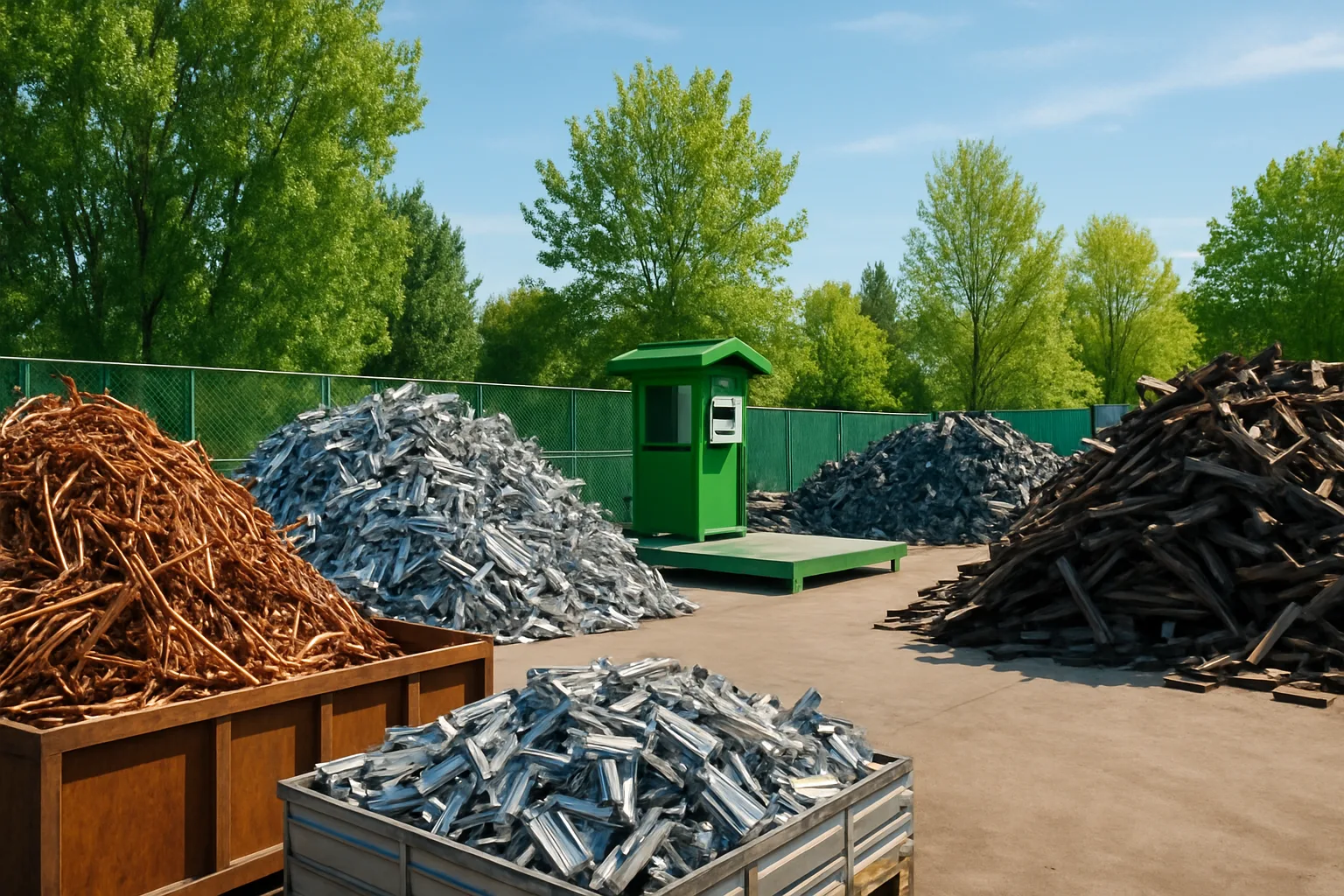
What Actually Happens When You Drop Off Scrap Metal — And Why It Changes Your Payout
Most people drive up to a recycling yard, toss their load on the scale, and hope for a fair number. But what you actually get paid depends on decisions made in the next five minutes — decisions about weight, grade, and contamination. Understanding how yards weigh and grade your scrap metal is one of the most practical things you can do before you sell your scrap metal in Canada on SellYourScrap.
If you're looking to sell scrap metal near me Burnaby, or anywhere across British Columbia, this process is the same whether you're dropping off a trunk full of copper pipe or a flatbed of mixed steel. Let's break down exactly what happens — and where your money is made or lost.
Step One: The Scale — How Your Scrap Gets Weighed
Every yard uses a certified truck scale or a platform scale at the gate. When you pull in, your vehicle weight gets recorded. When you pull out empty, they weigh you again. The difference is your net payload. For smaller loads brought in by hand, yards use bench scales or hanging scales to weigh bins and buckets directly.
This part seems simple. But here's where a lot of sellers leave money on the table: wet material. Scrap metal that's been sitting outside, soaked with rain, or stored in a flooded yard can weigh significantly more than dry metal. Some yards deduct a moisture percentage from your total — others don't, and pocket the difference. Knowing this before you show up means you can dry out your load or at least ask the question.
- Truck scales: Used for full vehicle loads — cars, trailers, roll-offs
- Platform scales: Used for mid-sized loads dropped from a truck bed
- Bench scales: Used for small batches — copper wire, cores, electronics
- Hanging scales: Common for bins of non-ferrous metals at the counter
All certified scales should be provincially calibrated and tested regularly. In British Columbia, Measurement Canada sets the standards for commercial weighing devices. If something feels off about your weight, you have the right to ask for a reweigh — and a legitimate yard won't give you grief about it.
How Grading Works — And Why the Same Metal Pays Differently
Weight gets you in the door. Grade determines what you actually get paid per pound or per kilogram. Grading is the process of sorting your scrap into specific categories that reflect quality, purity, and the amount of prep work a smelter will need to do downstream.
Take copper as an example. Not all scrap copper is equal. A yard will typically sort copper into at least three grades:
- #1 Bare Bright Copper: Clean, uncoated, unalloyed wire — minimum 1/16" diameter. The highest grade, closest to pure copper.
- #1 Copper: Clean copper pipe or bus bar with no fittings, solder, or insulation. Slightly lower than bare bright.
- #2 Copper: Copper with minor oxidation, small amounts of solder, or light coating. More common from demolition jobs.
- Insulated Copper Wire: Graded by estimated copper recovery percentage — often called "recovery grade." Low recovery wire pays dramatically less than bare bright.
The grading gap between bare bright and low-recovery insulated wire can be significant. If you're stripping wire before you go, that prep time can absolutely be worth it. For larger volumes, the math becomes even more important.
Aluminum gets the same treatment. Scrap aluminum is sorted into clean extrusion (like window frames or heatsinks), cast aluminum (engine blocks, wheels), painted or coated aluminum, and mixed aluminum. Each grade has its own price point. Scrap aluminum from a vehicle will likely be graded as cast, while a clean extrusion from a renovation job pays better. Know what you have before you show up.
Steel, Iron, and Ferrous Metals — Grading the Heavy Stuff
Ferrous scrap — steel and iron — is graded differently from non-ferrous. The main factors are thickness, size, and contamination. Yards use a magnet to quickly separate ferrous from non-ferrous, which is the first cut in any sorting process.
Common ferrous grades include:
- #1 Heavy Melt (HMS 1): Thick-gauge steel, minimum 3/16" thick, clean. Structural steel, machinery parts, heavy plate.
- #2 Heavy Melt (HMS 2): Thinner gauge steel with minor contaminants. Sheet metal, lighter fabricated steel.
- Shredder scrap: Mixed light iron — appliances, car bodies — processed through a shredder downstream.
- Cast iron: Engine blocks, radiators, heavy castings. Priced separately from steel.
- Turnings and borings: Metal shavings and machining waste. Usually priced below HMS grades due to high surface area and oxidation.
Contamination matters a lot here. Concrete-filled steel, plastic-coated material, or mixed loads that require hand-sorting will be downgraded — or rejected outright. The cleaner your load when it arrives, the cleaner your payout.
Catalytic Converters — A Grading Category of Their Own
Cats are graded differently from everything else in the yard. They don't trade by weight alone — they trade by assay value, which reflects the actual platinum group metal (PGM) content inside: platinum, palladium, and rhodium. A heavier cat doesn't always mean a more valuable one.
Yards that buy cats typically use one of two methods: in-house grading by serial number or visual ID, or sending cores out for smelting and assay. VIN lookups and serial tracking — tools used on platforms like Canada's B2B scrap recycling marketplace — allow buyers to match a converter to a known PGM yield before making an offer.
If you have a load of cats, photo documentation and serial tracking give buyers more confidence, and that confidence typically shows up in the offer. Walking in with a pile of unidentified converters and asking for a spot price is the lowest-information, lowest-leverage position you can be in. Come prepared.
Where Sellers Lose Money — And How to Avoid It
Understanding the weighing and grading process isn't just academic. It's where you can meaningfully improve what you walk away with. Here are the most common ways sellers undercut their own payouts:
- Mixing grades: Throwing #1 and #2 copper together gets you a blended price — often the lower of the two. Sort before you go.
- Selling insulated wire without knowing recovery percentage: If your wire is high-recovery, stripping it adds real money. Low-recovery wire may not be worth the time.
- Wet or dirty loads: Water adds dead weight. Grease and oil can cause a load to be rejected or downgraded.
- Not knowing current scrap metal prices today: If you don't know the going rate for copper or aluminum before you walk in, you can't evaluate whether the offer you're getting is fair.
- Selling to one buyer without comparing prices: This is the biggest one. A single phone call or a single yard visit gives you no leverage. Multiple buyers competing for your material is how you find the real market.
That last point is exactly where a scrap metal auction model changes the dynamic. Instead of taking the first number offered, a competitive bidding process lets the market reveal the actual value of your load. Platforms built around the SMASH scrap metal auction model are designed to do exactly this — bring vetted buyers to your load, document it properly, and let competition do the work.
If you're in Burnaby or anywhere across British Columbia and want to get a fair price for your scrap today, understanding how your material will be evaluated is the first step toward getting the offer it deserves.
How SMASH Brings Transparency to the Weighing and Grading Process
One of the core problems in scrap selling isn't the yards — it's the information gap. When a buyer knows more about your material than you do, you're negotiating blind. SMASH is built to close that gap.
With inventory documentation tools, photo requirements, VIN lookups for catalytic converters, and serial tracking for cores, SMASH creates a standardized picture of your load before it ever goes to auction. Vetted buyers bid on documented loads — not guesses. That means the offer you receive reflects actual material quality, not a low-ball hedge against unknown contamination.
There are no subscription fees. SMASH only earns when you sell — so the incentive is aligned. If you're moving volume in Burnaby, across British Columbia, or anywhere in Canada, that alignment matters. You can explore Canadian scrap metal guides to learn more about how different metals are graded and priced before your next load goes out.
The old way was one buyer, one call, one price — take it or leave it. The SMASH way brings competition, documentation, and transparency to every load. That's how you stop guessing and start knowing.
Ready to get a fair return on your scrap? Head to sellyourscrap.ca to request a pickup — and let your material speak for itself.
Frequently Asked Questions
Q: How do I find the best place to sell scrap metal near me in Burnaby?
Start by knowing what you have and how it's graded. Then compare offers from multiple buyers rather than settling for the first number you hear. Platforms like SMASH connect sellers in Burnaby and across British Columbia with vetted buyers competing for your load — which is a much stronger position than a single yard visit.
Q: How are scrap metal prices today determined at the yard level?
Yard prices are tied to commodity markets — London Metal Exchange (LME) for non-ferrous, CME and regional indexes for steel. Yards apply a margin over their buy price to cover processing and logistics. Prices shift daily, sometimes more, so checking current rates before you sell matters. Never assume yesterday's price applies today.
Q: Does wet or dirty scrap metal affect what I get paid?
Yes, significantly. Wet metal weighs more — and some yards deduct a moisture percentage while others don't. Dirty or contaminated loads can be downgraded to a lower grade or rejected outright. Bringing clean, sorted, dry material is the single easiest way to improve your payout.
Q: How are catalytic converters graded differently from other scrap?
Cats are graded by their platinum group metal (PGM) content — platinum, palladium, and rhodium — not just by weight. Serial numbers and VIN lookups help buyers identify the expected yield from a specific converter. Documented, identified converters consistently attract stronger offers than unidentified mixed lots.
Q: Is it worth sorting my scrap before I go to a Burnaby recycling yard?
Almost always, yes. Mixing grades gets you the price of the lowest grade in the pile. Separating #1 copper from #2, or clean aluminum extrusion from cast, takes time — but the per-pound difference between grades can make that time worthwhile, especially on larger loads.
---Stay sharp on scrap metal markets and industry news — follow SMASH on LinkedIn for regular updates on pricing trends, platform features, and insights for scrap sellers across Canada.