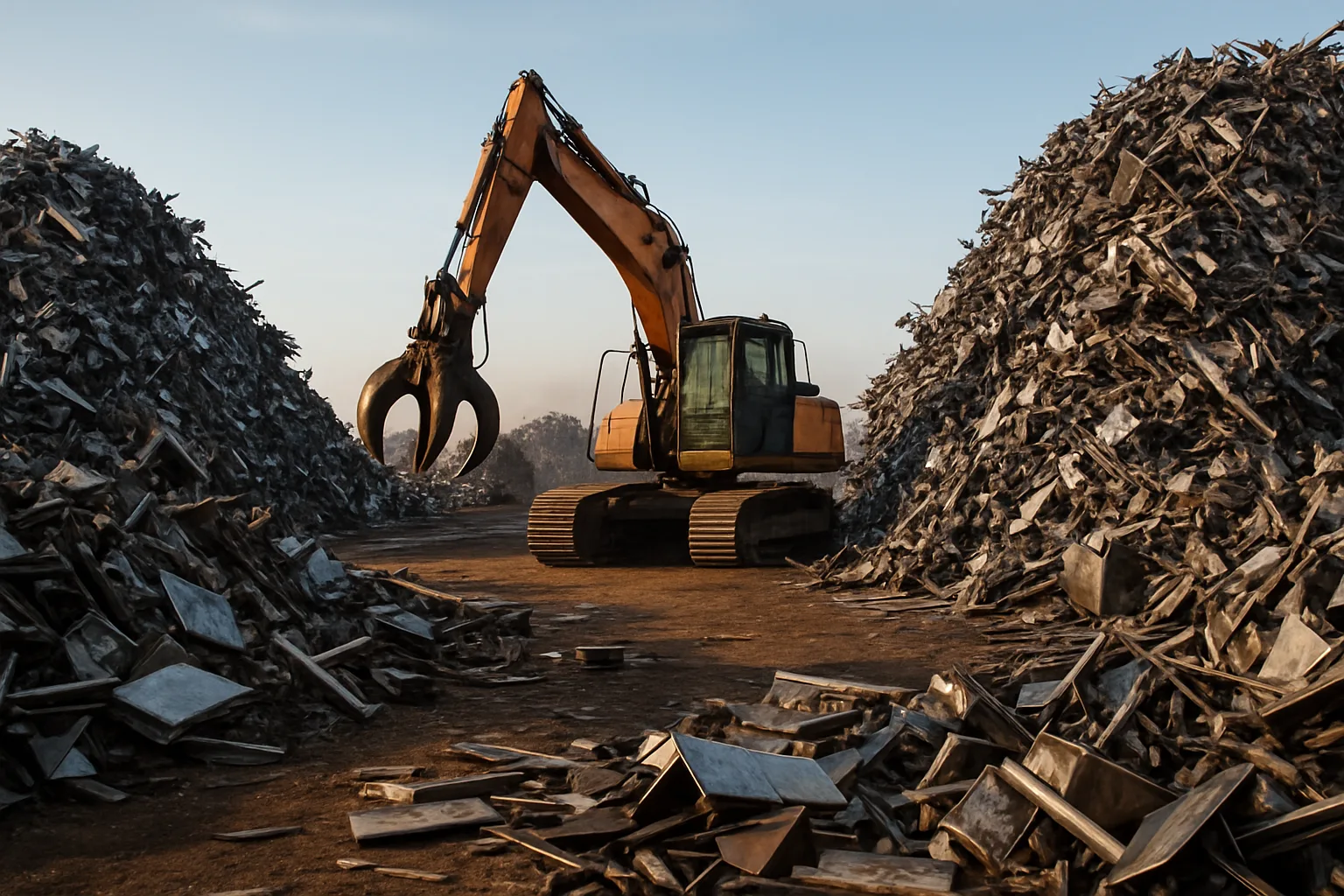
Most people toss steel and iron into the same mental bucket. They're both metal. They're both heavy. They both rust. But if you're trying to get a fair steel scrap price today, treating them the same will cost you money. The gap between what a yard pays for clean steel versus cast iron versus wrought iron can be significant — and if you don't know which material you're holding, you're negotiating blind.
This breakdown is for anyone in Canada — whether you're a Burnaby demolition crew stripping old machinery, a manufacturing facility in Hamilton offloading steel drops, or a homeowner with a rusted cast iron bathtub in the backyard. Know what you have. Know why it's priced differently. Then sell smarter.
---Steel and Iron Are Not the Same Material
Both steel and iron are iron-based metals, but that's where the similarity ends. The difference comes down to carbon content. Iron — specifically cast iron — contains a higher carbon content, typically over 2%. Steel contains less than 2% carbon. That small difference changes everything about how the metal behaves, how it's processed, and how much a recycler will pay for it.
Cast iron is brittle. It's heavy. It doesn't bend — it breaks. You'll find it in old radiators, engine blocks, wood stove inserts, cast iron cookware, and vintage plumbing. Steel, on the other hand, is more flexible, more workable, and in far higher industrial demand. Structural beams, auto frames, appliances, rebar — that's steel country.
Here's a quick breakdown of common materials in each category:
- Cast Iron: Engine blocks, radiators, old pipes, wood stoves, cookware, manhole covers
- Wrought Iron: Decorative fencing, old gates, ornamental railings (rarer, often lower volume)
- Structural Steel: I-beams, channel iron, plate steel, steel pipe
- Sheet Steel: Appliance housings, metal cabinetry, ducting
- Prepared Steel: Sorted, cut-down steel drops — often the highest-value ferrous category
When you're looking at scrap metal prices today, each of these categories trades at a different rate. Prepared steel typically commands more than unprepared mixed ferrous. Cast iron usually prices below structural steel. Knowing the difference before you call a yard — or list on a platform — changes the conversation entirely.
---Why Steel Scrap Commands Higher Prices Than Iron
The core reason steel trades higher than cast iron is recyclability and demand. Steel melts cleaner, recycles more efficiently, and is consumed in enormous quantities by steel mills across North America. The electric arc furnace (EAF) process, which dominates North American steel production, requires high-quality ferrous scrap as a primary feedstock. Clean, sorted steel is exactly what mills want.
Cast iron, by contrast, has a higher silicon and carbon content that makes it more difficult to process in standard steelmaking operations. It's not worthless — foundries actively buy it, and demand does exist — but the market is narrower and the price reflects that. A yard in Burnaby or anywhere across British Columbia will typically offer a lower per-tonne rate for cast iron than for clean structural steel or prepared shred.
A few other factors push steel values up:
- Volume: Steel trades in large quantities. Mills buy by the truckload and trainload. The more you have, the better your negotiating position.
- Grade clarity: Yards pay more for material they don't have to sort. Clean, separated steel loads command a premium over mixed ferrous.
- Global demand signals: Steel pricing is tied to global markets. When construction activity rises in Asia or infrastructure spending increases in North America, ferrous scrap prices tend to follow.
- Contamination: Steel mixed with non-ferrous metals, wood, or rubber gets downgraded fast. Contamination is one of the biggest value killers in scrap.
If you're a business generating regular steel drops — a fab shop, a demolition contractor, a maintenance facility — this is worth paying attention to every single month. The steel scrap price today isn't fixed. It moves with the market, and so should your selling strategy.
---Real-World Price Discovery: The Old Way vs. the SMASH Way
Here's a scenario that plays out constantly across Canada. A yard operator or industrial seller has a load of mixed ferrous — some structural steel, some cast iron, maybe a few engine blocks. They call their regular buyer. The buyer gives them a number. The seller takes it, because what else are they going to do?
That number may be fair. It may not be. Without competition, you genuinely don't know. You're pricing a load based on one data point from one buyer who has every incentive to buy low.
Platforms like the SMASH Recycling auction platform exist specifically to fix this problem. SMASH puts your documented loads — with photos, weights, material grades, and packing lists — in front of multiple vetted buyers simultaneously. Those buyers compete. The result is actual price discovery, not a number handed to you by someone with the leverage advantage.
For sellers in Burnaby and across British Columbia, this matters even more. Depending on your location, your regular buyer pool may be small. A yard in a mid-sized market doesn't always have five qualified buyers to call on a Thursday afternoon. SMASH expands that buyer pool without requiring you to do the legwork yourself. You document the load, it goes to auction, buyers compete on their own time.
To sell your scrap metal in Canada on SellYourScrap through the SMASH network, you don't need a subscription or an ongoing contract. The model is simple: no sale, no fee.
---How to Identify and Separate Steel vs. Iron Scrap Before You Sell
Getting paid correctly starts with showing up with material that's properly identified. Yards and buyers hate ambiguity. If you walk in with a mixed load and you can't tell them what's in it, they'll price for the worst-case scenario. Here's how to tell the difference in the field.
The magnet test helps but doesn't tell the whole story. Both steel and iron are magnetic, so you can't use a magnet to separate them. What you're looking for instead are visual and physical cues:
- Cast iron: Dull grey fracture surface when broken. Brittle — snaps rather than bends. Rough texture. Heavier feel for its size.
- Steel: Bright, slightly shiny fracture surface. Bends before it breaks. Smoother surface finish.
- Wrought iron: Fibrous internal structure visible at a break. Relatively rare in modern scrap flows.
On the prep side, here's what moves the needle on price:
- Separate cast iron from steel before you load. Even rough sorting improves your position.
- Remove non-ferrous attachments — copper fittings, aluminum brackets, rubber hoses. Mixed material drives down ferrous grades.
- Cut oversize pieces down if you can. Most buyers have size specs; oversized material often trades at a discount.
- Photograph everything. Whether you're selling locally in Burnaby or listing through a B2B scrap metal marketplace, documentation builds buyer confidence and supports your claimed grades.
If you're a regular seller, building this habit into your operation pays dividends over time. Buyers learn to trust your loads. That trust has real cash value.
---Where Scrap Metal Prices Today Are Heading for Ferrous in 2026
The ferrous market in 2026 is being shaped by a few intersecting forces. Infrastructure spending across North America continues to pull demand for structural steel upward. At the same time, volatility in global shipping and energy costs creates unpredictable swings in what mills will pay from month to month.
For sellers in markets like scrap metal prices Hamilton or urban cores — scrap metal downtown Vancouver, Toronto, or Calgary — the practical reality is that prices shift often enough that a deal you made last month may not reflect what the market will bear this month. Checking current rates before you sell isn't optional. It's table stakes.
This is one reason transparent auction-based platforms are gaining traction with serious sellers. When you put a load to auction, you're not relying on your memory of last month's price or a buyer's assurance that "the market's soft right now." The bids tell you what buyers are actually willing to pay today. That's real price discovery.
To get a fair price for your scrap today, the starting point is knowing your material, knowing your market, and using tools that give you access to genuine competition rather than a single-buyer conversation.
Whether you're clearing a demolition site in Burnaby, selling steel drops from a fabrication shop in British Columbia, or managing ferrous inventory across multiple locations, the fundamentals are the same: documented loads, separated grades, and competitive bids beat a phone call to one buyer every time. You can also explore Canadian scrap metal guides to sharpen your understanding of how different metals — copper, aluminum, steel, catalytic converters — are valued and sold.
Ready to stop guessing what your ferrous is worth? Sell your scrap metal in Canada by requesting a pickup at sellyourscrap.ca — and let competition do the work for you.
Follow SMASH on LinkedIn for ongoing scrap metal market insights, industry updates, and tips for getting more out of every load you sell.
---Frequently Asked Questions
Q: What is the steel scrap price today in Canada?
Steel scrap prices fluctuate based on global market conditions, mill demand, and material grade. There's no single fixed price — rates vary by region, load quality, and timing. Always check with a local yard or list through a competitive platform to see what buyers will actually pay for your specific material before committing to a sale.
Q: Is cast iron worth more or less than steel scrap?
Generally, cast iron trades at a lower per-tonne price than clean structural steel or prepared steel grades. Cast iron has a narrower buyer base and is more difficult to process in standard steelmaking. It still has value — especially in larger volumes — but don't expect steel prices when you're selling iron.
Q: Where can I sell scrap metal in Burnaby, British Columbia?
Burnaby and the broader Metro Vancouver area have active scrap buyers, but getting multiple bids isn't always easy through traditional channels. Platforms like SMASH connect Burnaby sellers with vetted buyers across the region, so your load gets real competition rather than a single take-it-or-leave-it offer. Check sellyourscrap.ca to get started.
Q: How do I know if my scrap is steel or iron before I sell?
Both are magnetic, so a magnet won't separate them. Look at the fracture surface: cast iron shows a dull grey, brittle break while steel shows a brighter, more ductile fracture. Physical behavior is your best clue — steel bends, cast iron snaps. If you're unsure, ask the yard before you load so you can sort accordingly.
Q: Does separating steel from cast iron actually change what I get paid?
Yes, meaningfully so. Mixed ferrous loads often get priced to the lowest-grade component. When you separate clean steel from cast iron, each stream can be valued on its own merits. A few hours of sorting on a large load can return a noticeable difference in your final cheque — especially on volumes over a tonne.
---Disclaimer: Scrap metal prices fluctuate based on market conditions, material grade, and buyer demand. All pricing references in this article are general in nature. Check current rates before selling any material.