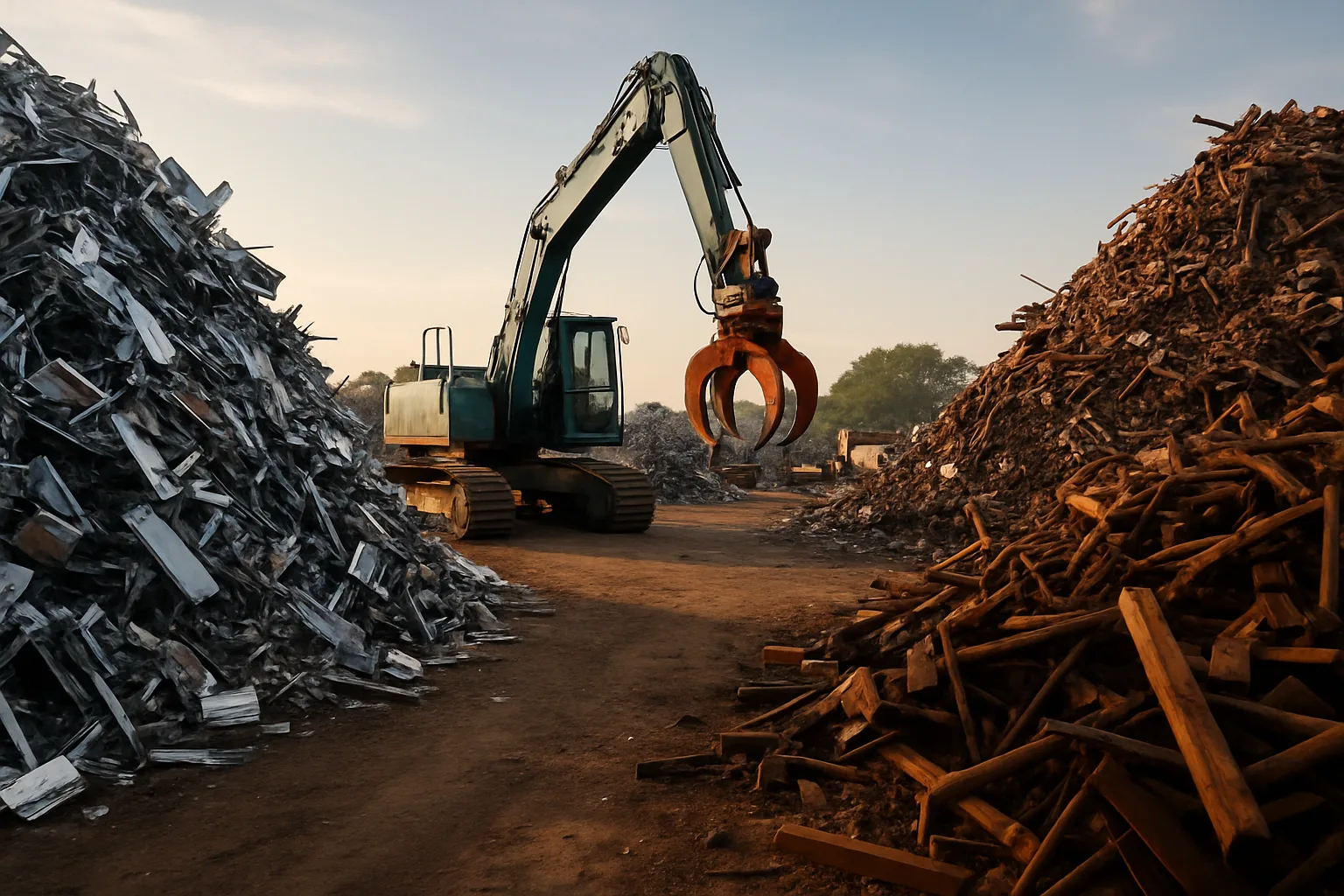
Most people selling scrap metal focus on copper — and for good reason. But if your yard has a mix of steel and iron sitting around, you're leaving money on the table by not understanding how these two materials are priced differently. Knowing the gap between iron and steel scrap values isn't just useful trivia. It directly affects how you sort, document, and sell your loads.
This guide breaks down the real differences between steel and iron scrap, why buyers price them the way they do, and how sellers in Surrey and across British Columbia can use that knowledge to get a fairer return — whether you're moving a single load or running a regular operation.
Steel vs. Iron: They're Not the Same Material
A lot of people use "steel" and "iron" interchangeably. In everyday conversation, that's fine. In scrap metal recycling, it costs you money. Steel and iron are chemically distinct materials with different processing requirements, different markets, and different price points.
Iron — specifically cast iron or pig iron — is a brittle metal with high carbon content (typically 2–4%). You'll find it in engine blocks, old pipes, radiators, bathtubs, and heavy machinery components. It's harder and heavier than many steels, but it's also more brittle and can't be reshaped easily without re-melting.
Steel is iron alloyed with carbon at lower concentrations (usually under 2%), plus other elements like manganese, chromium, or nickel depending on the grade. Steel is more workable, more versatile, and dominates modern construction and manufacturing. That versatility is a big reason why steel scrap is processed differently — and priced differently — than iron.
At the yard level, common steel scrap includes:
- Structural beams and rebar
- Sheet metal and auto bodies
- Appliance steel (washers, dryers, ranges)
- Stainless steel (priced separately and much higher)
- Prepared plate and structural (P&S)
Cast iron is typically sold separately and often commands a slightly lower price per pound than clean steel grades — though this varies significantly by market conditions and buyer demand.
Why the Price Difference Exists Between Iron and Steel Scrap
The price gap between iron and steel scrap comes down to a few factors: processing cost, market demand, and what the end mill or foundry can actually do with the material.
Mill chemistry matters. Electric arc furnaces (EAFs), which dominate North American steel production, are picky about what goes in. Mixed or contaminated loads force mills to adjust their chemistry — and that adjustment costs money. Clean, sorted steel loads get better prices because they reduce that burden. Cast iron, with its higher carbon content, can throw off mill chemistry if it ends up in the wrong place.
Cast iron has a narrower market. Iron foundries are still active, but there are fewer of them than EAF mills. That limited buyer pool affects price. Sellers with large quantities of cast iron — engine blocks, manhole covers, old boilers — are typically working with a smaller set of buyers than those selling clean structural steel or shredded auto bodies.
Contamination kills value. Iron and steel are both ferrous metals, but a load of shredded auto steel that's heavy with cast iron content will typically get docked at the scale. Separation matters. If you're processing mixed ferrous scrap, sorting iron from steel isn't just good practice — it's dollars per ton on your final settlement.
Where Copper Scrap Prices in Surrey Fit Into the Bigger Picture
You might notice the primary focus here is copper scrap prices Surrey — and yes, there's a reason copper keeps coming up even in a steel-and-iron conversation. Copper is the benchmark non-ferrous metal. Its price drives buyer behavior, affects freight economics, and often sets the tone for how aggressively buyers bid on mixed loads that include non-ferrous alongside ferrous materials.
When copper prices are strong, buyers in Surrey tend to be more aggressive across the board — including on ferrous loads — because they're in a growth posture. When copper softens, margins tighten, and buyers get pickier about what they'll pay for steel and iron. Understanding scrap metal prices Surrey means understanding how non-ferrous benchmarks ripple into ferrous pricing.
For sellers in Surrey and across British Columbia, this means watching copper isn't just for those with copper wire or tubing to move. It's a signal for the entire scrap market's mood. If you're sitting on a mixed load — some copper, some steel, some cast iron — knowing that relationship helps you time your sale and approach buyers with realistic expectations.
If you want to sell your scrap metal in Canada on SellYourScrap, sorting your materials before listing them is one of the fastest ways to improve what you get paid. Sorted loads, documented properly with photos and weights, give buyers confidence — and confident buyers bid higher.
How to Sort and Document Ferrous Scrap the Right Way
Sorting sounds simple. In practice, most small-to-mid-size sellers skip it — and leave money behind. Here's what actually matters when you're preparing iron and steel scrap for sale.
Separate by grade, not just by "metal type." Steel itself has multiple grades that sell at different price points:
- #1 Heavy Melt (HMS 1): Clean, uncoated steel, 1/4" or thicker, cut to specific lengths. Preferred by most mills.
- #2 Heavy Melt (HMS 2): Thinner gauge, lighter material, may include some galvanized. Lower price than HMS 1.
- Shredded scrap: Processed mixed steel, often from auto shredding. Prices vary by regional demand.
- Cast iron: Sold separately. Typically priced differently from HMS grades.
- Stainless steel: Priced significantly above carbon steel grades — never mix it in.
Document everything before the load leaves your site. This means photos of the sorted piles, weights from your own scale if you have one, and a clear packing list or bill of lading (BOL) that specifies each grade and estimated tonnage. Good documentation protects you at the settlement and builds credibility with buyers — especially on a sell your scrap metal on SMASH Recycling platform where multiple vetted buyers are competing on your listed load.
Check for contamination before you sort. Copper wiring, aluminum brackets, plastics, and fluids (oil, coolant) all count against you at the yard. Strip attachments before your load gets weighed. That extra 30 minutes of prep work often comes back multiplied in your final settlement check.
Using a B2B Scrap Metal Marketplace to Get Real Price Discovery
Here's the old way: you call one buyer, get one price, accept it or don't — usually you do, because you don't have time to make five more calls. That's not price discovery. That's just taking whatever's offered.
A B2B scrap metal marketplace like SMASH changes the dynamic. Instead of one buyer, you get multiple vetted buyers competing for your load. That competition — even on ferrous materials like HMS steel or cast iron — can reveal what the market is actually willing to pay, not just what one buyer wants to offer on a slow Tuesday.
For sellers in Surrey dealing in regular ferrous volumes, this matters. If you're moving 10 to 20 tons of mixed steel and iron monthly, the difference between one buyer's offer and a competitive bid situation adds up fast. SMASH handles the documentation side too — inventory tools, photo documentation, serial tracking where relevant — so your listings show buyers exactly what they're bidding on.
You can also explore Canadian scrap metal guides to get a better sense of how different materials are priced and what prep steps matter most before you list.
The platform doesn't charge subscription fees. It wins when you win. That alignment matters — especially when you're dealing with commodity markets that shift week to week.
What Surrey Scrap Sellers Should Know Before Their Next Load
Surrey is one of the most active industrial areas in British Columbia, with a dense mix of construction, light manufacturing, and vehicle recycling operations. That means there's consistent ferrous scrap volume moving through the region — and consistent buyer interest in sourcing it locally to reduce freight costs.
If you're selling iron and steel scrap out of Surrey, a few things to keep in mind:
- Know your grades before you call anyone. Show up knowing what you have — HMS 1, HMS 2, cast iron, stainless — and you immediately sound like a seller worth working with.
- Don't mix ferrous and non-ferrous in the same load. Copper pipe, aluminum trim, and steel in the same bin gets you one price for the lowest-value material in the mix.
- Watch the copper market as a leading signal. Copper scrap price movements often preview where ferrous sentiment is heading in the following weeks.
- Use competition, not hope, to price your load. Listing on a platform with multiple buyers beats calling one yard and hoping for the best.
- Get a pickup scheduled, not just a quote. A quote without logistics is just a number. Lock in the date.
If you need help getting started, Surrey scrap metal services are available to connect you with the right buyers and help you move your material efficiently.
Whether you're a first-time seller trying to clear a job site or a regular operator looking to tighten up your scrap program, the process is the same: sort well, document properly, and get your load in front of more than one buyer. If you're ready to get a fair price for your scrap today, the tools exist to make that happen without the guessing game.
Sell your scrap metal in Canada — request a pickup at sellyourscrap.ca and let competition do the work for you.
Frequently Asked Questions
Q: Is cast iron worth more or less than steel scrap?
Generally, cast iron sells for less per pound than clean steel grades like HMS 1, because it has a narrower buyer market and can create chemistry challenges at electric arc furnaces. However, prices fluctuate — always check current rates before you sell. Sorting your iron from your steel is the best way to make sure each material gets priced fairly.
Q: What are copper scrap prices in Surrey right now?
Copper scrap prices in Surrey — like all scrap metal prices — change based on global commodity markets, local buyer demand, and material grade. We don't publish live prices here because they shift frequently. For current rates, contact a local yard or list your load on a platform like SMASH where vetted buyers bid competitively. Always get a quote close to your sale date, not weeks in advance.
Q: How do I know which grade of steel scrap I have?
The two most common grades for sellers are HMS 1 (heavy melt steel, 1/4" thick or more, uncoated, cut to spec) and HMS 2 (lighter gauge, may include galvanized or coated material). If you're unsure, take photos of your material and describe it to a buyer before they arrive. Platforms like SMASH let you include photos and documentation in your listing so buyers can assess the grade before bidding.
Q: Can I sell mixed ferrous scrap, or does it need to be sorted?
You can sell mixed ferrous scrap, but sorted loads consistently get better pricing. Mixed loads get priced at the lowest grade in the mix — buyers aren't going to pay HMS 1 rates if the load also contains cast iron, thin gauge, or contaminated material. Spending time to separate grades before listing your load nearly always pays off in a higher settlement.
Q: Does SMASH operate in Surrey and British Columbia?
Yes — SMASH serves sellers and buyers across North America, including British Columbia. Sellers in Surrey can list ferrous and non-ferrous loads on the platform, reach vetted buyers, and benefit from the competitive auction format without paying subscription fees. The platform handles documentation, auto-invoicing, and GST/HST compliance, so the paperwork side is covered.
Disclaimer: Scrap metal prices fluctuate based on commodity markets, regional demand, and material grade. All price references in this article are general in nature. Always verify current rates with a buyer or platform before selling your load.
Follow SMASH on LinkedIn for ongoing scrap metal market updates, industry insights, and tips for getting more from every load you sell.