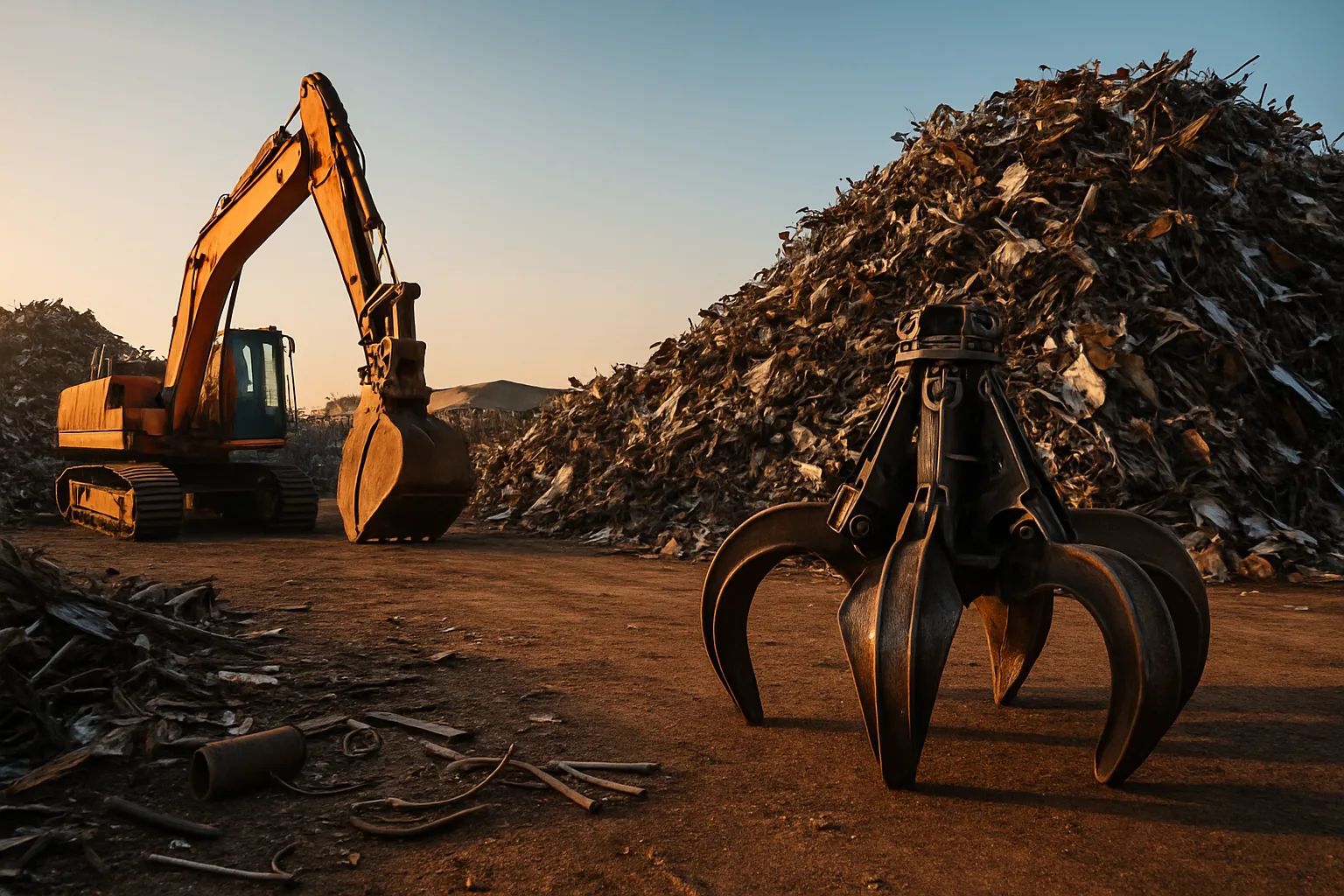
Most small-scale scrap collectors leave money on the table — not because they're doing it wrong, but because nobody told them the rules. If you're hauling copper, aluminum, or steel to your local yard without a strategy, you're guessing at scrap metal prices today and hoping for the best. That's the old way. Here's how to do it smarter.
Whether you're clearing out a garage in Abbotsford, stripping a renovation job, or picking up loads on the side, the difference between a decent payout and a great one comes down to preparation, timing, and knowing where to sell. Let's break it down.
---1. Know What You Have Before You Show Up
Walking into a scrap yard with an unsorted pile is the fastest way to get paid bottom dollar. Yards price mixed loads conservatively — they factor in their sorting time. You pay for that with a lower price per pound.
Separate your materials before you go. Keep copper away from aluminum. Pull steel off the pile. Strip wire if it makes sense for the volume you have. The more work you've done, the less room a buyer has to discount you.
- Bare bright copper — highest grade, stripped clean of insulation
- #1 copper — clean pipe and bus bar, no solder
- #2 copper — pipe with fittings, painted or soldered
- Aluminum — separate cast, extrusion, and sheet grades
- Steel and iron — keep it away from non-ferrous to avoid contamination discounts
Five minutes of sorting can mean a meaningful difference on every load. It adds up fast when you're running regular pickups.
---2. Track Scrap Metal Prices Today — Don't Assume
Metal prices move. Copper can swing by several cents a pound in a week based on global demand, trade policy, and energy markets. Aluminum follows its own cycles. If you're showing up to sell based on what prices were a month ago, you may be selling into a dip without knowing it.
Check commodity prices before every significant load. Use the London Metal Exchange (LME) as a benchmark, then cross-reference with what local yards are actually paying — those two numbers are rarely the same. Yards factor in processing costs, transportation, and margin. But the LME tells you which direction prices are heading.
Platforms like find the best price for your scrap in Canada use live buyer competition to reflect actual market conditions — not one yard's posted price. That's price discovery in action. More buyers bidding on your material means the number you land on is closer to what the market actually thinks it's worth.
Disclaimer: Scrap metal prices fluctuate daily based on commodity markets, grades, and buyer demand. Always check current rates before selling.
---3. Don't Rely on One Buyer — Use Competition to Your Advantage
This is the biggest mistake small collectors make. You call the same yard every time because it's familiar. Maybe they're friendly. Maybe it's just convenient. But one buyer means zero competition, and zero competition means you have no leverage.
Think about it this way: if only one person is bidding on your load, what's stopping them from lowballing you? Nothing. The single-buyer model benefits the buyer, not the seller.
A scrap metal auction platform flips that dynamic entirely. When multiple vetted buyers compete for your material, prices reflect what your load is actually worth — not what one yard decides to offer that day. SMASH operates exactly this way. You list your inventory, buyers compete, and you see real offers side by side. No phone-around guessing. No wondering if you got a fair number.
If you're selling regularly in Abbotsford or anywhere in British Columbia, getting multiple eyes on your load is one of the simplest things you can do to improve your average price per load.
---4. Document Your Loads Properly — It Pays Off
Photos, weights, and material descriptions aren't just paperwork. They're leverage. A well-documented load gives buyers confidence. Confident buyers bid higher. That's the direct link between documentation and earnings.
Here's what to capture before every load:
- Photos — clear shots of the material, sorted by grade. Show the quality.
- Weight estimates — even rough figures help buyers plan. Use a bathroom scale for smaller loads or ask your yard for a ticket copy.
- Grade descriptions — use industry-standard grading language. Don't just say "copper wire" — say "#2 insulated copper wire, mixed gauge."
- Location and availability — when is the load ready? Can you hold it? Is pickup accessible?
SMASH's inventory tool is built for exactly this — it lets you log material with photo documentation, grades, and weights in one place. Buyers see a professional, complete picture of what they're bidding on. That documentation doesn't just help you sell this load. It builds a track record that makes future loads easier to move.
---5. Time Your Sells Around Market Conditions — Not Just Convenience
Selling scrap when it's convenient for you is understandable. But if you can hold a load for a week or two, timing can matter. Copper prices, for example, tend to respond to manufacturing data, energy transition news, and global supply disruptions. Aluminum reacts to energy costs and automotive demand cycles.
You don't need to be a commodities trader. But a basic awareness of which way prices are trending can inform whether you sell now or wait. If copper just dropped 10 cents per pound and the trend looks like a correction, holding a hundred pounds of bare bright for even a few days could be worth it.
The flip side is also true. If you're seeing a spike and you have a large volume ready, don't wait for the top — sell into strength. Timing the absolute peak is impossible. Selling in a clear uptrend is not.
For sellers in Abbotsford and across explore Canadian scrap metal guides to stay current on metal market trends that affect your local pricing.
---6. Understand the Full Cost of Selling — Including Your Time
Here's a calculation most small collectors skip: what does it actually cost to haul a load to the yard? Factor in fuel, your time, vehicle wear, and the value of sorting labor. If you're driving 30 minutes each way for a 60-pound aluminum load, the net return per hour might surprise you — and not in a good way.
This isn't an argument against selling small loads. It's an argument for batching them. Accumulate material until you have a load that justifies the trip. Or look for services that come to you — sell your scrap metal in Canada on SellYourScrap for options that include pickup, which changes the math entirely on smaller volumes.
Scrap metal recycling in British Columbia has real infrastructure built around pickup and processing. You don't always have to bring the load to the buyer. When buyers compete for your material and one of them handles logistics, that's a meaningful upgrade to your operation — even if you're just a part-time collector.
Also worth knowing: for catalytic converters, cores, and other high-value items, always get a serial number or VIN lookup done before you sell. These items have wide price ranges depending on the exact unit. Selling blind on cats is like selling copper at the #2 rate when you're holding bare bright. SMASH's platform supports serial tracking for exactly this reason.
---7. Build Relationships With Vetted Buyers — Not Just Any Buyer
Not every scrap buyer operates the same way. Some yards are consistent, transparent, and pay on time. Others change their posted prices arbitrarily, apply surprise deductions, or pay slowly. When you're running a small operation, cash flow matters. Late payment or unexpected dock-offs on a load can wipe out your margin.
Working with vetted buyers — buyers who have been verified, reviewed, and held to a standard — reduces that risk significantly. This is one of the core reasons SMASH screens the buyers on its platform. You're not posting your load to the open internet and hoping for the best. Every buyer in the network has gone through a vetting process.
If you're looking for consistent, fair deals on your loads, get a fair price for your scrap today and connect with buyers who actually compete for your material. That's a different experience than calling around hoping someone picks up.
For local sellers, checking out Abbotsford scrap metal services is a practical starting point — it puts you in front of buyers who operate in your area and understand local logistics.
---Put It All Together
Small-scale scrap collecting is a real business — or a serious side income — if you treat it like one. Know your grades. Watch scrap metal prices today. Document your loads. Stop relying on one buyer. Batch your loads to make the economics work. And use platforms that create real competition for your material.
SMASH exists because the single-buyer phone call model was never fair to sellers. No subscription fees, vetted buyers, live competition, and transparent pricing — that's how the modern scrap market should work. Whether you're hauling loads out of Abbotsford once a month or running regular pickups across the Lower Mainland, the tools exist to help you earn what your material is actually worth.
Ready to stop guessing? Sell your scrap metal in Canada — request a pickup at sellyourscrap.ca and see what real buyer competition looks like for your material.
---Frequently Asked Questions
Q: What are scrap metal prices today in Abbotsford, BC?
Scrap metal prices change daily based on commodity markets, material grades, and local buyer demand. The best way to get an accurate current price is to check with multiple buyers or use a platform like SMASH where buyers compete on your specific load. Prices for copper, aluminum, and steel vary significantly by grade, so sorting your material before getting a quote matters.
Q: How do I find a scrap metal buyer near me in Abbotsford?
You can search for local yards directly, but the better move is to use a platform that brings vetted buyers to you. SMASH connects sellers across British Columbia with verified buyers who compete for loads — which often produces better results than cold-calling a single yard. Check out local Abbotsford scrap metal services for pickup options in your area.
Q: Is it worth sorting scrap metal before selling?
Yes — almost always. Sorted loads get graded more accurately and buyers can bid with more confidence, which typically leads to stronger offers. Mixed or contaminated loads get priced conservatively because the buyer has to account for their own sorting time. Even basic separation of copper, aluminum, and steel makes a real difference in your payout.
Q: What scrap metals are worth the most right now?
Copper consistently commands the highest prices among common scrap metals — bare bright copper and #1 copper are the top grades. Catalytic converters can be extremely valuable depending on the specific unit, which is why serial tracking matters. Aluminum and stainless steel are mid-tier but worth separating carefully. Always verify current market rates before selling, as prices fluctuate.
Q: Do I need a lot of scrap to use a platform like SMASH?
Not necessarily — but it helps to have enough volume to make logistics work. Batching smaller loads until you have a meaningful quantity is a common strategy for small collectors. SMASH is designed for commercial volumes, but SellYourScrap.ca offers options for a range of load sizes, including pickup services that make smaller volumes practical to move.
---Stay sharp on scrap metal market trends — follow SMASH on LinkedIn for industry updates, pricing insights, and news from the North American scrap market.