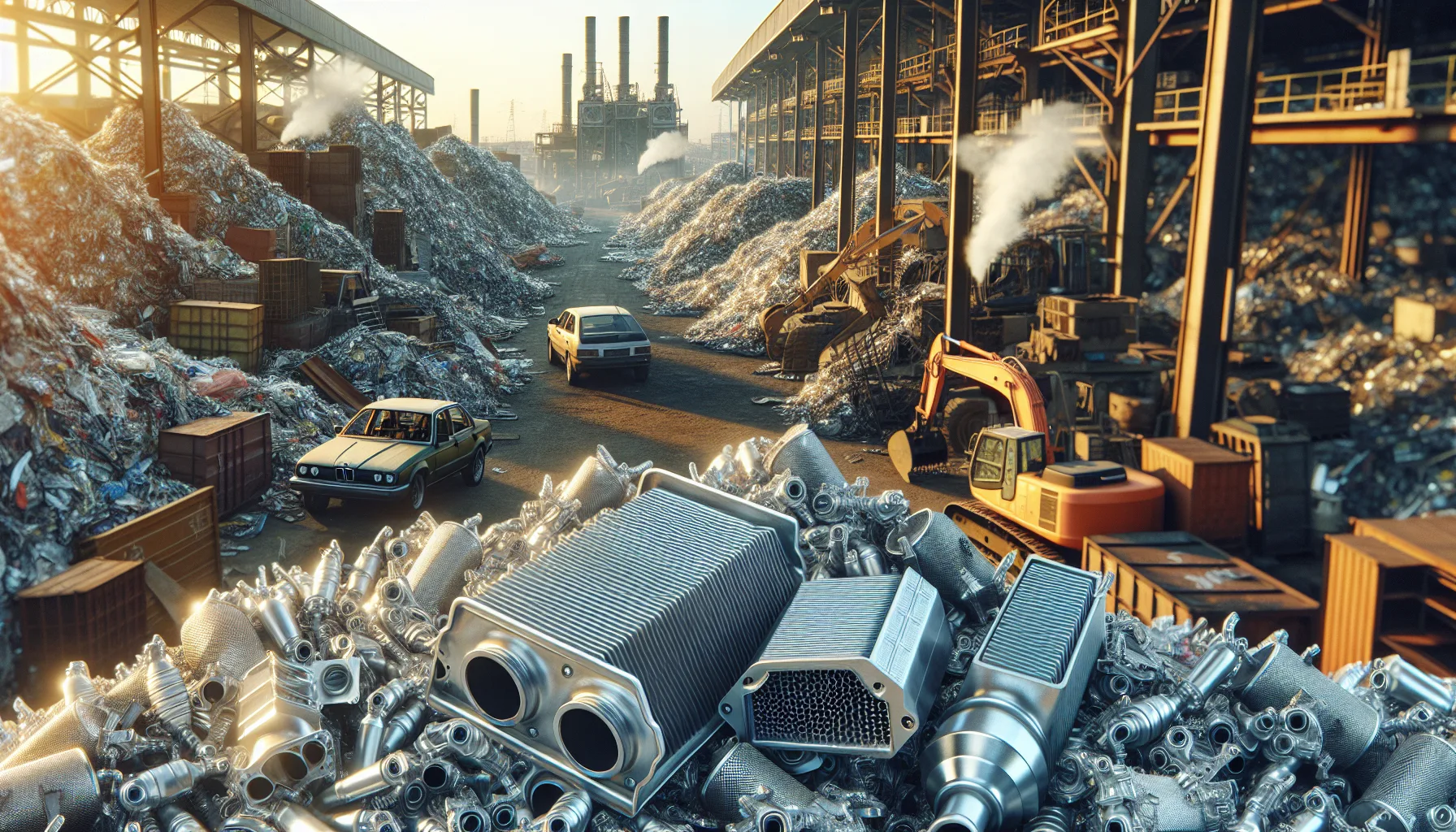
The aluminum scrap price today reflects broader market dynamics, but many Canadian metal recyclers don't realize that catalytic converter recycling operates on completely different principles. While aluminum prices fluctuate based on supply chains and industrial demand, catalytic converters contain precious metals like platinum, palladium, and rhodium — creating a specialized recycling market worth billions globally.
Understanding how catalytic converter recycling works reveals why these automotive components command premium prices compared to standard scrap metals. The process involves sophisticated recovery techniques and specialized facilities that can extract valuable precious metals efficiently.
The Science Behind Catalytic Converter Recycling
Catalytic converters contain a ceramic honeycomb structure coated with precious metals that serve as catalysts for reducing harmful emissions. The recycling process begins with careful dismantling to preserve the catalyst-coated substrate. Unlike recycling aluminum or copper, catalytic converter processing requires specialized equipment and expertise.
Professional recycling facilities use high-temperature furnaces to process the ceramic substrate. This pyrolysis process separates the precious metals from the ceramic base material. The recovered metals undergo further refining through chemical processes to achieve the purity levels required for industrial applications.
The complexity of this process explains why catalytic converter recycling commands higher prices per unit compared to standard scrap metals. While you might check the aluminum scrap price today and see relatively stable values, precious metal markets experience more dramatic price swings based on mining supply, automotive demand, and economic factors.
Why Catalytic Converter Prices Vary Dramatically
Several factors create significant price variations in catalytic converter recycling that don't affect other scrap metals. Vehicle make and model determine the type and quantity of precious metals used in manufacturing. Luxury vehicles and diesel trucks typically contain higher concentrations of valuable catalysts.
Market demand for platinum, palladium, and rhodium fluctuates based on automotive production schedules and industrial applications. Mining disruptions in South Africa and Russia — the primary sources of these metals — can cause dramatic price spikes. Economic uncertainty often drives investors toward precious metals, further affecting prices.
Geographic location also impacts pricing. Urban centers with established recycling infrastructure often offer better rates than rural areas. In British Columbia, facilities in Vancouver and surrounding regions may provide different pricing than smaller operations. This geographic variation doesn't typically affect aluminum or steel recycling to the same degree.
Age and condition of the catalytic converter influence value significantly. Newer converters from hybrid vehicles often contain higher precious metal concentrations. Damaged or contaminated units may require additional processing, reducing their market value.
Best Scrap Metal Prices Chilliwack: Understanding Local Market Factors
Chilliwack's position in the Fraser Valley creates unique opportunities for scrap metal recycling. The city's proximity to Vancouver's major recycling facilities while maintaining lower operational costs can translate to competitive pricing for sellers. Local recyclers serving Chilliwack often provide sell your scrap metal in Canada on SellYourScrap services that reflect these regional advantages.
Transportation costs significantly impact scrap metal pricing throughout British Columbia. Chilliwack's strategic location along major transportation corridors helps minimize these logistics expenses. This geographic advantage benefits local sellers seeking the best scrap metal prices Chilliwack has to offer.
The agricultural and industrial base around Chilliwack generates steady scrap metal supply, creating established collection and processing networks. Platforms like SMASH make it easier for local sellers to access competitive bidding from multiple recyclers, ensuring fair market pricing for their materials.
Seasonal factors also influence local pricing. Agricultural equipment upgrades during spring and fall can increase scrap metal availability, potentially affecting local market rates. Understanding these patterns helps sellers time their transactions for optimal returns.
How to Sell Scrap Metal Online in Canada
Digital platforms have revolutionized scrap metal sales across Canada, making it easier to compare prices and find buyers. Online marketplaces connect sellers directly with certified recyclers, eliminating traditional middleman markups. This direct access often results in better pricing than local walk-in transactions.
SMASH represents the evolution of scrap metal sales, providing transparent pricing and competitive bidding among verified buyers. The platform simplifies the selling process while ensuring sellers receive fair market value for their materials. Instead of calling multiple recyclers individually, sellers can access multiple quotes through a single interface.
Documentation requirements for online sales typically include photos, weight estimates, and material descriptions. High-quality images showing material condition and quantity help buyers provide accurate quotes. Detailed descriptions of metal types, contamination levels, and accessibility for pickup improve quote accuracy.
Payment processing through established online platforms provides security and reliability often lacking in casual transactions. Electronic payments, insurance coverage, and dispute resolution mechanisms protect both buyers and sellers throughout the transaction process.
Maximizing Returns on Scrap Metal Sales
Proper preparation significantly impacts scrap metal sale prices across all categories. Separating different metal types prevents cross-contamination that reduces overall value. Clean aluminum commands higher prices than mixed or contaminated materials, regardless of today's base aluminum scrap price.
Timing sales with market conditions can improve returns substantially. While most sellers focus on immediate needs, monitoring price trends helps optimize transaction timing. Explore Canadian scrap metal guides for current market insights and timing strategies.
Volume considerations affect pricing structures at most recycling facilities. Accumulating larger quantities before selling often results in better per-unit pricing. However, storage costs and security concerns must be balanced against potential price improvements from larger transactions.
Building relationships with multiple buyers creates competitive pressure that benefits sellers. Platforms like SMASH facilitate this competitive bidding without requiring individual relationship management with each potential buyer.
The Future of Scrap Metal Recycling in Canada
Technological advancement continues transforming scrap metal recycling across Canada. Automated sorting systems improve material recovery rates while reducing processing costs. These efficiency gains often translate to better pricing for sellers and more sustainable recycling practices.
Electric vehicle adoption will significantly impact catalytic converter recycling demand over the coming decade. However, the transition creates new opportunities in battery recycling and rare earth metal recovery. Canadian recyclers are adapting their processes to handle these emerging material streams.
Environmental regulations continue evolving, potentially affecting recycling operations and pricing structures. Stricter emissions standards may require additional processing equipment, while carbon pricing mechanisms could make recycling more economically attractive compared to primary metal production.
Digital integration will likely expand beyond current online sales platforms. Blockchain technology could provide supply chain transparency, while IoT sensors might enable real-time price tracking and automated sales triggers. These innovations promise to make scrap metal recycling more efficient and profitable for Canadian sellers.
Whether you're dealing with catalytic converters containing precious metals or checking the aluminum scrap price today for standard materials, understanding market dynamics helps maximize returns. Get a fair price for your scrap today through platforms that connect you with competitive buyers across Canada. Get competitive bids for your scrap in Canada and experience the benefits of transparent, competitive pricing.
Frequently Asked Questions
Q: How does catalytic converter recycling differ from regular scrap metal recycling?
Catalytic converter recycling involves extracting precious metals (platinum, palladium, rhodium) through specialized high-temperature processing, while regular scrap metal recycling typically involves melting and reforming base metals. This complexity makes catalytic converters more valuable per unit but requires specialized facilities for proper processing.
Q: Why do catalytic converter prices vary more than aluminum scrap prices?
Catalytic converter prices depend on precious metal markets, which are more volatile than base metal markets. Vehicle make, model, age, and condition significantly affect precious metal content, while aluminum scrap price today reflects more stable industrial supply and demand patterns.
Q: Where can I find the best scrap metal prices in Chilliwack?
The best scrap metal prices in Chilliwack come from comparing multiple buyers through online platforms like SMASH. Local recyclers may offer competitive rates, but digital platforms provide access to regional buyers and competitive bidding that often results in better pricing than single-source transactions.
Q: What factors affect scrap metal pricing in British Columbia?
Transportation costs, proximity to processing facilities, local supply and demand, and seasonal factors all influence scrap metal pricing in British Columbia. Urban centers typically offer better prices due to established infrastructure, while rural areas may face higher logistics costs that impact final pricing.
Q: How can I sell scrap metal online safely in Canada?
Use established platforms with verified buyers, proper insurance coverage, and secure payment processing. Document transactions with photos and descriptions, verify buyer credentials, and understand pickup procedures before agreeing to sales. Reputable platforms provide dispute resolution and buyer verification to protect sellers.
Ready to turn your scrap metal into cash at fair Canadian market prices? Sell your scrap metal in Canada — request a pickup at sellyourscrap.ca and discover how easy it is to get competitive quotes from verified buyers across the country.
Follow SMASH on LinkedIn for the latest industry updates and scrap metal market insights.