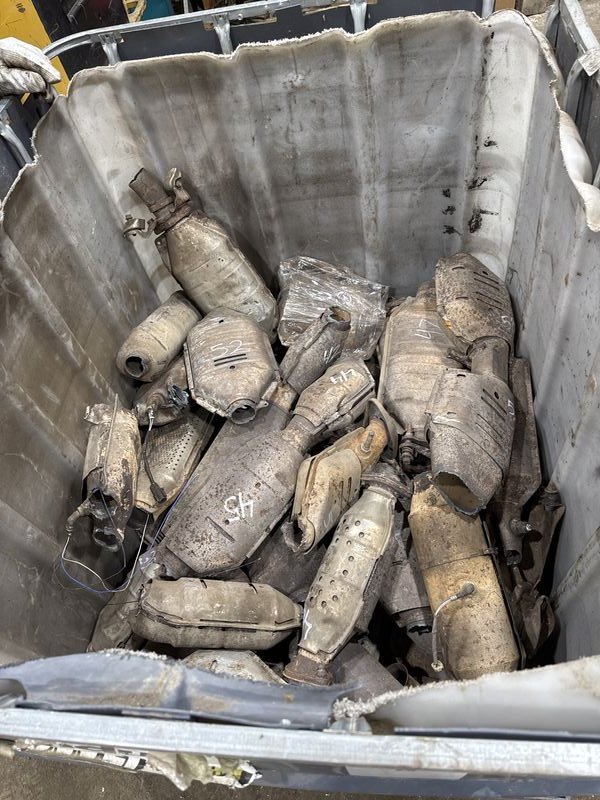
Why Your Catalytic Converter Is Worth More Than You Think — And How to Get Paid Fairly
Most people don't realize the small canister under their car is sitting on a small fortune. Catalytic converters contain platinum, palladium, and rhodium — three of the most volatile precious metals on the market. If you're trying to sell scrap metal near me Burnaby, understanding how cat recycling actually works puts serious money back in your pocket. Get it wrong, and you're leaving that money on the table.
This week's roundup breaks down the full process — from what's inside your cat to why the price you're quoted on Monday might look completely different by Friday. Whether you're a yard operator in Burnaby, a mechanic clearing out old stock in British Columbia, or someone who just pulled a busted converter off a trade-in, this is the context you need.
What's Actually Inside a Catalytic Converter
Strip away the steel shell, and you'll find a ceramic or metalite substrate coated with a thin layer of platinum group metals (PGMs). That's the part buyers actually want. The three main PGMs are platinum (Pt), palladium (Pd), and rhodium (Rh) — and their market values swing hard based on global commodity markets, automotive production trends, and industrial demand.
The exact PGM loading varies by vehicle make, model, engine type, and emission standard. A domestic half-ton truck cat looks nothing like a small import cat in terms of recoverable metal. That's why two converters that look identical on the outside can carry completely different values. Knowing what you have — down to the serial number — is the difference between a fair deal and a lowball offer.
- Platinum: Used more heavily in diesel converters. Demand is tied to diesel vehicle production, which has shifted significantly in recent years.
- Palladium: Dominant in gasoline converters. Prices have historically been more volatile than platinum, moving sharply with auto sector output.
- Rhodium: The smallest quantity but often the highest value per ounce. Rhodium prices can swing dramatically — hundreds of dollars in either direction — within weeks.
The substrate itself (ceramic or metalite) also affects recovery. Metalite substrates often yield higher PGM recovery rates in smelting, which means buyers price them differently. If your buyer isn't asking what type of substrate you have, they're probably not giving you an accurate quote.
How the Catalytic Converter Recycling Process Works
Once a converter leaves a yard or shop, it travels through a defined chain before those PGMs ever become usable again. Most cats are consolidated at regional collection points, sorted and graded by type, then shipped to a primary processor or smelter. The smelting and assaying process is what ultimately determines true PGM yield — and that takes time.
Here's the typical flow from your hands to final settlement:
- Collection and sorting: Cats are sorted by type — domestic, foreign, aftermarket, DPF, foil/metalite. Each category carries a different price tier.
- Decanning (optional): Some processors remove the substrate from the shell before shipping. This reduces freight weight and can accelerate processing.
- Sampling and assaying: The substrate is crushed, sampled, and sent for chemical analysis to determine exact PGM content. This is the most accurate pricing method but requires volume and time.
- Smelting and refining: The actual PGMs are extracted, refined to spec, and sold into commodity markets.
- Settlement: The seller receives payment based on assayed value, minus processing fees. Settlement timelines vary — sometimes weeks, sometimes longer for large lots.
For smaller sellers — a shop with a handful of cats or an individual with a few pulled from project vehicles — the process is simpler. Most recyclers buy cats outright at a quoted market price based on type, without going through full assay. That's faster, but it's also where pricing transparency matters most. You want to know your buyer is working from real market data, not a margin-padded internal price sheet.
Why Catalytic Converter Prices Vary So Much — Even Week to Week
If you've ever called two different recyclers and gotten wildly different quotes on the same cat, you've experienced firsthand why the scrap metal market frustrates so many sellers. The price variation isn't random — it's driven by several real factors that stack on top of each other.
Spot price movement in PGMs. Rhodium and palladium in particular have seen dramatic swings over the past several years. A spike or drop in spot price can move converter values significantly in a short window. If a buyer quoted you last week's rate today, you'd never know the difference — unless you're tracking the market yourself.
Buyer margin practices. Not every buyer passes market value through to the seller. Some build in large spreads between what they pay you and what they recover at the processor. Without competition, there's no pressure to tighten that margin.
Converter classification. Misclassifying a cat — calling a high-yield domestic a foreign small, for example — is one of the most common ways sellers lose money without knowing it. Visual identification alone isn't reliable. Serial numbers and verified databases give you ground truth.
Regional demand and freight. A recycler in Burnaby moving cats to a west coast processor is working with different logistics costs than a buyer in Ottawa routing material east. That affects how much of the recovered value makes it back to you. This is exactly why Canada's B2B scrap recycling marketplace matters — creating real buyer competition across regions helps surface what the market is actually willing to pay.
Volume and lot size. A single cat gets priced differently than a pallet of fifty. Buyers price volume more aggressively. If you're accumulating cats over time, waiting until you have a meaningful lot to move can shift your pricing tier significantly.
Disclaimer: Catalytic converter and PGM prices fluctuate daily based on commodity markets. Always verify current rates before selling.
How Competition Changes the Equation — The SMASH Approach
The old way of selling scrap cats looks like this: you call the one buyer you know, they quote you a number, you take it or walk. There's no benchmark, no second opinion, no pressure on the buyer to be sharp. That's how margin gets extracted from sellers who don't have time to shop around.
SMASH runs a different model. Instead of one phone call and one number, your material goes in front of vetted buyers who compete for it. That competition is what drives price discovery — not guessing, not hoping your buyer is being straight with you. When multiple qualified buyers see the same lot at the same time, the market sets the price. That's how it's supposed to work.
For catalytic converters specifically, SMASH's platform supports serial number tracking and photo documentation — so buyers see exactly what they're bidding on. No ambiguity about converter type. No classification disputes after the fact. A documented lot with clear photos and accurate identifiers gives buyers confidence to bid aggressively, because they know what they're getting.
If you're looking to sell your scrap metal in Canada on SellYourScrap, or you're a yard operator moving volume through a structured auction process, the transparency difference is real. More buyers, better data, and an auction format — that combination can help reveal what your material is genuinely worth in today's market.
What Burnaby and British Columbia Sellers Should Know Right Now
Catalytic converter theft remains a significant issue across British Columbia, and that's shaped how legitimate buyers operate in 2026. Recyclers in Burnaby and across the province are working within stricter documentation requirements — seller ID, vehicle ownership verification, and detailed records of converter origin are standard practice now, not optional.
That's not a barrier — it's a filter. Legitimate sellers with clean material and proper paperwork move through the process faster. If you've got cats from a mechanical shop, a fleet disposal, or your own vehicle work, you're exactly the kind of seller serious buyers want to deal with. Having your documentation organized ahead of time accelerates the transaction and protects you if questions come up later.
For individuals and small shops in Burnaby looking to get fair value, the path forward is straightforward: know what you have, document it properly, and don't accept the first number without context. Platforms that connect you with competing buyers — rather than a single gatekeeper — exist specifically to fix this. You can explore Canadian scrap metal guides to get up to speed on pricing benchmarks and best practices before you sell.
Whether you're moving a single cat or a commercial volume of cores, the same principle applies: competition reveals value. One buyer with no accountability is the old way. SMASH and platforms built around transparent, multi-buyer processes are how serious sellers get serious results. If you're ready to get a fair price for your scrap today, start by knowing your material and working with a process built on transparency — not guesswork.
Frequently Asked Questions
Q: How do I find a fair price when I want to sell scrap metal near me in Burnaby?
The best approach is to get multiple quotes before committing. Know your material — the type of converter, the substrate, and the vehicle it came from. In Burnaby, documentation requirements are strict, so have your ownership records ready. Platforms like SMASH that put your material in front of competing buyers help ensure you're seeing real market prices, not a single buyer's preferred margin.
Q: Why does a catalytic converter price change so often?
Catalytic converter prices are directly tied to the spot prices of platinum, palladium, and rhodium on global commodity markets. These metals trade daily, and their values can shift significantly based on industrial demand, automotive production data, and broader market conditions. A quote from last week may not reflect what your converter is worth today — always verify current rates before selling.
Q: What paperwork do I need to sell a catalytic converter in British Columbia?
In British Columbia, recyclers are required to collect seller identification and documentation of converter origin as part of anti-theft regulations. For shop-sourced cats, service records or purchase invoices work. For vehicle-sourced converters, vehicle ownership documents are standard. Having this ready speeds up the transaction and protects you legally.
Q: How does a scrap metal auction work for catalytic converters?
In a scrap metal auction format — like the one SMASH operates — your documented lot is presented to vetted buyers simultaneously. Each buyer can see the material details, photos, and specs, then submits competitive bids. The seller receives the top bid rather than a single take-it-or-leave-it offer. This model creates real price discovery rather than relying on one buyer's assessment of what your material is worth.
Q: Can I sell just one or two catalytic converters, or do I need a large volume?
Many recyclers will buy individual or small quantities of converters at quoted spot prices. However, larger lots often access better pricing tiers because buyers can manage logistics and processing costs more efficiently at volume. If you have the ability to accumulate cats over time before selling, it's worth considering — but for single units, finding a buyer with transparent, market-based pricing still beats settling for the first quote you receive.
Ready to stop guessing what your scrap is worth? Whether you're clearing out a shop in Burnaby or managing commercial volumes across British Columbia, sellyourscrap.ca connects you with a process built around fair prices and real market competition. Request your pickup today and find out what your material is actually worth.
Follow SMASH on LinkedIn for weekly scrap metal market updates, industry insights, and pricing context across North America.