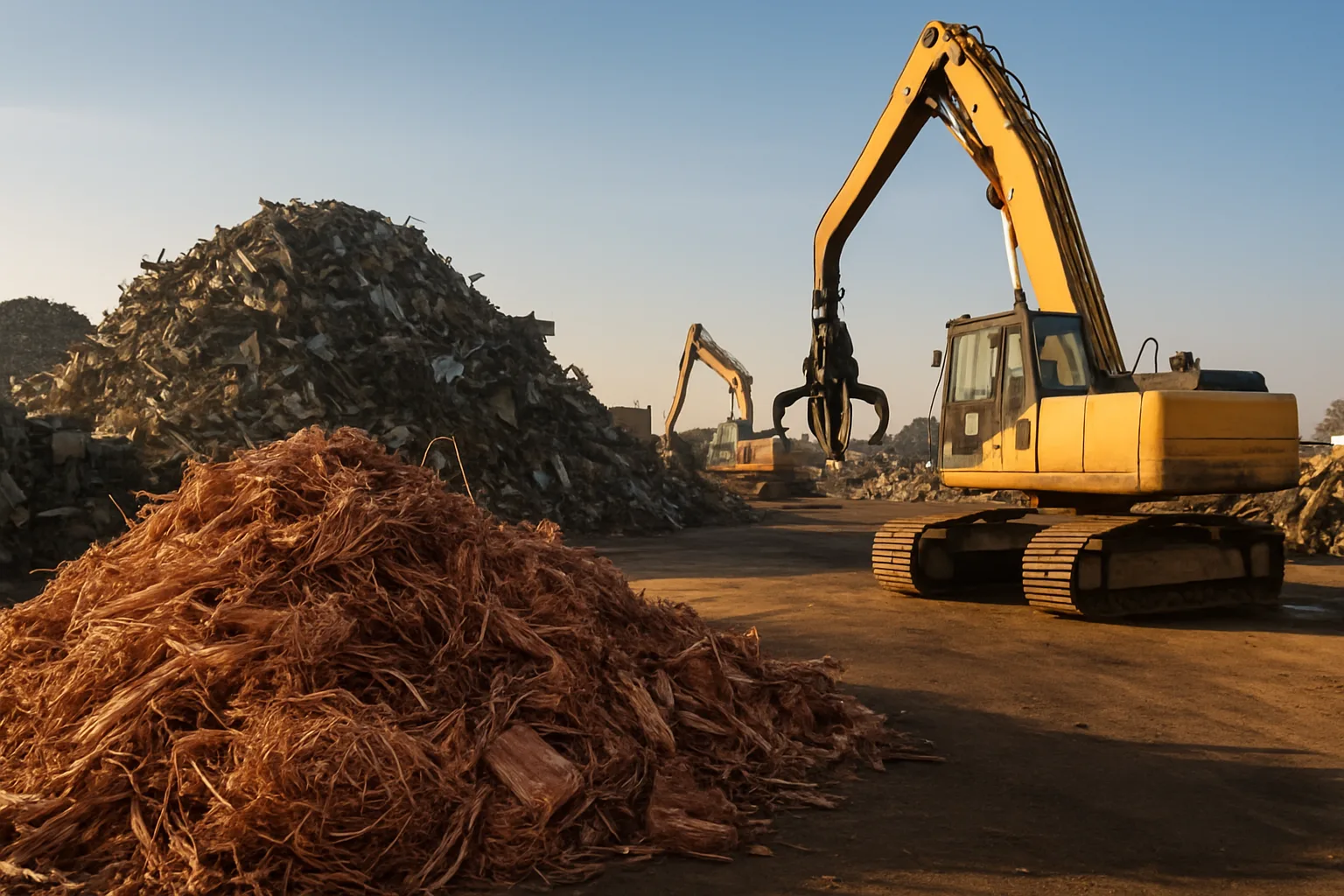
Most people selling scrap copper leave money on the table before they even make a call. Why? They don't know what grade they have. And grade determines price — sometimes by a significant margin per pound. If you're sitting on copper pipe, wire, or fittings and want to know what it's worth right now, this guide breaks it all down: copper scrap price today in Canada, how grading works, what's moving the market in 2026, and how to make sure you get a fair shake.
Whether you're a contractor in St. John's clearing out leftover materials, a homeowner scrapping an old water heater, or a small recycler in Newfoundland and Labrador looking to get better returns on your loads — this one's for you.
---Why the Copper Scrap Price Today Isn't One Number
Here's what the big copper scrap buying sites don't tell you upfront: there is no single copper scrap price. There are grades. And those grades can swing the per-pound payout by a meaningful amount. Buyers know this. Many sellers don't — and that information gap costs sellers real money.
Copper pricing in Canada tracks the London Metal Exchange (LME) and COMEX spot price, but what you actually receive at the yard depends on three things: the grade of your copper, the current spread the buyer is taking, and how much competition exists for your load. That last point is where most sellers get hurt. One buyer, one offer, no leverage. That's the old way. More on that shortly.
Prices fluctuate daily. Before you sell, always check current rates — what was accurate last week may not reflect today's market. Use this guide to understand the structure of pricing, then verify live rates before you move your material.
---The Canadian Copper Scrap Grading Guide: Know What You Have
Copper scrap is graded based on cleanliness, form, and alloy content. The cleaner and purer the copper, the higher the grade — and the higher the payout. Here's a practical breakdown of the grades you'll actually encounter as a Canadian seller:
#1 Copper (Bare Bright / Heavy Copper)
Bare Bright Copper is the top of the pile. This is clean, uncoated, unalloyed copper wire that's at least 1/16" thick. No insulation, no solder, no plating, no corrosion. Think stripped electrical wire with a shiny surface. It commands the highest price per pound. #1 Heavy Copper is similar — clean copper pipe, bus bars, and clippings with no significant contamination. It may carry a small discount to bare bright, but it's still premium material.
- Examples: stripped wire (clean), copper pipe with no fittings or solder, clean copper clippings
- What kills the grade: paint, solder joints, attached fittings, corrosion
- Payout: highest among copper grades
#2 Copper
#2 copper covers a wide range — think copper with solder, paint, coatings, or minor contamination. Old plumbing pipe with fittings still on, corroded wire, copper with small amounts of other metals attached. Most homeowners and contractors scrapping leftover materials will fall into this category without realizing it. It's still valuable. It just prices lower than #1 because the yard has to do more processing work.
- Examples: copper pipe with fittings, soldered joints, painted or coated copper
- What moves it up: cleaning off fittings and stripping coatings before delivery
- Payout: moderate — but prep work can bump you toward #1 pricing
Insulated Copper Wire (ICW)
This is one of the most common forms of copper scrap in North America — and one of the most misunderstood from a pricing standpoint. The value here depends on the recovery percentage: how much actual copper is inside the insulated wire. Romex, THHN, extension cords, and appliance wire all have different recovery rates, and buyers price accordingly. A thick-gauge wire with high copper content (like THHN) gets a better rate than a thin lamp cord where the insulation-to-copper ratio is poor.
- Thick THHN / building wire: higher recovery, better price
- Romex (14/2, 12/2): mid-range recovery
- Extension cords, appliance wire, Christmas lights: low recovery, lower price
- Tip: if the quantity is large enough, stripping the wire yourself can be worthwhile — but check the math first
Copper Alloys: Brass and Bronze
Brass (copper + zinc) and bronze (copper + tin) are not priced as copper — they're their own category. But they're worth knowing about because many sellers mix them in with copper loads and end up getting blended pricing that doesn't favour them. Separate your brass valves, fittings, and fixtures. Separate your bronze bearings and bushings. Both materials have solid value in their own right, and sell your scrap metal in Canada on SellYourScrap helps you understand what each category is actually worth before you commit to a sale.
---Copper Price Trends in 2026: What's Driving the Market
Copper doesn't move in isolation. It's tied to global manufacturing activity, energy transition demand, and currency fluctuations — all of which have been active forces in 2026. Here's what's influencing the market right now:
Electrification demand remains strong. EV production, grid infrastructure upgrades, and renewable energy installations all consume copper at scale. This structural demand has kept a floor under copper prices even when economic uncertainty creates short-term pressure. For Canadian sellers, that's generally good news — but it also means prices can spike and dip with energy policy news.
The Canadian dollar matters. Since copper trades globally in USD, CAD/USD fluctuations directly affect what Canadian sellers receive in Canadian dollars. A weaker loonie can mean higher CAD payouts even when the USD spot price holds flat. Always confirm whether a quoted price is CAD or USD — especially if you're comparing across platforms.
Supply from mining is under pressure. Grade declines at major copper mines and permitting delays for new projects have tightened the global supply picture. Scrap copper plays a bigger role in meeting demand when primary supply lags. That's a structural tailwind for scrap sellers — your material has real industrial value.
For sellers in St. John's and across Newfoundland and Labrador, the regional market can add another layer of variability. Logistics costs, local buyer demand, and seasonal patterns all affect what you'll actually receive. That's why competition between buyers matters — a single local yard sets its own margin. Multiple vetted buyers bidding changes that dynamic entirely.
---Scrap Metal Prices Today: How Copper Compares to Other Metals
Copper is typically the highest-value common scrap metal by weight — but context matters. If you have a mixed load, knowing how copper stacks up against aluminum, steel, and stainless helps you sort and prioritize before heading to the yard.
Here's a general hierarchy for Canadian scrap metal prices today (specific prices fluctuate — confirm current rates before selling):
- Bare bright copper — top of the non-ferrous pile
- #1 copper / heavy copper — close behind bare bright
- Brass / bronze — solid value, keep separated from copper
- #2 copper — good value, improved by cleaning
- Insulated copper wire — value varies widely by recovery rate
- Aluminum (6061, extrusions, cast) — meaningfully lower per pound than copper, but lighter and often available in larger volumes
- Stainless steel — below aluminum by weight, but good value in large quantities
- Steel / ferrous — lowest per-pound value, but high-volume plays can still add up
If you're curious about aluminium scrap value specifically, the same grading logic applies — clean, separated aluminum (like clean extrusions or 6061 sheet) outperforms mixed or painted material. Don't let a buyer blend your clean aluminum into a lower-grade price. Keep it sorted. To get a fair price for your scrap today, presentation and sorting are often as important as the market price itself.
For context: searches for copper scrap price today in India reveal that global scrap markets all reference the same LME benchmark — but local demand, processing infrastructure, and buyer competition shape what sellers actually receive. The lesson for Canadian sellers is the same: the spot price is just a starting point. Your real-world payout depends on who's buying and how much they want it.
---How Sellers in St. John's Can Get Better Copper Prices
St. John's is not a small market for scrap metal. Construction activity, industrial operations, and the offshore energy sector generate real volumes of copper, steel, and aluminum scrap. But geographic distance from major smelters and fewer local buyers can create pricing pressure that doesn't exist in larger urban markets. The fix isn't to accept it. The fix is to create competition.
Platforms like SMASH Recycling — where verified buyers bid on your metal connect sellers directly with vetted buyers across North America. Instead of calling one yard and taking what you're offered, your documented load goes to auction. More buyers seeing your material means better price discovery. It doesn't guarantee a higher price — but competition is how markets work, and a single buyer with no competition has no incentive to move toward your number.
For scrap metal recycling in St. John's specifically, this kind of access matters. You're not limited to what's available locally. Your copper, your documented load, your terms — presented to a pool of buyers who actually want it. That's a different conversation than a cold call to a single yard.
Want to understand the broader landscape before you sell? Explore Canadian scrap metal guides on the SellYourScrap blog for practical breakdowns on grades, markets, and how to prepare your material.
---How to Prepare Your Copper Scrap Before You Sell
The difference between a well-prepared load and a disorganized one can mean real dollars per pound. Here's what experienced sellers do before moving copper scrap:
- Sort by grade. Keep bare bright separate from #2 copper. Keep insulated wire in its own pile, sorted by gauge if possible. Mixed loads get priced at the lowest common denominator.
- Remove non-copper attachments. Strip fittings, cut off solder joints, remove brackets and fasteners where practical. A few minutes of prep can move material from #2 to #1 pricing.
- Document your load. Photos, approximate weights, and material descriptions give buyers the information they need to make confident offers. Undocumented loads create uncertainty — and buyers price uncertainty into their offers.
- Know your weight. Don't rely on yard scales as your only reference. If you're moving volume, a basic weight estimate before you arrive puts you in a stronger position to spot a short-weight situation.
- Check current prices the day you sell. Copper can move daily. A price that was accurate Monday may not reflect Friday's market. Always verify before you commit.
SMASH makes the documentation side easier — inventory tools, photo upload, and load descriptions are built into the platform so buyers know exactly what they're bidding on. That transparency benefits sellers. Documented loads attract more serious buyers.
---Frequently Asked Questions
Q: What is the copper scrap price today in Canada?
Copper scrap prices in Canada change daily based on the LME spot price, local buyer demand, and the CAD/USD exchange rate. Bare bright copper typically commands the highest price per pound, with #1 and #2 copper priced below it in descending order. Always confirm live rates with a buyer or platform before selling — posted prices can shift significantly week to week.
Q: How do I find the best copper scrap price in St. John's?
The best way to get a competitive price in St. John's is to create buyer competition rather than relying on a single yard's offer. Platforms like SMASH connect sellers with vetted buyers across Canada, so your load gets real market exposure. Sort and document your material before listing — clean, well-described loads attract stronger offers.
Q: What's the difference between #1 and #2 copper scrap?
#1 copper is clean, uncoated, unalloyed material — bare bright wire or heavy copper with no solder, paint, or fittings. #2 copper includes material with minor contamination like solder joints, coatings, or attached hardware. The price gap between grades is real, and simple cleaning or stripping can move material from #2 to #1 pricing.
Q: Is aluminum scrap worth selling alongside copper in Newfoundland and Labrador?
Yes — aluminum scrap has meaningful value, especially in volume. Clean aluminum extrusions, 6061 sheet, and cast aluminum all price differently, so keep them sorted. While aluminum pays less per pound than copper, large quantities from construction or industrial sources can generate significant returns. Don't mix grades or alloys — sorted material always prices better.
Q: How does the copper scrap price today in India compare to Canadian prices?
Both markets reference the same LME benchmark in USD, but local factors — processing costs, buyer competition, import/export dynamics, and currency conversion — mean the actual payout to sellers differs significantly. Canadian sellers receive prices in CAD, adjusted for local buyer margins and logistics. Focus on Canadian market rates and use competitive platforms to ensure you're getting fair local pricing rather than comparing to international figures directly.
---If you've got copper, aluminum, or mixed non-ferrous scrap and you're ready to move it, start by getting your material sorted and documented. Then make sure more than one buyer sees it. That's how you find out what it's actually worth. When you're ready, sell your scrap metal in Canada on SellYourScrap — request a pickup and let the market do the work for you.
Stay current on copper prices, market moves, and scrap industry insights by following SMASH on LinkedIn — practical updates for Canadian scrap sellers, not generic industry news.