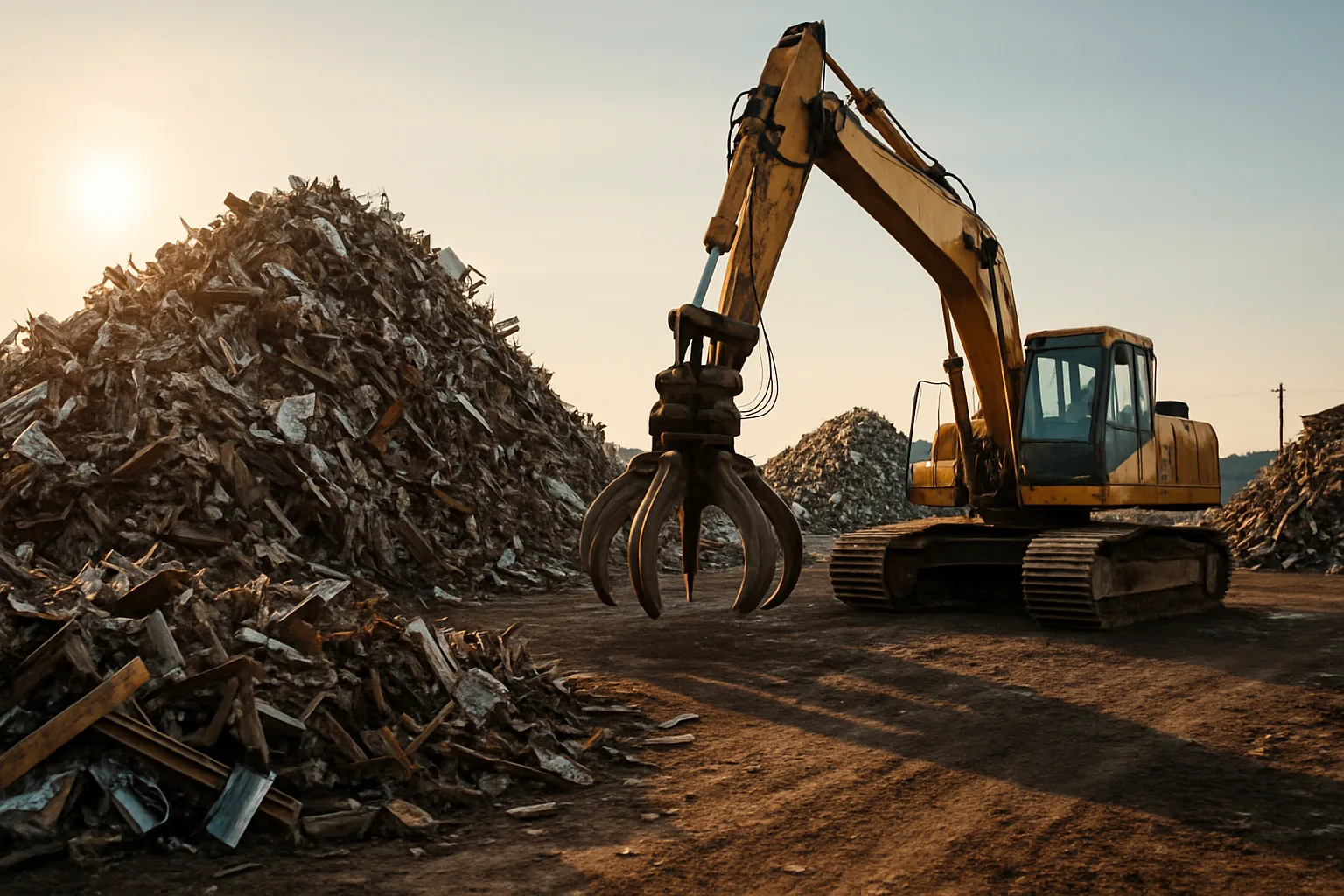
Why Your Scrap Pile Is Worth More (or Less) Than It Was Last Month
You pulled a load of copper pipe out of a renovation job. You've got a pile of aluminum extrusion sitting in the yard. You're ready to move it — but the price you get today might be noticeably different from what you'd get next week. That's not a local quirk. That's the global economy talking directly to your scrap pile.
If you're trying to sell scrap metal near me Guelph, understanding what drives those price swings isn't just interesting — it's money in your pocket. Prices at your local yard aren't set by your yard. They're set by forces moving through Shanghai, Pittsburgh, São Paulo, and every port and smelter in between. Let's break down how that actually works, and what you can do about it.
How Global Metal Markets Set the Floor (and Ceiling) on Your Local Scrap Price
Scrap metal isn't priced in a vacuum. Copper, aluminum, and steel all trade on international commodities markets — the London Metal Exchange (LME) and the Chicago Mercantile Exchange being the two most influential. When buyers in those markets move, the ripple hits every scrap yard in Ontario within days.
Here's the chain: a major manufacturer in Southeast Asia ramps up production and needs more copper cathode. Demand spikes. Refined copper prices climb. Smelters and mills suddenly compete harder for scrap feedstock — because scrap is cheaper to process than virgin ore. That competition pushes scrap copper prices up at the yard level. The same logic works in reverse when demand contracts.
A few key global signals to watch:
- LME copper and aluminum spot prices — the closest thing to a live benchmark for what your scrap is worth
- Chinese manufacturing PMI data — China consumes a massive share of the world's refined metals; when their factories slow, demand drops
- U.S. steel mill utilization rates — directly impacts ferrous scrap demand across North America
- Currency exchange rates — a weaker Canadian dollar can actually support scrap prices by making Canadian exports more competitive internationally
- Freight and shipping costs — when it costs more to ship a container of scrap overseas, buyers factor that into what they'll pay at origin
None of this is abstract. Every one of those signals affects what you'll get paid when you sell your scrap metal in Canada on SellYourScrap.
Tariffs, Trade Policy, and the 2026 Metals Market in Canada
Trade policy has become one of the most volatile variables in scrap metal pricing — and 2026 has delivered its share of turbulence. Ongoing adjustments to North American trade agreements and shifting tariff structures on steel and aluminum have created real uncertainty for processors and mills trying to plan their feedstock costs.
When the U.S. imposes or adjusts tariffs on imported metals, it reshapes where scrap flows. Canadian scrap exporters may find certain markets more or less accessible depending on the current policy environment. That affects how much domestic mills are willing to pay for Canadian scrap to keep their own production lines fed. It's a moving target — and it's one reason why locking yourself into a single buyer relationship can leave money on the table.
The broader point: scrap metal recycling Canada-wide is increasingly tied to policy decisions made in Washington, Beijing, Brussels, and Ottawa. You don't have to track all of it obsessively — but you do need a pricing mechanism that reflects real market conditions, not a single buyer's margin. That's where a scrap metal auction format changes the game. When multiple vetted buyers compete for your material, the price they offer reflects the actual market — not just one yard's interpretation of it.
What This Means for Yards and Sellers in Guelph and Across Ontario
Guelph sits in the middle of one of Canada's most active manufacturing corridors. The city has a long history of industrial production — automotive components, food processing equipment, machinery manufacturing. That industrial base generates a consistent supply of non-ferrous scrap: copper wire, aluminum castings, stainless steel. It also means local buyers and processors in Guelph are closely tied to the health of Ontario's manufacturing sector.
When a major employer in the region slows production, it affects scrap generation volumes. When commodity prices soften globally, local yards tighten their spreads to protect margin. Sellers end up absorbing that squeeze — unless they have access to a broader pool of buyers. If you're relying on one yard and one phone call, you're getting one interpretation of the market. Competition reveals what the market actually is.
Sellers using the Guelph scrap metal services available through platforms like SMASH can connect with vetted buyers across North America — not just whoever happens to be closest. That reach matters when local conditions are soft but broader demand is stronger.
A few practical realities for Ontario sellers right now:
- Copper prices have remained volatile in 2026 — driven by energy transition demand (EV infrastructure, grid upgrades) pulling against broader economic uncertainty
- Aluminum scrap continues to see solid demand from automotive lightweighting programs, but grade matters — clean extrusion versus mixed auto sheet will price very differently
- Steel and ferrous scrap pricing is closely tied to mill activity in Hamilton and across the Great Lakes region
- Catalytic converter cores remain one of the highest-value scrap categories — but pricing depends heavily on PGM (platinum group metal) spot prices, which track global auto production and recycling volumes
The Problem With the Old Way: One Buyer, One Price, No Context
The traditional scrap selling model is simple: you call your regular buyer, they give you a number, you take it or leave it. For a lot of sellers, that's still how it works. The problem isn't that the yard is dishonest — it's that a single quote gives you zero price discovery. You don't know if that number reflects today's LME price, last week's price, or a margin the buyer built in because they knew you weren't going to call anyone else.
In a rising market, you could be selling below value. In a falling market, you have no leverage. Either way, you're flying blind.
The SMASH model exists precisely to fix this. A SMASH scrap metal auction puts your documented load in front of multiple vetted buyers simultaneously. They compete. The price that emerges reflects genuine market demand — not one buyer's assessment of how much you know. That's not a sales pitch. That's just how price discovery works. More buyers means better pricing information. Documented inventory — photos, weights, VIN lookups on cores, serial tracking on high-value material — gives buyers more confidence, which typically improves offers.
You can sell your scrap metal on SMASH Recycling without a subscription fee. SMASH only earns when you sell. That alignment matters.
How to Protect Your Margins When Markets Are Moving
You can't control what happens in Shanghai or what the Federal Reserve does with interest rates. But you can control how you respond to market conditions — and that starts with how you sell.
A few principles that hold regardless of where prices are heading:
- Know your grades before you sell. Mixing clean copper with contaminated material loses you money on the whole load. Sort aggressively. Clean non-ferrous always commands a premium.
- Document everything. Photos, weights, and material descriptions give buyers confidence and reduce the discount they build in for uncertainty. Platforms like SMASH use photo documentation and inventory tools to help with this.
- Sell into competition. A single quote is not a market price. It's one data point. Auction-format selling lets the market set the price, not one buyer.
- Watch timing, but don't try to perfectly time the market. If prices are trending up and you can hold material safely, it may be worth waiting. But don't sit on high-value non-ferrous indefinitely hoping for a spike — storage costs and security risk eat into your gains.
- Use tools that reflect real pricing. LME price trackers, scrap metal recycling industry news feeds, and platforms that provide market context help you walk into any conversation with current data.
Whether you're a first-time seller clearing out a renovation or an established yard operator moving tonnage, the same logic applies. Better information and more buyers mean better outcomes. If you want to explore Canadian scrap metal guides for specific materials — copper, aluminum, catalytic converters, steel — the resources are there.
The Bottom Line for Canadian Scrap Sellers in 2026
Global markets are volatile right now. Tariff policy keeps shifting. Commodity prices for copper and aluminum are reacting to energy transition demand on one side and economic slowdown risk on the other. That makes the old model — one buyer, one phone call, take what you get — even more costly than it was a few years ago.
The sellers who come out ahead are the ones who understand that scrap prices are set globally and captured locally. You can't change the LME price. But you can change who you're selling to, how you document your loads, and whether you're selling into competition or into a single relationship where the buyer holds all the information.
If you're ready to move material — whether you're in Guelph, across Ontario, or anywhere else in Canada — get a fair price for your scrap today by using platforms and services built around transparency, competition, and real market data. Request a pickup at sellyourscrap.ca and see what your material is actually worth.
Frequently Asked Questions
Q: Why do scrap metal prices change so often near Guelph?
Scrap metal prices are tied to global commodity markets — particularly the London Metal Exchange for copper and aluminum. When international demand, trade policy, or currency rates shift, local prices in Guelph and across Ontario follow within days. A single week can see meaningful price movement, which is why selling into a competitive auction format gives you a more accurate price than a single-buyer quote.
Q: How do I know if I'm getting a fair price when I sell scrap metal near me in Guelph?
The most reliable way to know is to have multiple buyers competing for your material. A single yard quote is one data point — it may or may not reflect current market conditions. Platforms like SMASH use a vetted-buyer auction format so that price discovery happens through competition, not negotiation with a single counterparty. Document your loads well — clean, sorted, photographed material consistently attracts stronger offers.
Q: Does scrap metal recycling in Canada get affected by U.S. trade policy?
Yes, significantly. A large portion of Canadian scrap metal — especially ferrous and non-ferrous grades — is exported to or processed in relation to U.S. markets. When U.S. tariff policy changes or American mill utilization shifts, it directly affects what Canadian processors and exporters will pay for domestic scrap. In 2026, ongoing trade policy adjustments have continued to create pricing variability across Canada.
Q: What scrap metals hold value best when markets are volatile?
Clean, sorted non-ferrous metals — particularly bare bright copper, aluminum extrusion, and catalytic converter cores — tend to hold value better than mixed or contaminated grades because buyers have high confidence in what they're purchasing. PGM-bearing materials like catalytic converters are tied to their own precious metals market and can move independently of the broader scrap market. Grade quality and documentation consistently matter more than timing the market perfectly.
Q: Is there a scrap metal auction platform that serves sellers in Guelph and Ontario?
Yes. SMASH (Scrap Metal Auction Sales Hub) connects sellers across Canada — including Ontario — with vetted buyers through a competitive auction format. There are no subscription fees; SMASH only earns when a sale completes. Sellers document their loads using inventory tools, photo documentation, and VIN or serial tracking where applicable. You can list and sell through smashrecycling.ca or contact jeff@smashscrap.com directly if you're ready to start selling.
Stay current on scrap metal market trends and industry updates — follow SMASH on LinkedIn for regular insights on metal pricing, trade news, and what's moving in the Canadian and North American scrap market.