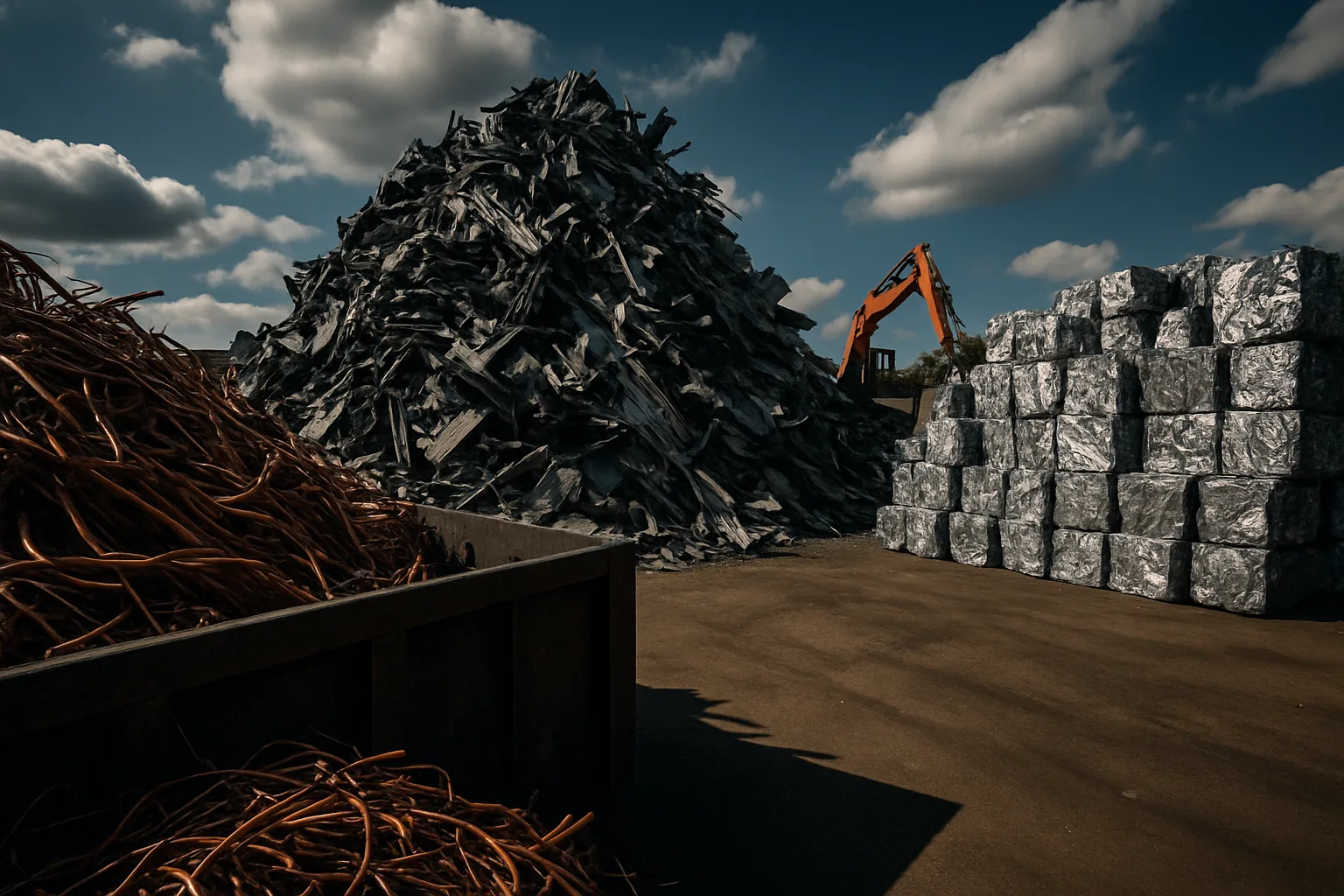
Most people selling scrap don't realize they're leaving money on the table — not because they have the wrong material, but because they don't know what they have. Knowing the difference between ferrous and non-ferrous metals is the first step to getting paid fairly when you sell scrap metal in Montreal or anywhere else across Canada.
This isn't complicated metallurgy. It's practical knowledge that changes how you sort, price, and sell your material. Let's break it down.
What Are Ferrous and Non-Ferrous Metals — and Why Does It Matter?
The word "ferrous" comes from the Latin ferrum, meaning iron. Simple rule: if a metal contains iron, it's ferrous. If it doesn't, it's non-ferrous. That single distinction drives almost everything in scrap pricing, handling, and demand.
Ferrous metals include steel, cast iron, wrought iron, and stainless steel (in most grades). Non-ferrous metals include copper, aluminum, brass, lead, zinc, nickel, and precious metals. The fastest way to tell the difference? Use a magnet. Ferrous metals stick to magnets. Non-ferrous metals don't. That one trick sorts a mixed pile faster than anything else.
Why does this matter when you're trying to sell scrap metal for cash? Because yards price these categories completely differently. Non-ferrous metals are almost always worth significantly more per pound or per kilogram. Mixing them together — or not separating them before you arrive at a yard — can cost you real money.
Ferrous Scrap: Steel, Iron, and What You're Actually Working With
Ferrous scrap is the backbone of global recycling. Steel mills depend on it. The volumes are massive, and so is the demand — but because iron and steel are abundant, ferrous prices per unit of weight tend to be lower than non-ferrous metals.
Common ferrous materials you might have on hand include:
- Structural steel — beams, angles, channels from construction or demolition
- Sheet metal — car panels, appliance casings, HVAC ductwork
- Cast iron — old radiators, engine blocks, pipes
- Rebar — from concrete forms and construction waste
- Shredded auto bodies — the bulk of what comes off a crushed vehicle
Ferrous loads are usually bought by the tonne, not by the pound. If you're clearing out a construction site near Montreal's ongoing infrastructure projects, you're likely dealing with ferrous scrap by the load. Contamination matters — wood, concrete, plastic, and other non-metal material attached to your steel will lower the grade and your payout. Clean, sorted steel always commands a better price than mixed or contaminated loads.
Stainless steel sits in a slightly different category. It contains iron, making it technically ferrous, but it also contains nickel and chromium. Most yards price stainless separately and pay a premium over regular steel. Don't throw it in with your general steel pile.
Non-Ferrous Scrap: Where the Real Value Per Pound Lives
Non-ferrous is where most individual sellers focus their attention — and for good reason. Copper, aluminum, and brass fetch dramatically higher prices per kilogram than steel. If you're checking the aluminum scrap price today or the going rate for bare bright copper wire, you're already thinking in non-ferrous terms.
Here's a quick breakdown of the most common non-ferrous scrap types:
- Copper — the highest-value common scrap metal. Includes bare bright wire, #1 copper pipe, #2 copper (with solder or paint), and copper tubing. Sell your scrap metal in Canada on SellYourScrap to make sure your copper goes to buyers who actually compete for it.
- Aluminum — found in window frames, siding, cans, wheels, and electrical cable. Different grades pay differently. Painted or coated aluminum is worth less than clean cast or extruded aluminum.
- Brass — plumbing fittings, valves, shells, and fixtures. Heavier than it looks and worth solid money when separated cleanly.
- Lead — old pipes, wheel weights, battery plates. Dense, soft, and easy to identify.
- Zinc — die-cast parts, galvanized metal coatings.
Non-ferrous pricing moves with global commodity markets. The scrap metal prices today for copper or aluminum in Quebec are influenced by London Metal Exchange benchmarks, the Canadian dollar, and regional demand. Prices shift. What copper fetched three months ago isn't necessarily what it fetches today. Platforms like SMASH Recycling — where verified buyers bid on your metal create real-time competition that helps you find where the market actually sits, instead of accepting whatever a single buyer quotes you.
Disclaimer: All metal prices fluctuate based on market conditions. Always check current rates before selling your material.
How to Sort Your Scrap Before You Sell — Especially in Montreal
Sorting isn't just good practice. It's the difference between getting paid accurately and getting a blended rate that shortchanges your best material. Most buyers in Montreal and across Quebec apply the worst price in a mixed lot to the entire lot if you don't separate your metals.
Here's a practical sorting process:
- Magnet test first. Run a strong magnet over everything. What sticks is ferrous. Set it aside in its own pile.
- Identify your non-ferrous by colour and weight. Copper is reddish-orange. Aluminum is light grey and very light. Brass is yellowish. Lead is dark grey and extremely heavy for its size.
- Grade within categories. Don't mix bare bright copper wire with heavily insulated wire — they price differently. Don't mix clean aluminum extrusion with painted window frames.
- Remove non-metal attachments. Pull rubber, plastic fittings, and insulation where practical. Clean material pays more.
- Weigh or estimate your loads before you go. Knowing roughly what you have prevents surprises at the scale.
Montreal's industrial zones — from Pointe-Saint-Charles to the Northeast industrial corridor — generate a mix of ferrous and non-ferrous material constantly. If you're running a shop, managing a demolition, or clearing out a property, sorted material moves faster and pays better. Our Montreal scrap metal services can help you turn sorted loads into fair-market payouts without the runaround.
Catalytic Converters: A Special Case in the Non-Ferrous World
Catalytic converters sit in their own category. The shell is steel (ferrous), but the value is in the ceramic or metallic substrate inside, which contains platinum group metals — platinum, palladium, and rhodium. These aren't priced by weight the same way copper or aluminum are. They're priced by the specific converter type, the precious metal content, and current PGM market rates.
If you're selling cats in Quebec, don't treat them like generic non-ferrous metal. They need proper identification — ideally by make, model, and serial number — and buyers need to bid on them knowing what's inside. Guessing gets you less than the market value. Documentation gets you more.
This is one area where the old "call one buyer, take one price" model costs sellers the most. When buyers compete on documented material, the result is better price discovery for the seller. That's the whole model behind platforms like SMASH — documented inventory, vetted buyers, competitive bids.
Scrap Metal Pricing: What Moves the Market in 2026
Whether you're selling a few hundred pounds of copper pipe or a full load of shredded aluminum, understanding what moves pricing helps you time your sales and negotiate better. In 2026, a few key forces are shaping scrap metal prices across Canada:
- Global manufacturing demand — steel mills and smelters adjust what they'll pay based on order books and production schedules.
- Currency fluctuations — the CAD/USD exchange rate affects what Canadian scrap is worth to export buyers.
- Energy costs — smelting aluminum from scrap uses a fraction of the energy of primary production. When energy costs rise, recycled aluminum becomes relatively more attractive to buyers.
- Trade policy — tariff changes on primary metals affect secondary (scrap) market demand. 2026 has seen continued volatility in North American trade dynamics that ripple into scrap pricing.
- Regional supply and demand — what's happening in Montreal and Quebec manufacturing affects local yard buying appetite.
You won't control these macro factors. What you can control is how well you document, sort, and present your material — and who you let bid on it. Explore Canadian scrap metal guides to keep up with market trends, selling tips, and pricing breakdowns.
When you're ready to sell, don't call one buyer. Let buyers compete. That's how you find out what your material is actually worth. Get a fair price for your scrap today — whether it's a load of copper pipe, a pile of sorted aluminum, or a mixed ferrous haul from a job site.
Frequently Asked Questions
Q: How do I know if my scrap metal is ferrous or non-ferrous?
Use a magnet. Ferrous metals (steel, iron) are magnetic. Non-ferrous metals (copper, aluminum, brass, lead) won't stick to a magnet. This quick test is reliable enough to sort the majority of a mixed pile in minutes.
Q: Is it worth separating my scrap before selling in Montreal?
Yes — almost always. Sorted loads get graded individually, so your best material gets its best price. Mixed loads often get blended at the lowest rate in the pile. A few minutes of sorting can noticeably improve your payout, especially when you have copper or aluminum mixed into a general steel pile.
Q: What non-ferrous scrap is worth the most money?
Copper typically commands the highest price among common non-ferrous scrap metals. Bare bright copper wire and clean #1 copper pipe sit at the top of the scale. Platinum group metals from catalytic converters can exceed copper on a per-gram basis, but they require specialized buyers and documentation to get full value.
Q: How do I check the aluminum scrap price today in Quebec?
Aluminum pricing changes regularly based on LME benchmarks and local yard buying appetite. Platforms like SMASH connect sellers with vetted buyers across Canada, where competitive bidding reflects current market rates. Always check current rates before committing to a sale — posted prices can shift week to week.
Q: Can I sell scrap metal in Montreal without a truck or vehicle?
Yes. If your volume is large enough or your material valuable enough, pickup services are often available. Request a pickup at sellyourscrap.ca to find out what options apply to your situation in Montreal or elsewhere in Quebec.
If you've got material sitting in your yard, shop, or garage — sorted or not — the best move is to find out what it's actually worth in today's market. Sell your scrap metal in Canada and request a pickup at sellyourscrap.ca. No guessing. No leaving money behind.
For scrap metal market updates, industry news, and pricing trends across Canada, follow SMASH on LinkedIn — it's where the industry conversation happens.