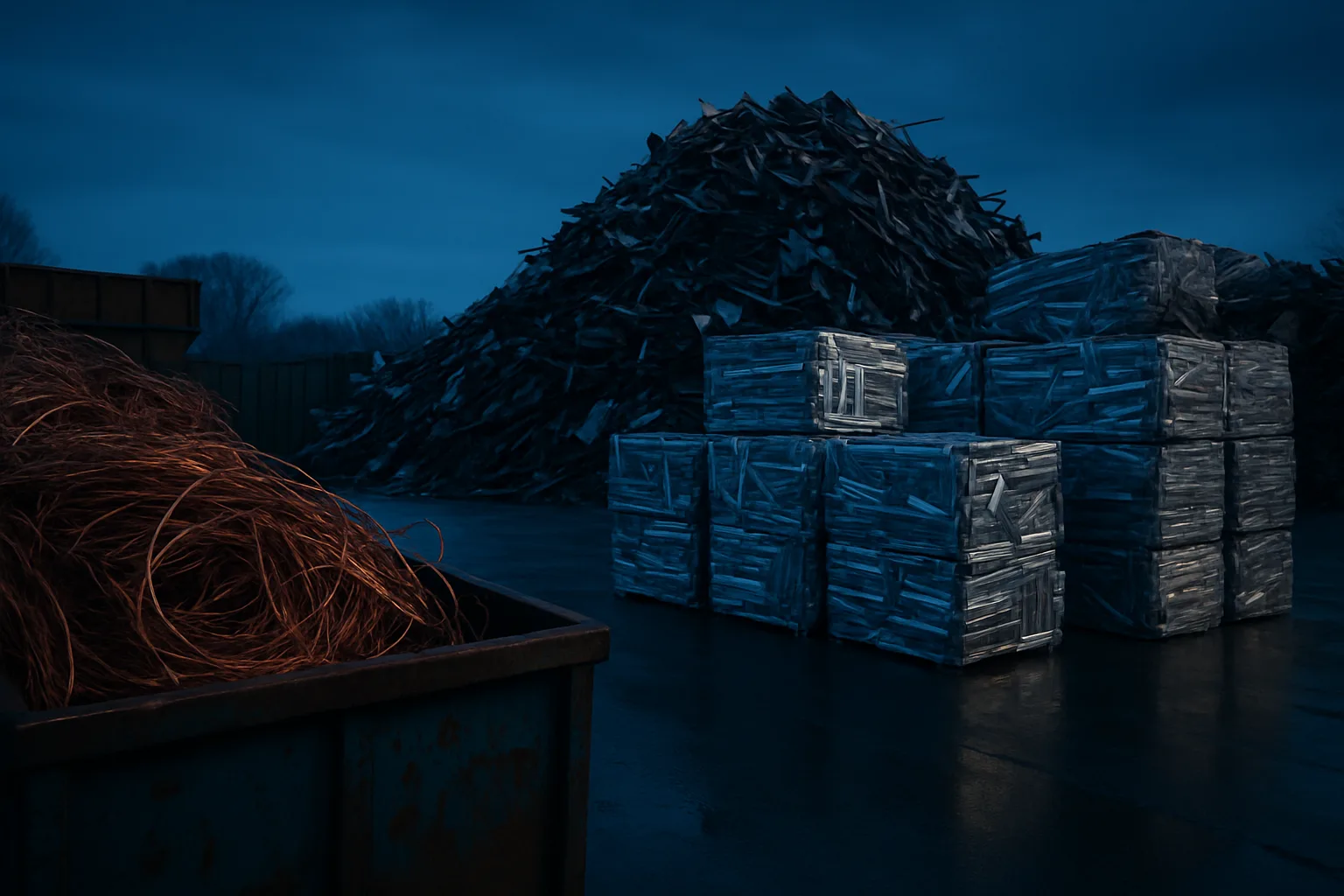
What's Driving Scrap Metal Prices Right Now — And What Sudbury Sellers Need to Know
Most scrap yards won't tell you what your load is actually worth. They give you a number, you take it or leave it, and you'll never know if you left money on the table. In a market that's been moving fast in 2026, that information gap costs sellers real money — especially if you're sitting on copper, aluminum, or a pile of catalytic converters.
If you're in Sudbury or anywhere across Ontario, here's what the scrap metal market is doing right now, what's pushing prices up and down, and how to position yourself to get a fair return on every load you move.
The 2026 Scrap Metal Market: Key Trends Shaping Steel Scrap Price Today
The scrap metal market in 2026 is being shaped by a tighter-than-usual supply picture on the non-ferrous side and continued pressure on steel from both domestic demand and global trade flows. North American steel mills are running hard to fill infrastructure and manufacturing orders. That demand filters directly into the steel scrap price today — mills need feedstock, and scrap is the feedstock.
On the non-ferrous side, scrap copper and scrap aluminum are reacting to a few converging forces:
- Copper: Global electrification demand — from EVs to grid upgrades — keeps copper tight. Clean copper grades are commanding strong premiums. Even mixed or insulated wire is moving well when documented properly.
- Aluminum: Secondary aluminum demand from automotive and construction sectors remains solid. Cast versus extrusion grades still carry meaningful price spreads, so sorting matters.
- Catalytic converters: Platinum group metal (PGM) prices have stabilized after the volatility of the past few years, but high-value cats are still worth serious money. VIN lookup and serial tracking are increasingly important for documentation and compliance.
- Steel and iron: Prices have firmed up compared to the lows seen in late 2025. Shredded steel, heavy melt, and plate and structural grades are all active. Watch mill capacity utilization rates — when mills are running above 75%, scrap demand usually follows.
The bottom line: if you haven't checked current rates recently, your mental benchmark might be off by a meaningful margin. Prices have moved. Don't sell based on last quarter's numbers.
Why Sudbury Sellers Are Sitting on More Leverage Than They Think
Sudbury's industrial and mining heritage means the region generates a consistent supply of high-quality scrap — copper, nickel-bearing materials, heavy steel, and industrial non-ferrous that buyers across Ontario and beyond actively want. That's leverage. The problem is that most sellers in the region still operate the old way: one buyer, one call, one price with no comparison point.
When you sell to a single buyer without competition, you're not getting price discovery — you're getting their margin. A buyer with no competition has every incentive to buy low. That's not a criticism; it's just business. The fix isn't to distrust your buyer. The fix is to introduce competition.
That's exactly what a scrap metal auction format does. When multiple vetted buyers compete for your load simultaneously, the price reflects actual market demand — not one buyer's best offer on a slow Tuesday. Platforms like find the best price for your scrap in Canada through SMASH do this in a structured, transparent way that lets sellers in Sudbury and across Ontario access a broader buyer pool without cold-calling a list of contacts.
The Sudbury scrap metal services available through this platform connect local sellers directly to vetted buyers who are actively bidding — not just browsing.
How to Read Market Signals Before You Sell
You don't need to be a commodities trader to read the market well enough to time your sales smarter. A few signals are worth watching:
- London Metal Exchange (LME) copper price: It's the global benchmark. When LME copper moves, scrap copper prices usually follow within days. Check it weekly if you're holding material.
- North American steel mill utilization rates: Published regularly by industry associations. Higher utilization means more demand for scrap feedstock.
- USD/CAD exchange rate: A weaker Canadian dollar can actually help sellers in Canada — exported scrap priced in USD translates to more CAD for the seller. Watch this if you're moving larger volumes.
- Seasonal patterns: Late summer and early fall tend to see increased construction activity winding down, which can soften steel demand briefly before fall production ramps. Non-ferrous tends to hold more steadily year-round.
- Local yard activity: If your local Sudbury yard is backed up with inventory, they may cut bids to slow inflow. If they're light, they'll pay more to fill orders. That supply/demand dynamic is hyper-local and changes fast.
None of these signals guarantee anything. Prices fluctuate — always. But sellers who watch these indicators make better decisions than sellers who call one buyer and accept whatever number gets quoted. Knowledge is leverage.
Sell Scrap Metal Online: What the Shift to Digital Means for Canadian Sellers
Selling scrap metal online has moved from a novelty to a real operational choice for yards and individual sellers across Canada. The reason is straightforward: more buyers, better price discovery, less time on the phone chasing quotes.
When you sell your scrap metal in Canada on SellYourScrap, the process is built around documentation and competition — two things the old phone-and-handshake method consistently lacks. Documented inventory, photo evidence, accurate weights, and packing lists give buyers confidence to bid higher. Buyers who can see exactly what they're getting are buyers who bid competitively.
SMASH supports this with built-in tools: inventory management, photo documentation, VIN lookup for vehicles and cats, and serial tracking for regulated materials. Auto-invoicing and GST/HST handling are built in — so you're not chasing paperwork after every transaction.
For sellers in Ontario and across Canada, the ability to sell scrap metal online through a platform like SMASH also removes geography as a constraint. Your load in Sudbury isn't limited to buyers who are willing to drive up Highway 17. It's visible to vetted buyers across the network. More competition. Better price discovery.
Disclaimer: All metal prices referenced in this article are illustrative of market dynamics only. Actual scrap prices fluctuate daily based on market conditions, grade, volume, and buyer demand. Always check current rates before selling.
Best Scrap Metal Prices Ontario: What "Best Price" Actually Means
Sellers searching for the best scrap metal prices Ontario are really asking one question: am I leaving money on the table? The honest answer is: probably, if you're selling to a single buyer without any competitive process.
"Best price" doesn't mean the highest number anyone would theoretically pay. It means the true market price — what multiple informed, competing buyers are willing to pay for your specific load on a specific day. That number is almost always higher than the first offer from a single buyer.
Here's what moves price in your favor:
- Clean, sorted material: Mixed loads sell for less. Separating your copper grades, pulling aluminum from steel, and cleaning contamination pays off at the scale.
- Accurate documentation: BOLs, packing lists, photos, and weights reduce buyer risk. Lower risk equals higher bids.
- Multiple buyers: This is the single biggest lever. One buyer, one price. Ten vetted buyers, real competition.
- Timing: Selling when local supply is tight and buyer demand is up captures more value than selling into a glutted market.
Platforms like SMASH are built to deliver all four of these conditions simultaneously. No subscription fees. The platform only earns when you sell — so there's a direct incentive to get you the best outcome. You can explore Canadian scrap metal guides to go deeper on grading, sorting, and timing your sales for maximum value.
Making the Move: How to Get Started with a Scrap Metal Auction Today
If you've been selling the old way — one call, one price, no comparison — the shift to a scrap metal auction format is simpler than it sounds. You don't need to overhaul your operation. You need to document your load, list it, and let buyers compete.
Start here:
- Sort and weigh your material. Know what you have before you list it. Copper, aluminum, steel, cats — each goes in separately. Mixed loads underperform every time.
- Document everything. Photos, weights, grades, any BOLs or packing lists you have. The more information buyers have, the more confidently they bid.
- List on SMASH. Vetted buyers see your load and compete in a structured auction. No cold calls. No guessing.
- Review bids and close. You see all bids. You decide. Auto-invoicing handles the paperwork.
Whether you're a yard operator in Sudbury moving consistent weekly volumes or an individual seller with a one-time load, the process is the same. If you're ready to stop guessing and start selling with actual market data behind you, get a fair price for your scrap today and see what competition actually does for your returns.
Selling scrap in Canada doesn't have to be a one-buyer, take-it-or-leave-it conversation. The market is active. Buyers are competing. Get your load in front of them.
Frequently Asked Questions
Q: What is a scrap metal auction and how does it work for sellers in Sudbury?
A scrap metal auction is a structured process where multiple vetted buyers compete to purchase your load simultaneously. Instead of calling one buyer and accepting their price, you list your material on a platform like SMASH, buyers submit competitive bids, and you choose the best offer. For sellers in Sudbury, this opens your load to a much wider buyer pool than the local market alone.
Q: How do I find the best scrap metal prices in Ontario today?
The best way to find true market pricing in Ontario is to get competing bids rather than relying on a single quote. Check LME copper prices for non-ferrous benchmarks, monitor steel mill utilization for steel scrap signals, and use a platform like SMASH to put your load in front of multiple buyers. One quote is not a market price — it's one buyer's offer.
Q: Can I sell scrap metal online if I'm in Northern Ontario or a smaller city like Sudbury?
Yes. Selling scrap metal online removes the geographic limitation of local-only buyers. When you list on SMASH, vetted buyers across the network can bid on your load regardless of your location. Proper documentation — photos, weights, grades — is especially important when buyers can't inspect in person, and it typically results in stronger bids.
Q: Does the steel scrap price today change often?
Yes — scrap metal prices fluctuate based on mill demand, global commodity prices, exchange rates, and local supply conditions. Steel scrap prices can shift week to week and sometimes day to day during volatile periods. Always check current rates before committing to a sale, and don't rely on prices you were quoted more than a few days ago.
Q: Are there fees to sell scrap through an auction platform like SMASH?
SMASH does not charge subscription fees. The platform earns when you sell — meaning there's a direct incentive to help you get the best outcome on every load. GST/HST handling is built into the platform, so you're not managing tax paperwork manually on every transaction.
Stay current on scrap metal market trends and pricing signals by following SMASH on LinkedIn — regular updates on metal recycling in Canada, price movements, and industry news worth paying attention to.