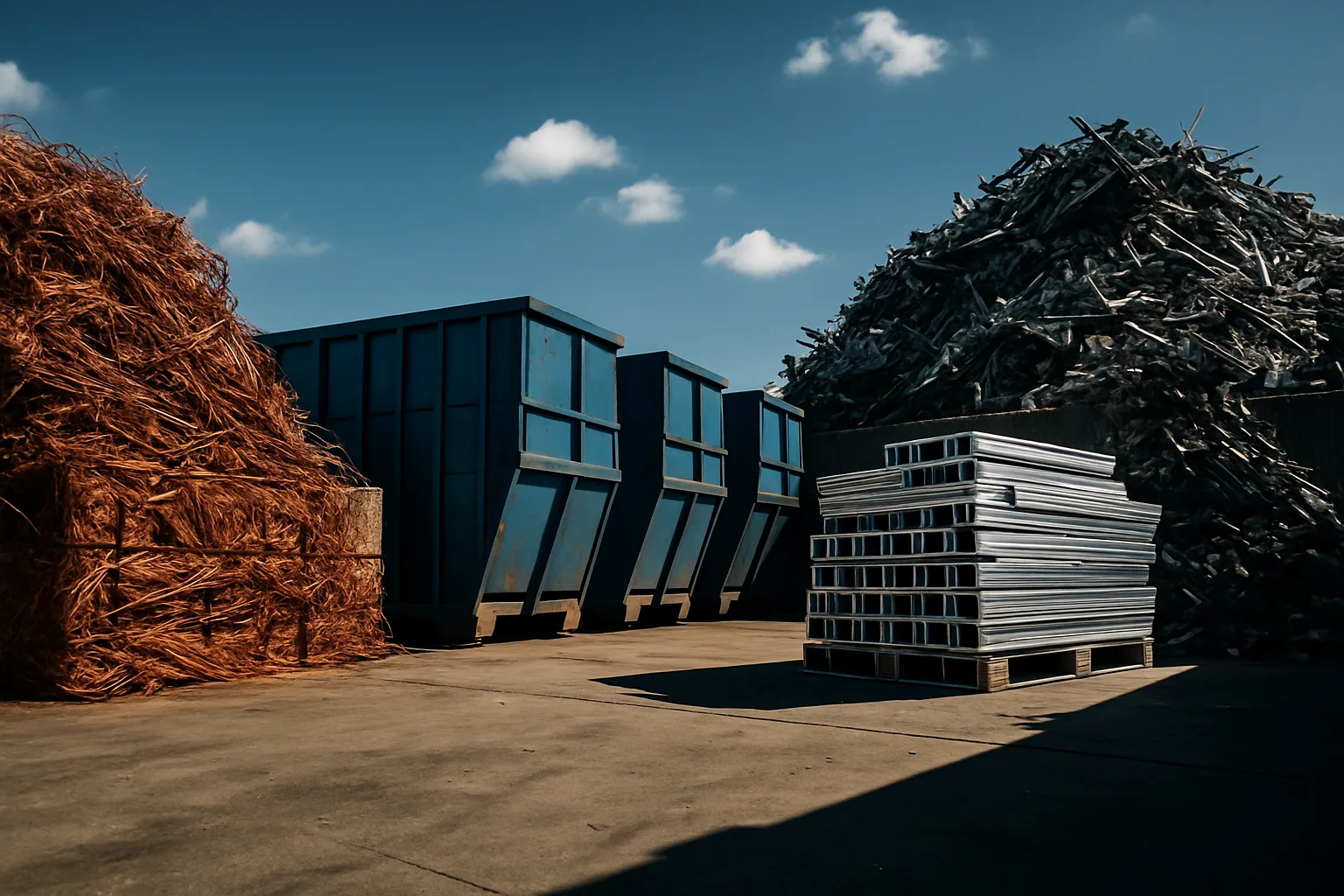
Why Sorting Your Scrap Metal Before You Sell It Actually Matters
Most people toss everything into one pile and hope for the best. That's leaving money on the table. Whether you're clearing out a garage in Quebec City scrap metal services or running a full recycling operation across Quebec, how you sort and prepare your load directly affects what you get paid. Mixed metal loads get graded down. Clean, separated loads get graded up. That's just how scrap metal prices today work.
Buyers price what they can process efficiently. When you hand them a sorted, documented load, they're confident in what they're buying. When you hand them a mystery pile, they hedge. The difference shows up in your payout. Here's how to stop leaving money behind.
Know What You Have: The Basic Metal Categories
Before you can sort, you need to identify. Scrap metal breaks into two major families: ferrous (iron and steel) and non-ferrous (everything else — copper, aluminum, brass, stainless). Non-ferrous metals almost always pay more per pound. Copper and brass top the list. Clean aluminum scrap is right behind them, with solid aluminum recycle value depending on grade and condition.
A basic magnet test tells you immediately whether something is ferrous. Steel and iron stick. Copper, aluminum, brass, and stainless don't. It's the single fastest sorting tool you have. Once you know what's ferrous and what isn't, you can start separating by grade.
Here's a quick breakdown of the most common categories you'll encounter:
- Bare bright copper — stripped wire, no insulation, no solder. Top price.
- Copper wire (insulated) — lower grade than bare bright; recovery rate depends on insulation thickness.
- Copper pipe and fittings — commonly from plumbing teardowns.
- Sheet aluminum — siding, flashing, clean sheets with no paint or attachments.
- Aluminum extrusions — window frames, door frames, structural profiles.
- Cast aluminum — engine blocks, wheels, heavier pieces.
- Brass — valves, fittings, plumbing hardware.
- Stainless steel — sinks, appliances, industrial equipment.
- Light iron / HMS — heavy melting steel, structural scrap, beams.
Mixing these together collapses your price to the lowest-grade item in the pile. Keep them separate from the start and you sidestep the most common payout mistake in the business.
How to Prepare Each Metal Type for Maximum Scrap Metal Prices Today
Sorting is just the first step. Preparation is where you recover the most value. Buyers pay for clean, processed metal — not for your labour of cutting off attachments and stripping insulation on their floor. If you do that work upfront, you capture the premium. If you don't, they charge for it by grading your load down.
Copper: Strip insulation off wire whenever it's practical. Bare bright copper pays significantly more per pound than insulated wire. Remove solder from fittings if you can. Keep pipe separate from wire. Even separating thick-gauge insulated wire from thin-gauge makes a difference — recovery rates vary, and buyers price accordingly.
Aluminum: Remove steel bolts, iron brackets, and any non-aluminum attachments. Window frames with glass still in them are contaminated loads. Pull the glass, pull the hardware. Sheet aluminum should be flat and free of paint where possible. Wheels should be clean — tires and valve stems removed. The cleaner the aluminum, the better the aluminum recycle value you recover.
Brass: Separate from copper. Brass and copper look similar but price differently. Brass is an alloy — zinc and copper — and grades lower than clean copper. Keep valves and fittings together as a group.
Steel and iron: Remove non-ferrous attachments (copper windings in motors, aluminum housings). HMS (heavy melting steel) pays more than mixed light iron. If you're clearing structural steel, separate beams from sheet scrap. Volume matters here — more tonnage means more leverage in a negotiation.
Documentation: The Step Most Sellers Skip
You sorted your load. You cleaned it up. Now document it before it leaves your hands. This is especially true if you're selling through a platform like Canada's B2B scrap recycling marketplace, where buyers are evaluating your load remotely before they bid. Photos, weights, material descriptions — these aren't bureaucratic overhead. They're the evidence buyers use to price with confidence instead of caution.
A documented load on a scrap metal auction platform attracts competitive bids. An undocumented load with a vague description attracts lowball hedging. The logic is simple: buyers price in uncertainty. Remove the uncertainty and you remove the discount.
At minimum, document the following for each load:
- Photos of each metal category, clearly sorted and visible
- Estimated weight per category (scale it if you can)
- Grade description — clean, contaminated, mixed, bare bright, etc.
- Origin if relevant — demolition copper, automotive aluminum, industrial stainless
- Any certifications or BOLs (bills of lading) if the load is being shipped
Platforms like SMASH build this documentation step directly into the listing workflow. Serial tracking, photo documentation, and inventory tools mean the prep you do in the yard translates directly into buyer confidence at auction. That confidence is priced into bids.
The Auction Advantage: Why Competitive Bidding Beats One Phone Call
Here's the old way: you call your one buyer, they quote you a price, you take it or leave it. You have no idea if it's fair. You have no leverage. If you say no, you're sitting on a load with no alternative. That's not a negotiation — it's a single data point dressed up as market price.
The better approach is competition. When multiple vetted buyers see the same load and bid against each other, the market reveals itself. You don't have to guess. You don't have to wonder if you got taken. The SMASH scrap metal auction format exists specifically to replace the single-buyer call with real price discovery. More buyers, more competition, better information — that's the mechanism. As SMASH puts it: more buyers means better price discovery.
If you want to sell your scrap metal in Canada on SellYourScrap, combining solid preparation with an auction-format platform gives you both sides of the equation: a better load and a better process for selling it. One without the other still leaves upside unrealized.
For sellers in Quebec City and across Quebec, this matters more than ever in 2026. Global demand for non-ferrous metals — particularly copper and aluminum — continues to fluctuate with energy transition projects, manufacturing activity, and commodity market cycles. Knowing your material and presenting it well puts you in the best position regardless of where the market sits on any given week.
Common Sorting Mistakes That Cut Your Payout
Even experienced sellers make these. Avoid them and you protect your margin without doing any additional work beyond what you're already doing.
- Leaving steel hardware on aluminum. Bolts, brackets, and hinges attached to aluminum frames contaminate the grade. Pull them before you weigh.
- Mixing copper grades. Bare bright and insulated wire aren't the same product. Selling them together means the whole pile gets graded as the lower material.
- Not removing motors from equipment. Motors contain copper windings worth more sold separately than as part of a mixed steel unit.
- Selling wet scrap. Water adds weight — but yards account for it. Wet loads often get penalized on weight or grade. Keep your metal dry if you can.
- Ignoring catalytic converters. Cats price by serial number and PGM (platinum group metal) content. Never throw a cat into a general metal pile. It prices completely differently and platforms like SMASH support VIN lookup and serial tracking for a reason.
- Selling too small. Consolidating loads increases your leverage. A single pail of copper wire is harder to sell at a good price than 500 lbs of sorted, baled copper wire.
Each of these mistakes represents a gap between what your metal is worth and what you actually collect. The fix isn't complicated — it's mostly attention to process.
Ready to Sell? Here's the Right Starting Point
You've sorted your material. You've cleaned it up, documented it, and separated the non-ferrous from the ferrous. Now you need buyers who will actually compete for it. That's where the process matters as much as the prep.
Whether you're a homeowner in Quebec City clearing out a basement reno or a demolition contractor managing multiple loads across Quebec, the path to fair value runs through documentation, competition, and transparency. Not guesswork, not one phone call, not hoping your regular buyer is having a good day.
When you're ready, get a fair price for your scrap today — and explore Canadian scrap metal guides for more detail on pricing, preparation, and what different grades are actually worth right now. If you want to sell your scrap metal in Canada, the best move is to show up with a clean, documented, sorted load — and let competition do the rest.
Disclaimer: Scrap metal prices fluctuate daily based on commodity markets, demand, and regional factors. Always check current rates before making selling decisions.
Frequently Asked Questions
Q: How do I find somewhere to sell scrap metal near me in Quebec City?
Start with online platforms that connect sellers to vetted buyers — SMASH is one option that operates across Canada, including Quebec City. You can also use local recycling yards, but comparing offers before committing gives you a better sense of what your load is actually worth in today's market.
Q: What scrap metal is worth the most money right now?
Generally, bare bright copper commands the highest price per pound among common scrap metals, followed by insulated copper wire, brass, and clean aluminum. Prices fluctuate — check current rates before you sell, and never mix high-grade material with lower-grade scrap before weighing.
Q: Do I need to strip copper wire before selling it in Quebec City?
Stripping insulation typically earns you a higher per-pound price because you're selling a higher-grade product — bare bright copper versus insulated wire. Whether it's worth the effort depends on volume and insulation thickness. Thick-jacketed wire generally pays better stripped; thin-gauge wire may not justify the labour.
Q: What is the difference between a scrap metal auction and selling to a single yard?
A scrap metal auction puts your load in front of multiple buyers who compete against each other. A single-yard transaction gives you one data point — their quote — with no way to know if it reflects fair market value. Competition tends to produce better price discovery, especially for larger or higher-value loads.
Q: Can I sell small amounts of scrap metal, or do I need a large load?
Small loads can still sell, but larger consolidated loads typically attract more buyer interest and give you more leverage. If you're accumulating metal over time in Quebec City, consider holding smaller quantities until you have a more substantial load before listing or hauling it in — you'll spend less on transport and likely get a better rate per pound.
Stay current on scrap metal market trends and price movements — follow SMASH on LinkedIn for industry updates and insights directly from the recycling market.