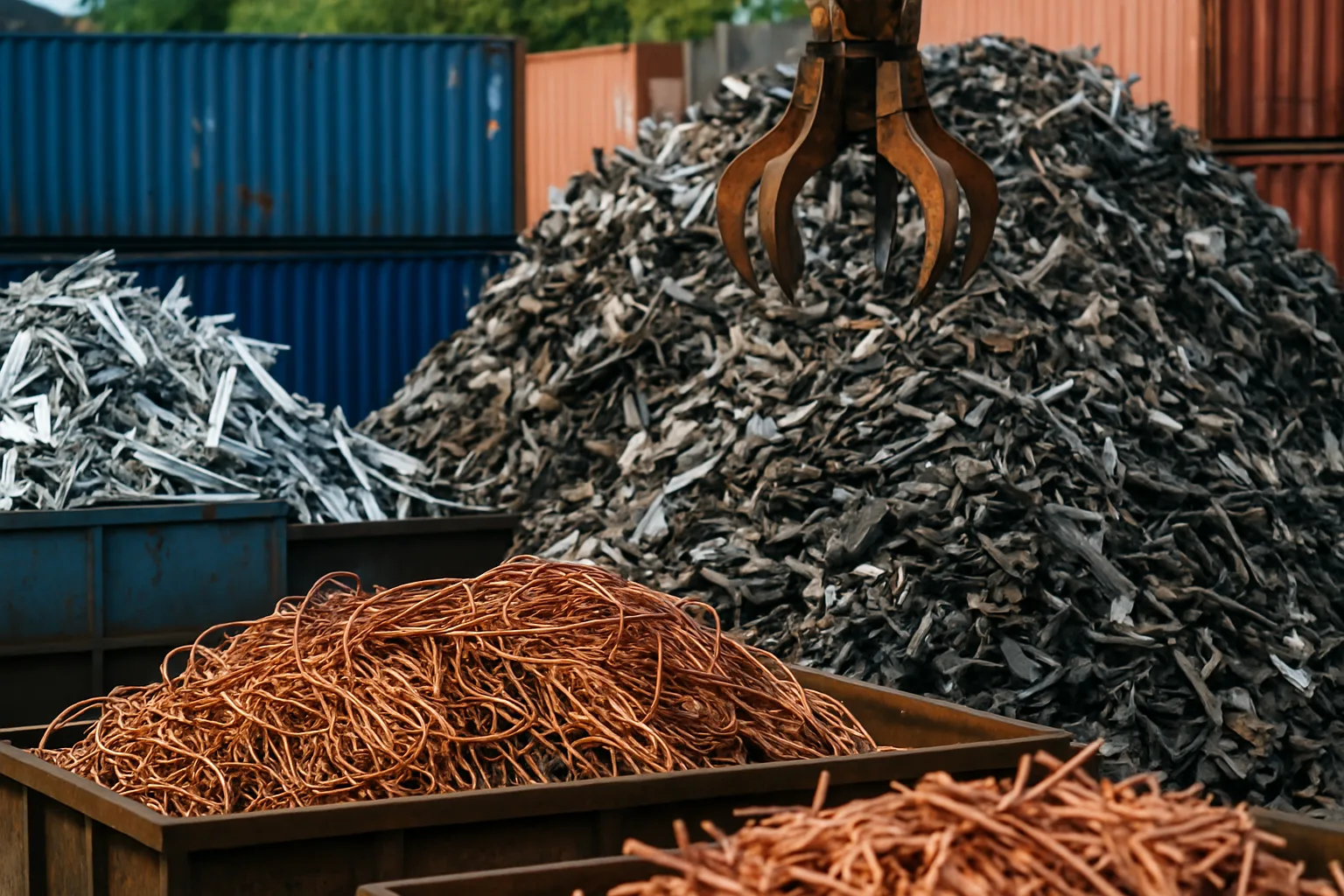
Why the Price You Get for Scrap in Hamilton Depends on What's Happening in Shanghai
You pulled a load of copper out of a demo job. You've got aluminum extrusions sitting in the yard. You call your buyer, get a number, and you take it — because what else are you going to do? But here's the part most sellers never think about: that number didn't come from your local yard's mood that morning. It came from a trading floor in London, a factory order in Shenzhen, and a tariff decision in Washington. If you want to sell scrap metal in Hamilton at a fair price, you need to understand what's actually driving the market — and why the gap between what you're offered and what the metal is worth isn't always as small as your buyer wants you to think.
Global commodity markets set the floor. Local buyers set their margin on top. The more you understand the first part, the harder it is for anyone to take advantage on the second.
How Global Metal Demand Moves the Aluminum Scrap Price Today
Aluminum is one of the most globally traded metals on earth. The price you see at your local Hamilton scrap yard traces directly back to the London Metal Exchange (LME) and the appetite of manufacturers in Asia, Europe, and North America. When Chinese auto plants ramp up production, aluminum demand rises. When aerospace orders spike in the U.S., the same thing happens. That demand pulls up the price of primary aluminum — and secondary (scrap) aluminum follows close behind.
In 2026, aluminum markets have been navigating a complicated landscape. Energy costs in Europe have kept smelting expensive, which increases the value of recycled aluminum — because melting scrap uses a fraction of the energy required to produce primary aluminum from bauxite. That's a genuine structural advantage for scrap sellers right now. If you're sitting on aluminum extrusions, sheet, or cast aluminum, the global push toward lower-carbon manufacturing is working in your favour.
- LME aluminum prices set the global benchmark — local prices track this with a spread
- Energy costs in smelting regions affect how much buyers value recycled feedstock
- Currency exchange rates between CAD and USD shift what Canadian sellers actually receive
- Export demand from Asia can tighten North American supply and push prices up
The bottom line: the aluminum scrap price today at any yard in Ontario isn't a guess. It's a derivative of global forces. Knowing that gives you leverage — especially when you're comparing offers.
Copper, Tariffs, and Why the Copper Scrap Price Today in India Matters to You
Copper is the metal that economists call "Dr. Copper" — because its price reliably signals the health of the global economy. When infrastructure spending rises, when electric vehicles scale up, when data centres get built, copper demand surges. And when it surges globally, your scrap copper in Hamilton is worth more to more buyers.
The copper scrap price today in India is worth tracking for one specific reason: India has become one of the world's largest importers of copper scrap. When Indian refiners are buying aggressively, that demand pulls on North American supply. Export flows tighten. Domestic buyers in Canada have to compete harder for available material — which means sellers get better price discovery when competition is actually in play.
Tariffs complicate everything. In 2026, trade policy between the U.S., Canada, and several Asian markets continues to shift. New or adjusted duties on metal imports can redirect scrap flows almost overnight. A tariff that discourages U.S. copper imports from certain countries can suddenly make Canadian scrap more attractive to those same buyers — or it can suppress local prices if the domestic market gets flooded. Either way, the regulatory environment isn't static. Sellers who treat it as static leave money on the table.
For sell your scrap metal in Canada on SellYourScrap, staying current on trade policy isn't a nice-to-have — it's how you know whether the offer you're getting is fair or low.
Scrap Metal Recycling Canada — Why Local Prices Don't Always Reflect the Market
Here's the uncomfortable truth about scrap metal recycling Canada: the price you're offered at a single buyer depends heavily on what that buyer needs that day, not on what the market says your metal is worth. If they're long on copper, they'll offer less. If they've got a customer screaming for aluminum, they'll offer more. You have no way of knowing which situation you're walking into — unless you create competition for your load.
That's the structural problem with the old way of selling. One phone call. One number. Take it or leave it. The buyer has information you don't. They know where the LME is sitting. They know their customer's demand. They know their margin target. You know none of that.
Platforms like the SMASH Recycling auction platform exist specifically to close that information gap. When multiple vetted buyers compete for your load — whether it's scrap copper, aluminum, or non-ferrous material — the price discovery process reflects actual market demand, not one buyer's offer that morning. More buyers competing means better price discovery. That's not marketing language. That's how competitive markets work.
Hamilton sits at the intersection of major Ontario industrial corridors. There's no shortage of scrap being generated here — auto parts, construction demo, manufacturing offcuts. The question is whether that material gets sold to the first buyer who answers the phone, or to the buyer willing to pay the most for it.
What Economic Signals Should Hamilton Scrap Sellers Actually Watch?
You don't need a Bloomberg terminal. But a few key signals will tell you whether you're in a strong selling window or a soft one.
- LME copper and aluminum spot prices — available free on the LME website. These are your benchmarks. If they're up week-over-week, your material is worth more.
- CAD/USD exchange rate — most scrap is priced in USD and converted. A weaker Canadian dollar means your metal fetches more in CAD terms when exported.
- U.S. manufacturing PMI (Purchasing Managers' Index) — when U.S. manufacturers are buying more inputs, they need more metal feedstock. This tightens supply and lifts prices.
- Chinese import data — China's appetite for scrap and primary metals moves global prices. When they're buying, prices rise. When they slow down, markets soften.
- Canadian trade policy updates — any changes to import/export duties on metals affect how scrap flows across borders and who's competing for your material.
None of this requires daily monitoring. But checking LME prices before you go to sell — especially on a large load — takes five minutes and could change your negotiating position entirely. For ongoing market context, explore Canadian scrap metal guides that break down what's moving prices in real time.
Best Scrap Metal Prices Ontario — How to Make Sure You're Getting Them
Knowing the global picture only helps if you do something with it. Here's how sellers in Hamilton and across Ontario actually capture the best scrap metal prices available to them.
Document your load properly. Buyers pay more for materials they can verify. Photos, weights, and accurate descriptions of your scrap copper, aluminum grade, or catalytic converter cores give buyers confidence. Documented inventory gets better bids. That's not theory — it's how procurement works.
Don't sell in a soft window if you can wait. If LME prices dropped 8% this week and you have the ability to hold your load for two weeks, that's a real consideration. Not always practical — but worth thinking through for large loads.
Use competition, not just comparison. Calling three yards and comparing quotes is better than one call. But a competitive auction format where buyers are bidding in real time is better still. SMASH runs exactly that process for sellers who want actual market competition rather than sequential quotes.
Know your grade. Bare bright copper, #1 copper, #2 copper — these aren't interchangeable. The spread between grades can be significant. Sorting your material before you sell almost always pays off. Same goes for aluminum: cast vs. extrusion vs. sheet all carry different values.
If you're based in Hamilton or anywhere across Ontario and you want to stop guessing at price, Hamilton scrap metal services through platforms like SMASH give you a smarter path to market. The tools exist. The vetted buyers are there. The only variable is whether you use them or keep calling the same one yard out of habit.
When you're ready to stop leaving money on the table, get a fair price for your scrap today — because the global market is moving whether or not you're paying attention to it.
Frequently Asked Questions
Q: Why do scrap metal prices change so often in Hamilton?
Scrap prices in Hamilton track global commodity markets — primarily the London Metal Exchange (LME) for copper and aluminum. Exchange rates, trade policy changes, and shifts in manufacturing demand in Asia and North America can all move prices within days. Checking current benchmarks before you sell helps you know whether you're in a strong window or a soft one.
Q: How do I know if I'm getting the best scrap metal price in Ontario?
The best way is to create competition for your load. Single-buyer quotes reflect that buyer's margin target and daily inventory needs — not necessarily what the market will bear. Platforms that bring multiple vetted buyers into competition give you better price discovery. SMASH is built specifically for that process.
Q: Does the copper scrap price in India or China affect what I get paid in Hamilton?
Yes, directly. When large importing countries like India and China are buying scrap copper aggressively, they compete with North American buyers for available material. That tightens supply domestically and puts upward pressure on prices. Global demand flows ultimately determine local price floors.
Q: Is there a best time of year to sell scrap metal in Canada?
Timing depends more on market conditions than the calendar — though spring construction season and fall manufacturing ramp-ups can lift demand. The more reliable strategy is to watch LME benchmarks and sell into strength rather than trying to predict seasonal cycles. Large loads are especially worth timing when prices are trending up.
Q: What types of scrap metal can I sell in Hamilton, Ontario?
Hamilton sellers regularly move copper (bare bright, #1, #2), aluminum (extrusions, cast, sheet, turnings), steel, stainless, catalytic converter cores, and mixed non-ferrous loads. Proper grading and documentation before you sell — photos, weights, accurate descriptions — gives buyers confidence and typically leads to stronger bids.
Ready to stop guessing at price? Sell your scrap metal in Canada with confidence — request a pickup and get fair market value at sellyourscrap.ca.
Stay ahead of the market — follow SMASH on LinkedIn for scrap metal market insights, industry updates, and pricing trends across North America.
Disclaimer: Scrap metal prices fluctuate daily based on global commodity markets, exchange rates, and local supply and demand. Always check current rates before selling. Nothing in this article constitutes a guaranteed price offer.