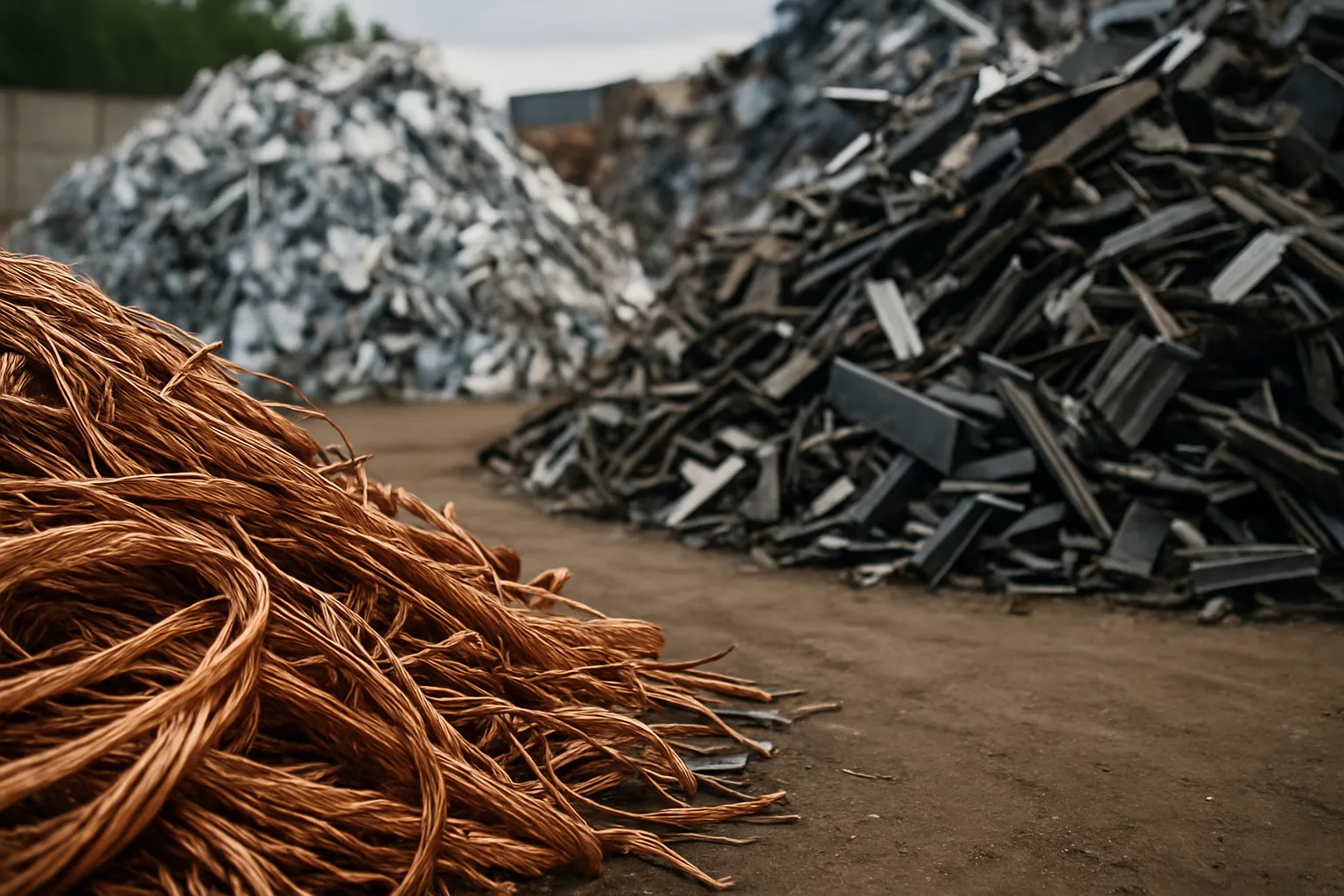
Most scrap yards don't advertise this, but environmental regulations governing metal recycling have tightened significantly across Canada over the past few years. If you're running a business that generates scrap — whether that's copper wire, aluminum offcuts, end-of-life vehicles, or spent catalytic converters — understanding those rules isn't just about compliance. It's about protecting your business and getting the best return on material you're already legally obligated to handle responsibly.
This isn't a legal handbook. It's a practical breakdown of what the environmental landscape looks like for scrap metal recycling in Canada in 2026, what it means for sellers in Quebec and beyond, and how a B2B scrap metal marketplace like SMASH simplifies your compliance paper trail while putting more competition behind your loads.
---Why Environmental Regulations Matter for Scrap Metal Sellers
Metal recycling is genuinely one of the most environmentally sound industries on the planet. Recycling aluminum uses a fraction of the energy required to smelt it from raw bauxite. Recycled copper avoids the pollution load of mining and refining. Steel scrap displaces virgin iron ore extraction. These are real, measurable environmental wins — and regulators know it.
That said, the process of collecting, storing, transporting, and processing scrap metal carries its own environmental risks. Hydraulic fluids, battery acid, refrigerants, mercury switches, and catalytic converter substrates all require handling procedures that prevent contamination of soil and groundwater. In Quebec, the Loi sur la qualité de l'environnement (Environment Quality Act) governs much of this. Federally, Transport Canada and Environment and Climate Change Canada have jurisdiction over hazardous materials in transit and at processing facilities.
For sellers — especially businesses generating significant volumes of scrap — the practical takeaway is this: documentation matters. Where your scrap came from, what it contains, and how it was stored before sale are questions buyers increasingly ask, and platforms like sell your scrap metal on SMASH Recycling are built to capture that documentation at the point of listing.
Scrap Metal Regulations in Quebec — What Sellers Need to Know
Quebec has some of the most structured recycling policy in North America. The province has long-standing extended producer responsibility (EPR) frameworks, and end-of-life vehicle (ELV) regulations continue to evolve. If you're generating automotive scrap, wiring, HVAC components, or industrial non-ferrous metals in and around Montreal, you're operating under a specific regulatory layer that buyers on any serious B2B scrap metal marketplace will expect you to understand.
Key considerations for Quebec sellers in 2026:
- End-of-life vehicles (ELVs): Depollution requirements under provincial guidelines mean fluids, batteries, and airbag systems must be removed before a vehicle can be crushed or sold as ferrous scrap. This affects your timeline and your net value calculation.
- Catalytic converters: Quebec, like most provinces, now requires transaction records for catalytic converter sales. Serial tracking and photo documentation are standard practice — and for good reason. Theft of catalytic converters remains a significant issue across Canada, and buyers on legitimate auction platforms want chain-of-custody proof before bidding on a pallet of cats.
- Hazardous materials in transit: Moving large loads of batteries, PCB-containing transformers, or refrigerant-bearing equipment requires proper documentation under federal TDG (Transportation of Dangerous Goods) regulations. This applies to businesses shipping scrap from Montreal to processing facilities elsewhere in Canada.
- Storage and site standards: If you're accumulating scrap on your property before sale, Quebec environmental standards govern containment, drainage, and proximity to waterways. Industrial generators are typically subject to more scrutiny than individual households.
None of this should scare you off recycling. It should make you demand better documentation tools from the platforms you use to sell. That's exactly where a structured B2B scrap metal marketplace earns its keep.
Catalytic Converters and the Chain-of-Custody Problem
If there's one category of scrap where environmental rules and theft-prevention rules overlap almost completely, it's catalytic converters. Cats contain platinum group metals (PGMs) — platinum, palladium, and rhodium — which are extraordinarily valuable per kilogram. That value has made them a prime target for theft from vehicles and from scrap yards themselves.
In response, provinces across Canada have tightened transaction requirements. Buyers at legitimate facilities now require proof of ownership or generation, photo documentation of each unit, and increasingly, VIN-linked records when catalytic converters come from vehicles. A catalytic converter auction conducted through a vetted platform handles all of this systematically. Rather than a handshake deal with one buyer at a local yard, you get competing bids from vetted purchasers who've agreed to chain-of-custody standards.
The environmental angle here is real too. PGM recovery from spent catalytic converters is a precision process. Reputable smelters and processors can recover close to 95% of the recoverable PGMs. That's a strong environmental argument for routing cats through documented, competitive channels rather than informal ones — and it's an argument that buyers in a legitimate catalytic converter auction actively make to their own downstream partners.
For sellers in Montreal dealing in automotive scrap, connecting with Montreal scrap metal services that prioritize documentation is the difference between a smooth transaction and one that creates liability downstream.
How Documentation and Transparency Protect Sellers — Not Just Buyers
Here's the part of the environmental compliance conversation most sellers miss: proper documentation protects you, not just the buyer or the regulator.
If you're a business generating industrial copper scrap, aluminum extrusions, or automotive cores in Quebec, and that material ends up in the hands of a processor who handles it improperly, traceability matters. A documented sale through a platform that captures inventory details, photographs, weights, and buyer identity gives you a defensible paper trail if questions arise later.
SMASH was built with this in mind. The platform includes:
- Inventory documentation tools — log your loads with photos, weights, grades, and condition notes before the auction opens.
- VIN lookup and serial tracking — critical for automotive scrap and catalytic converter transactions.
- Auto-invoicing with GST/HST/PST/QST handling — so your Quebec transactions generate compliant paperwork automatically.
- Vetted buyer network — every buyer on the platform has been screened. You're not selling to an unknown operator.
That's not just a feature list. It's a compliance toolkit dressed up as a marketplace. When regulations tighten — and they will — sellers who've been operating with full documentation are in a much stronger position than those who've been moving loads on a handshake.
Want to see what this looks like in practice? You can sell your scrap metal in Canada on SellYourScrap and get the documentation infrastructure that serious buyers expect in 2026.
The Market Side: How Compliance Builds Buyer Confidence (and Better Prices)
There's a direct line between documented, compliant scrap and stronger price discovery. Here's why.
Buyers — whether they're processing copper scrap, bidding on a pallet of aluminum extrusions, or evaluating a load of catalytic converters — price in uncertainty. If they don't know the grade, the provenance, or whether the material meets their intake requirements, they discount their offer to compensate for the risk. A well-documented load with photos, weights, grades, and clear chain-of-custody removes that uncertainty.
More confidence from buyers means more willingness to bid aggressively. More competing bids mean better price discovery. That's the core logic behind using a competitive auction format on a B2B scrap metal marketplace — not just convenience, but better outcomes from transparency.
Sellers in cities like Montreal, Toronto, and across scrap metal recycling Quebec operations who've made the shift from single-buyer phone calls to documented, competitive auctions report a fundamentally different experience. Not because the market price changed — but because multiple buyers competing on a documented load reveals what the market is actually willing to pay.
Prices fluctuate based on global commodity markets, exchange rates, and demand cycles. Always verify current rates before finalizing a deal. But the structural advantage of competition and documentation doesn't fluctuate — it's consistently in your favour.
If you're ready to stop guessing and start getting real market feedback on your scrap, get a fair price for your scrap today and list your first load through a platform built for serious sellers.
Getting Started: What to Prepare Before You Sell
Whether you're new to structured scrap sales or you're moving your operation from informal channels to a documented marketplace, the prep work is straightforward. Here's what to have ready before listing on any serious platform:
- Grade your material. Copper #1 bare bright, copper #2, bare aluminum, cast aluminum, and steel grades all carry different values. Know what you have before you list it. If you're unsure, use the platform's tools or ask — good platforms have support built in.
- Photograph your loads. Clear photos from multiple angles. Show the material, the grade quality, any contamination or mixed content. Buyers price based on what they see.
- Weigh your loads accurately. Estimated weights that come in significantly short on delivery create disputes. Invest in accurate yard scales if you're moving volume regularly.
- Document your VINs and serials. For automotive scrap and catalytic converters, VIN-linked documentation is increasingly expected by buyers and regulators alike.
- Know your Quebec documentation requirements. For businesses generating industrial or automotive scrap, have your site compliance and transport documentation current before your first sale.
Once you're set up, the process is straightforward. List your inventory, set your auction parameters, let vetted buyers compete, and close the deal with auto-generated invoicing. Explore Canadian scrap metal guides on SellYourScrap for more practical breakdowns of the selling process across different metal categories.
Environmental compliance and strong market returns aren't in conflict — they reinforce each other. The sellers getting the best outcomes in 2026 are the ones who've built documentation into their workflow and routed their scrap through competitive, transparent channels. If you're ready to make that shift, sell your scrap metal in Canada by requesting a pickup at sellyourscrap.ca.
---Frequently Asked Questions
Q: Do I need special permits to sell scrap metal in Quebec?
Most individual and small-volume sellers don't need special permits, but businesses generating scrap as part of industrial or automotive operations may have obligations under Quebec's Environment Quality Act. If you're storing scrap on-site or transporting hazardous materials, check with your municipal authority and Quebec's Ministry of the Environment for current requirements in your sector.
Q: Why do buyers on a B2B scrap metal marketplace require chain-of-custody documentation for catalytic converters?
Catalytic converter theft is a well-documented issue across Canada, and reputable buyers require proof of ownership or vehicle origin to protect themselves legally and reputationally. Platforms like SMASH use VIN lookup and serial tracking to document cat transactions, which satisfies buyer requirements and protects sellers from future liability questions.
Q: How does a B2B scrap metal marketplace handle GST/HST and QST for Montreal sellers?
SMASH's platform includes auto-invoicing with built-in GST/HST/PST/QST handling, so transactions between registered businesses in Quebec generate tax-compliant invoices automatically. This removes a significant administrative burden from sellers who are dealing with multiple buyers across provinces.
Q: Does proper documentation actually affect the price I get for scrap metal?
Yes — documented loads give buyers more confidence, which typically leads to more competitive bidding. When buyers can verify grade, weight, and provenance before bidding, they're less likely to discount their offer to account for uncertainty. More buyers bidding aggressively means better price discovery for you.
Q: Can I sell catalytic converters from vehicles I've purchased for dismantling in Montreal?
Yes, provided you can document the vehicle origin — typically through VIN records tied to the vehicle title or purchase receipt. Montreal-area sellers should ensure their depollution process complies with Quebec's end-of-life vehicle guidelines before offering catalytic converters for sale through any channel. A structured auction platform with serial tracking makes that documentation straightforward.
---Stay current on scrap metal market trends and industry news — follow SMASH on LinkedIn for regular updates on pricing movements, regulatory changes, and best practices for scrap metal sellers across North America.