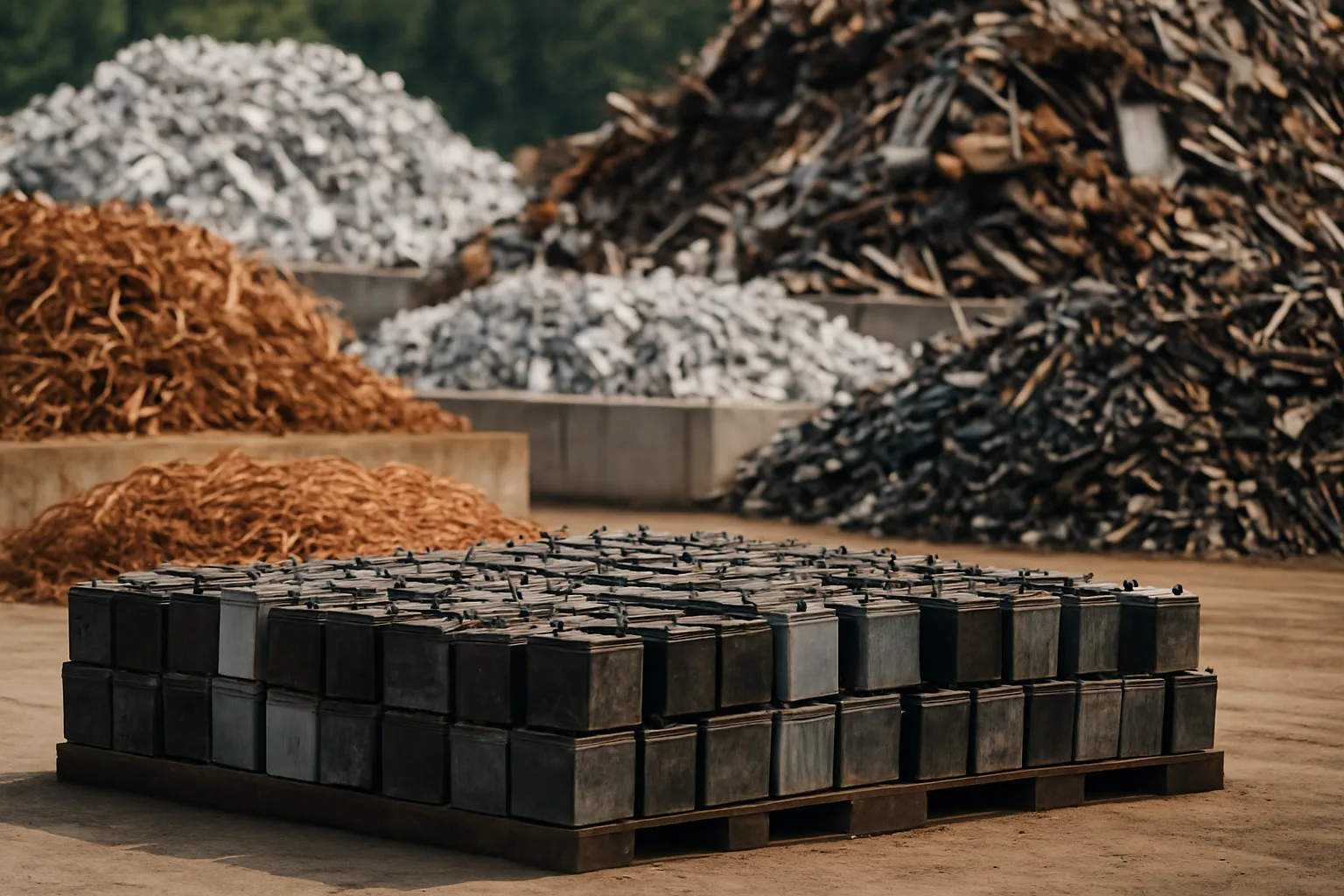
Most people toss their dead batteries without a second thought. That's money left on the table. Lead-acid batteries — the kind powering your car, forklift, or backup generator — contain significant amounts of recoverable lead, and lead scrap commands real value in today's metal recycling market. If you're sitting on a pile of dead batteries at your yard or facility in Hamilton, you're looking at scrap metal revenue, not waste disposal costs.
Understanding how lead-acid battery recycling works, what drives lead scrap prices, and how to get the best scrap metal prices Hamilton has to offer can make a measurable difference to your bottom line. This guide breaks it all down — practically, without the fluff.
---What's Actually Inside a Lead-Acid Battery (And Why It Matters)
A standard 12-volt automotive lead-acid battery weighs between 15 and 25 kilograms. The majority of that weight is recoverable material — primarily lead, which makes up roughly 60–70% of the battery's total mass. The rest includes sulfuric acid and polypropylene casing, both of which also get processed in proper recycling streams.
Lead is one of the most recycled metals on the planet. Secondary lead — recovered from used batteries — accounts for the vast majority of all lead produced in North America. That's not a coincidence. The recycling loop is efficient, the material holds value, and the infrastructure for processing it is well-established across Ontario and the rest of Canada. For sellers, this means consistent demand and a market that doesn't disappear when global manufacturing slows.
Key recoverable components in lead-acid batteries include:
- Lead plates and grids — the highest-value component
- Lead oxide paste — recoverable with the right processing equipment
- Polypropylene casing — recycled into new battery cases and plastic products
- Sulfuric acid — neutralized or reclaimed depending on the facility
When you sell a whole battery to a licensed recycler, you're not just selling dead weight. You're selling a processed commodity with a known recovery value. That's why lead-acid batteries attract real pricing — and why lumping them in with general scrap is a mistake.
---Lead Scrap Prices in Canada: What Moves the Market
Lead prices fluctuate based on global supply and demand, London Metal Exchange (LME) benchmarks, and North American secondary market conditions. As of mid-2026, lead continues to see steady demand driven by energy storage growth — particularly in industrial backup power systems and grid-scale battery installations that still rely on lead-acid chemistry for certain applications.
In practical terms, Canadian recyclers price whole lead-acid batteries per kilogram or per unit, depending on their buying model. Larger volumes — pallets, skids, or full truckloads — typically attract better per-unit pricing. The condition of the battery matters less than you'd expect for whole-unit purchases, but cracked or leaking batteries may be priced differently due to handling and regulatory requirements.
Factors that directly affect what you'll get paid:
- Volume — more units, better rate per kilogram
- Battery type — automotive, deep cycle, industrial, and forklift batteries all have different lead content
- Market timing — LME lead prices shift, and buyers adjust accordingly
- Buyer competition — a single buyer quote is rarely the best offer you'll get
- Documentation — clean manifests and weights speed up transactions and build trust
Disclaimer: Lead scrap prices change frequently based on market conditions. Always check current rates before selling. The figures referenced here are general guidance only.
---Why Hamilton Scrap Yards Are a Smart Starting Point — But Not Your Only Option
Hamilton has a long industrial history, and that history built real recycling infrastructure. The city's proximity to steel and manufacturing corridors across Ontario means there's consistent appetite for recovered metals — including lead from batteries. If you're generating lead-acid battery scrap regularly, local Hamilton yards can offer competitive pricing and short haul distances.
But "local" doesn't automatically mean "best price." Walking into a single yard and accepting the first offer is the old model. The better approach is creating competition around your material — which is exactly what platforms like SMASH Recycling — where verified buyers bid on your metal are built to do. Instead of one phone call to one buyer, your load gets exposure to a network of vetted buyers who compete for it.
For businesses generating regular volumes of lead-acid batteries — auto dismantlers, forklift fleet operators, battery distributors, industrial facilities — the difference between one-buyer pricing and competitive auction pricing adds up fast. That's not theory. That's how commodity markets work.
If you're new to the process or selling for the first time, the Hamilton scrap metal services page is a straightforward place to start understanding local options and pickup availability.
---B2B Scrap Metal Marketplace vs. Traditional Yard Drop-Off: A Direct Comparison
Let's be direct about the difference between selling through a B2B scrap metal marketplace and walking your material into a local yard. Both have a place — but they're not equivalent, especially at volume.
Traditional Yard Drop-Off
- One price from one buyer
- No visibility into how that price was set
- Relationship-dependent — your rate may depend on how long you've been a customer
- Limited documentation, often informal
- Fine for small, occasional loads
B2B Auction Platform (SMASH)
- Multiple vetted buyers competing for your load
- Transparent auction process — you see what buyers offer
- Structured inventory documentation with photos, weights, and manifests
- Auto-invoicing and paper trail built in
- Better suited to recurring commercial volumes
- No subscription fees — SMASH earns when you earn
For lead-acid battery scrap specifically, documented loads with accurate weights and battery counts give buyers more confidence. More confidence means more competitive bids. Platforms built around scrap metal inventory management — like SMASH — make that documentation process systematic, not something you're scrambling to pull together at pickup time.
If you're running a business and treating scrap as an afterthought, you're almost certainly leaving revenue behind. Ready to sell your scrap metal in Canada on SellYourScrap and see what competitive pricing actually looks like? Start there.
---How to Prepare Your Lead-Acid Battery Scrap for Maximum Value
Preparation is simple but it matters. Buyers want to know what they're buying. The more clearly you can describe and document your material, the smoother the transaction — and the more seriously buyers take your load.
Here's a practical checklist before you move your batteries:
- Count and weigh your units — even a rough weight helps buyers price accurately
- Sort by battery type — automotive, deep cycle, AGM, industrial, and forklift cells should be separated if possible
- Photograph the load — multiple angles, including any cracked or damaged units
- Note condition issues — leaking batteries require disclosure and may need separate handling under Ontario regulations
- Prepare a simple manifest — unit count, estimated weight, battery types, and your contact information
- Confirm regulatory compliance — used lead-acid batteries are regulated under Ontario's environmental rules; ensure your storage and transport practices are compliant
This isn't bureaucratic overhead. It's the difference between a buyer who lowballs because they're guessing and a buyer who competes because they know exactly what they're getting. Documented scrap earns better offers. Full stop.
You can also explore Canadian scrap metal guides for more practical breakdowns on preparing different material types for sale.
---Selling Lead-Acid Battery Scrap Near You: Making It Easy in Ontario
Whether you're searching for sell scrap metal near me in Hamilton or managing material across multiple Ontario locations, the logistics of battery scrap don't have to be complicated. Pickup services exist for commercial volumes. Buyers who work through structured platforms typically handle logistics as part of the deal.
For anyone generating lead-acid batteries regularly — think auto wreckers, battery retailers, heavy equipment shops, warehouses with UPS backup systems — the right approach is to treat this stream like any other recoverable commodity. Set up a consistent pickup schedule. Document your loads. Create buyer competition. Don't accept the first number you're quoted without understanding what the market will actually pay.
If you're looking for a faster way to move material, you can get a fair price for your scrap today through platforms that connect you directly to buyers who want what you have. Hamilton and the surrounding Ontario market have real depth when it comes to lead and battery scrap — but you have to access that depth intentionally, not by habit.
SMASH makes that process straightforward. List your load, document it properly, let verified buyers compete. No guessing, no single-buyer pricing, no subscription fees eating into your margins.
---Frequently Asked Questions
Q: What are lead-acid batteries worth as scrap metal in Hamilton?
Pricing for lead-acid batteries varies based on current LME lead prices, battery type, and volume. Automotive batteries, industrial units, and forklift batteries all carry different values per kilogram. Contact local Hamilton recyclers or use a competitive platform to get current market pricing — don't rely on posted rates, which are often baseline offers for small loads.
Q: Can I get the best scrap metal prices Hamilton offers for a large battery load?
Yes — but only if you create competition for your material. A single buyer quote rarely reflects the full market value of a documented, high-volume load. Platforms like SMASH connect sellers to multiple vetted buyers, which is how price discovery actually works. Documented loads with accurate weights and photos consistently attract stronger offers.
Q: Do I need to do anything special before selling used lead-acid batteries in Ontario?
Used lead-acid batteries are regulated hazardous materials under Ontario environmental rules. You need to ensure proper storage (upright, contained, no leaks), accurate manifesting for transport, and that your buyer is a licensed processor. Working with vetted recyclers — not informal buyers — keeps you compliant and protects your business.
Q: Is there pickup available for lead-acid battery scrap near Hamilton?
Yes. Commercial volumes of battery scrap can typically be picked up directly from your facility. Volume thresholds vary by buyer. If you're regularly generating battery scrap, it's worth setting up a consistent pickup schedule rather than making individual drop-off trips. Request a pickup through sellyourscrap.ca to get the process started.
Q: What's the difference between selling at a local scrap yard and using an online B2B scrap metal marketplace?
Local yards offer convenience and speed for small or one-off loads. A B2B marketplace like SMASH offers competitive bidding, transparent pricing, and better documentation — which typically produces stronger outcomes for commercial volumes. The two approaches aren't mutually exclusive, but for recurring or high-value loads, a competitive marketplace almost always delivers better results.
---If you've got lead-acid battery scrap sitting at your facility, don't let it collect dust. The material has real value, the market for it is active, and you don't have to accept the first price you're quoted. Sell your scrap metal in Canada — request a pickup at sellyourscrap.ca and find out what your batteries are actually worth in today's market.
Stay current on scrap metal pricing, market trends, and recycling insights by following SMASH on LinkedIn — practical industry updates, no noise.