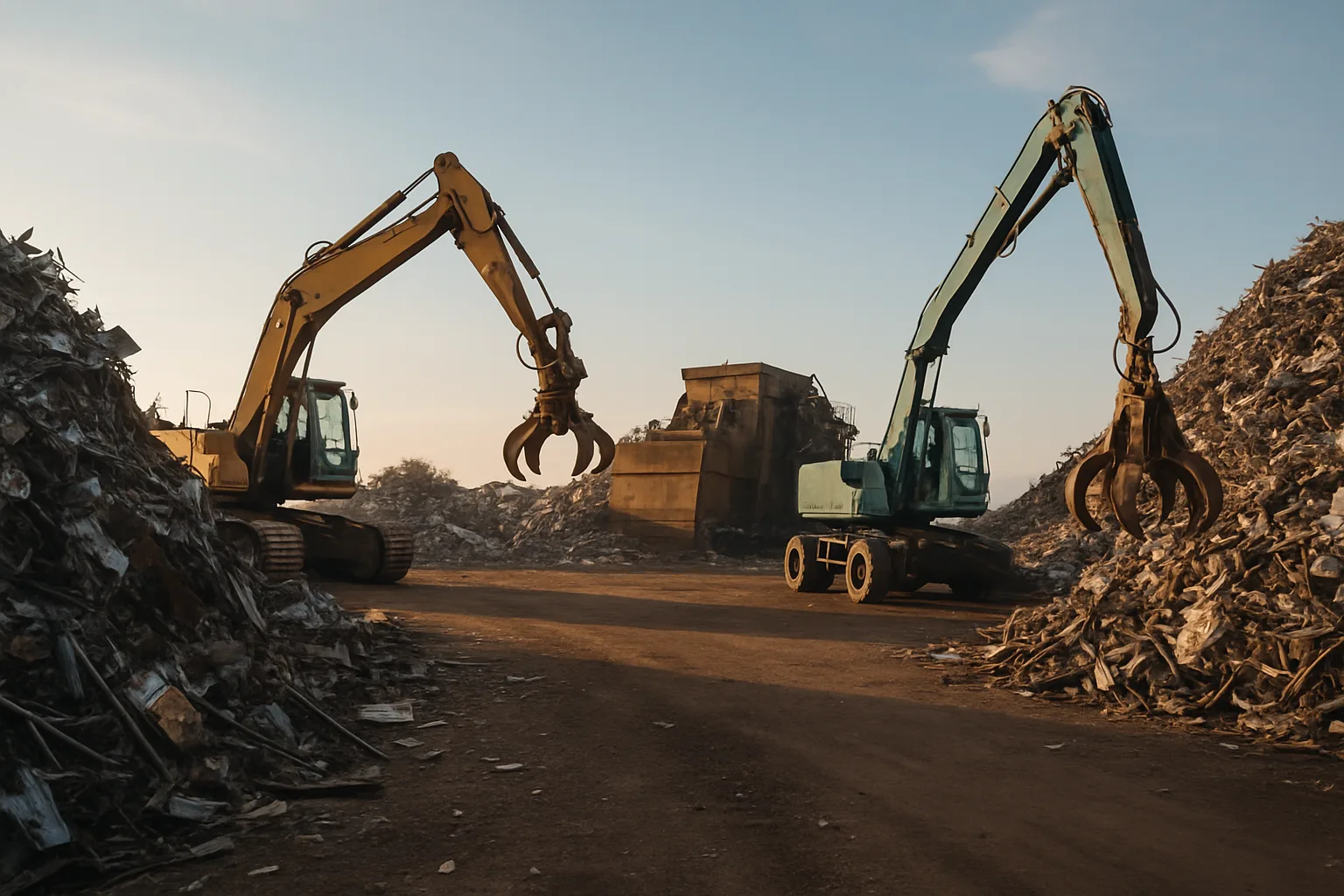
Which Scrap Metals Actually Pay — And How to Get the Best Price in Trois-Rivières
Most people selling scrap leave money on the table. Not because the metal isn't valuable — but because they don't know what they have, and they sell to whoever picks up the phone first. If you're sitting on a pile of mixed metal and wondering whether it's worth sorting, the answer is almost always yes. The difference between tossing everything in one bin and separating your loads by grade can mean a dramatically different payout.
This guide breaks down the most profitable scrap metals available in Canada right now, what affects their value, and how sellers in Trois-Rivières and across Quebec can stop guessing and start getting paid what their material is actually worth.
Copper: Still the King of Scrap Metal Prices
If you're asking what drives the best scrap metal prices Trois-Rivières has to offer, copper is almost always the answer. It's the most valuable common non-ferrous metal you'll find in residential, commercial, and industrial settings. Bare bright copper — the cleanest grade, stripped of insulation and oxidation — commands the highest price per pound. Copper pipe, wire, and tubing from plumbing or electrical work are the most common sources.
The grade matters enormously. Insulated copper wire is worth less than stripped wire. Dirty copper with solder or paint is docked further. Here's a quick breakdown of copper grades you'll encounter:
- Bare bright copper: The highest grade — clean, uncoated, unalloyed wire or tubing.
- Copper #1: Clean unalloyed copper pipe or tubing, free of fittings and oxidation.
- Copper #2: Slightly oxidized or soldered copper — still valuable, just not top-tier.
- Insulated copper wire: Priced based on the estimated copper content inside the insulation.
Whether you're a contractor pulling old plumbing or a homeowner renovating a kitchen, sorting your scrap copper before you sell pays off. Platforms like get competitive bids for your scrap in Canada put your copper inventory in front of multiple vetted buyers — so the price reflects actual market demand, not one buyer's best offer on a slow Tuesday.
Aluminum: High Volume, Strong Returns
Aluminum is the workhorse of non-ferrous recycling. It's everywhere — rims, extrusions, siding, gutters, cans, cast parts, and window frames. It's not as dense as copper, but the volume available makes it one of the most profitable categories for yards and collectors who move consistent loads.
Like copper, aluminum has grades. Cast aluminum (think engine blocks and transmission cases) is worth less than clean extrusion or sheet. Contaminated aluminum mixed with iron or plastic gets penalized. Keeping grades separated when you collect or store means fewer deductions when you sell.
Aluminum is especially common in light manufacturing and auto dismantling — two industries with a strong presence in Quebec's industrial corridor. If you're pulling parts from vehicles or clearing a shop floor, there's a good chance aluminum makes up a significant portion of your load.
- Clean aluminum extrusion: Window frames, industrial profiles — clean and uncoated.
- Cast aluminum: Engine components, gear housings — lower grade but high availability.
- Aluminum sheet/siding: Clean sheet is worth more than painted or coated material.
- Rims/wheels: Clean aluminum wheels, free of lead weights and valve stems, are a separate grade.
For anyone running regular aluminum volumes, scrap metal inventory management becomes a real issue. Knowing what you have, tracking it by grade, and documenting it with photos before it moves gives buyers confidence — and confidence translates into stronger bids.
Catalytic Converters: The Most Undervalued Item in Most Loads
Catalytic converters get their value from the platinum group metals (PGMs) inside — platinum, palladium, and rhodium. These aren't cheap. PGM prices are volatile, but even a single converter from the right vehicle can be worth more than a hundred pounds of mixed aluminum.
The challenge with cats is that most sellers don't know what they have. A converter from a late-model SUV is worth significantly more than a generic OEM unit from a base-model compact. VIN-based lookup and serial number tracking exist for exactly this reason — they match the specific converter to its known PGM content and market value.
SMASH uses serial tracking and VIN lookup to help sellers document their cats properly before going to market. That documentation gives buyers enough confidence to bid aggressively, which is exactly the outcome you want. Selling converters without documentation to a single buyer is one of the fastest ways to leave money on the table.
If you're in the auto recycling or dismantling business anywhere in Quebec, your catalytic converter handling process is worth reviewing. The difference between a documented auction and a quick-cash sale to one buyer can be substantial on a per-unit basis — multiply that across a month's volume and you're talking real dollars.
Steel and Ferrous Metals: Lower Price, High Volume
Steel isn't glamorous. The price per pound is a fraction of copper or aluminum. But for anyone moving bulk loads — demolition material, shop offcuts, machinery, structural steel — ferrous metals add up fast. And because steel is heavy, even modest price-per-ton numbers translate to meaningful payouts on large loads.
The key with ferrous is separation and cleanliness. Unprepared steel with excessive attachments, paint, or mixed contamination gets docked. Shredded steel, structural steel, and plate and structural (P&S) are all separate grades with different values. Heavy melt #1 and #2 are the most common categories for industrial sellers.
Trois-Rivières has a history in heavy industry — pulp and paper, manufacturing, and infrastructure — which means legacy ferrous material is a real part of the local recycling picture. If you're clearing a facility or managing a decommissioning project, knowing your ferrous grades before you call a buyer is a basic step that protects your payout.
For any operation with consistent steel volume, tying into a B2B scrap metal marketplace makes more sense than calling one yard. Multiple buyers competing on a documented load creates price discovery that a single phone call never can. That's not a marketing claim — it's just how auctions work.
What Drives Scrap Metal Prices — And Why You Shouldn't Guess
Scrap metal prices are tied to global commodity markets. London Metal Exchange (LME) pricing for copper and aluminum, automotive demand for PGMs, and domestic steel mill consumption all feed into what buyers will pay on any given day. Prices in July 2026 reflect current trade conditions, energy costs, and raw material demand — not what was happening twelve or eighteen months ago.
This is why checking current rates matters every single time you sell. A price guide from last year is noise. If you want the best scrap metal prices Trois-Rivières buyers will offer today, you need to be in a process that reflects today's market. That means documented inventory, multiple buyers, and a transparent process — not a cold call and a handshake.
SMASH solves the information gap directly. When your load is properly documented — weights, grades, photos, serial numbers where applicable — buyers can bid with confidence. More confident buyers bid more aggressively. That's price discovery, and it's the clearest path to a better return on your material.
Disclaimer: All scrap metal prices fluctuate based on market conditions. Check current rates before selling and do not rely on historical pricing for current transactions.
How to Sell Scrap Metal in Canada the Smarter Way
Whether you're an individual clearing a garage, a contractor wrapping up a job, or a yard operator moving regular volume, the process you use to sell affects what you get paid. The old way — call one buyer, take the offer, hope it's fair — works in someone's favour. Usually not yours.
Here's a practical approach that gets better results:
- Sort by grade before you sell. Mixed loads get penalized. Separated loads get graded accurately and priced better.
- Document what you have. Photos, weights, and serial numbers (for cats and cores) give buyers enough to bid without hedging.
- Put your load in front of multiple buyers. One phone call is not a market. An auction with vetted buyers is.
- Use a platform that charges no subscription fees. If the platform only wins when you win, the incentives are aligned.
- Check current prices before you sell. Timing matters. Don't sell into a dip if you can hold the material a few days.
If you're searching for scrap metal recycling near me for cash or trying to find scrap metal near me within 5 mi, the first step is knowing what you have and what it should realistically be worth. From there, you can connect with buyers who are actively looking for your material — not just the first number in your contact list.
When you're ready to move your material, you can sell your scrap metal in Canada on SellYourScrap and get into a process built around fair market pricing. For businesses with regular volume or mixed commercial loads, get a fair price for your scrap today through a documented, competitive process that replaces the guesswork. And if you want to dig deeper into how Canadian recycling markets work, explore Canadian scrap metal guides for practical advice on grades, pricing, and process.
Selling scrap in Canada doesn't have to feel like a gamble. Sort your material, document it properly, and let competition do the work. If you're in the Trois-Rivières area or anywhere across Quebec, there are buyers who want what you have — the goal is making sure they compete for it.
Frequently Asked Questions
Q: What scrap metal gets the best prices in Trois-Rivières right now?
Copper consistently commands the highest price per pound among common scrap metals. Catalytic converters can also be extremely valuable depending on the vehicle make and model. The best way to know current rates is to check with an active marketplace rather than relying on posted guides, since prices shift with global commodity markets.
Q: How do I find the best scrap metal prices in Trois-Rivières?
The most reliable way is to document your load properly — weights, grades, and photos — and put it in front of multiple vetted buyers. A competitive auction process gives you real price discovery instead of a single buyer's offer. Platforms like SMASH connect sellers across Canada with active buyers competing for inventory.
Q: Is it worth sorting my scrap metal before selling?
Yes — almost always. Mixed loads get penalized because buyers have to account for the cost of sorting. Separated, graded material is priced more accurately and gives buyers the confidence to bid higher. Even a basic sort between copper, aluminum, and steel can meaningfully improve your payout.
Q: Can I sell scrap metal as an individual, or is it only for businesses?
Both individuals and businesses can sell scrap metal in Canada. If you're a homeowner with copper pipe from a renovation or aluminum from a shed tear-down, that material has real value. You can get a fair price for your scrap today regardless of your volume — the process works whether you're clearing a single load or managing ongoing inventory.
Q: How do scrap metal prices in Quebec compare to the rest of Canada?
Scrap metal prices are largely driven by global commodity markets, so copper, aluminum, and steel pricing is broadly consistent across Canada. Local factors like transportation costs, regional demand, and the density of active buyers can create some variation. In markets like Quebec, connecting to a national pool of vetted buyers through a marketplace helps ensure your price reflects broader demand — not just what's available locally.
Ready to stop guessing what your scrap is worth? Sell your scrap metal in Canada and request a pickup at sellyourscrap.ca — whether you're a first-time seller or moving regular commercial volume, the process is straightforward and built around fair market pricing.
Stay current on scrap metal market trends and Canadian recycling industry news by following SMASH on LinkedIn — practical insights, no filler.