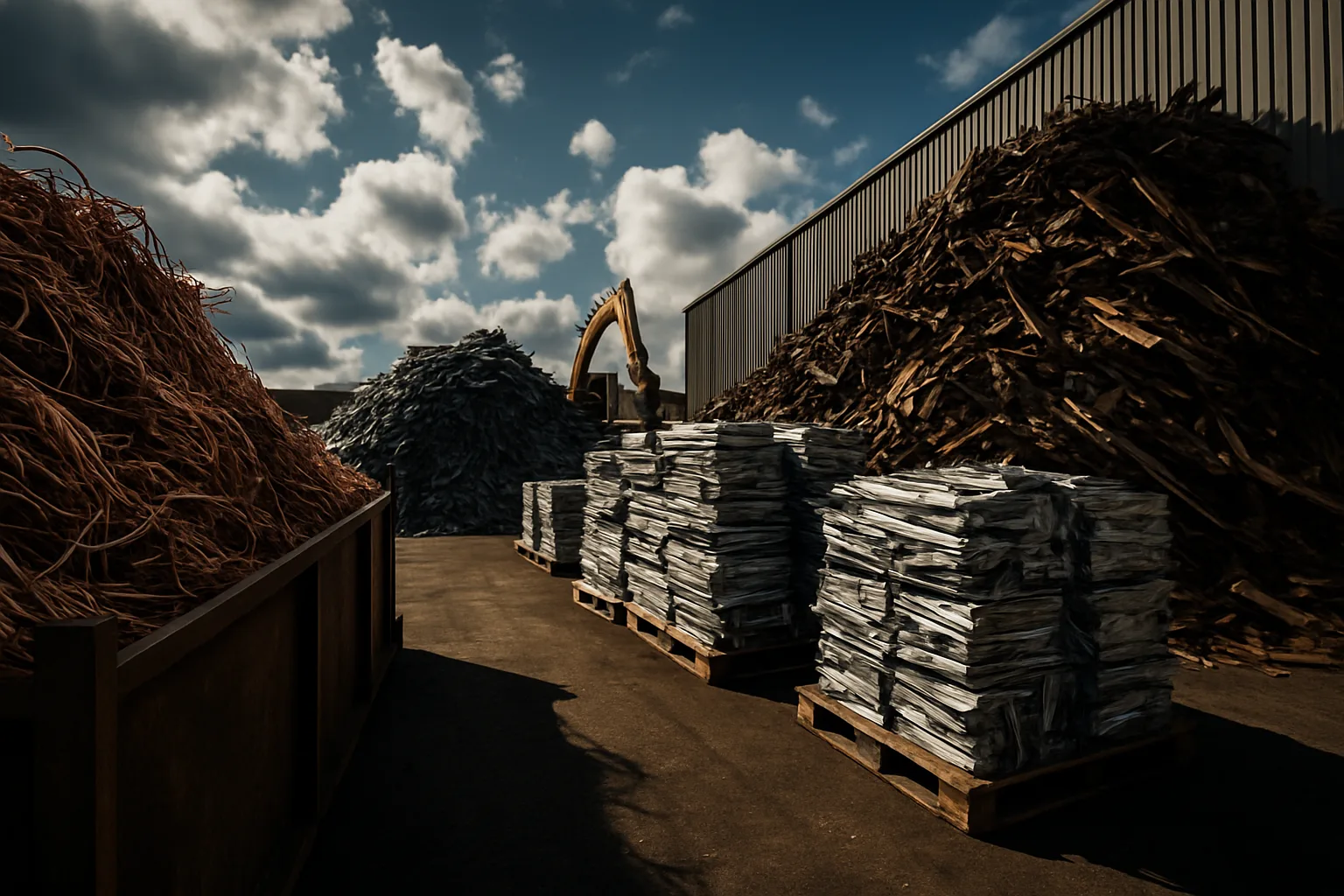
What Actually Happens When a Yard Weighs and Grades Your Scrap
Most sellers walk away from a recycling yard wondering the same thing: Did I get a fair shake? That question haunts every transaction where one buyer controls the scale, sets the grade, and names the price — with no outside check on any of it. Understanding how yards weigh and grade your scrap metal isn't just trivia. It directly determines how much money lands in your pocket.
Whether you're hauling a load of copper wire from a job site in Windsor or moving aluminum extrusions out of an Ontario industrial facility, the grading and weighing process is where value is made or lost. Knowing what happens inside that transaction gives you leverage. Ignorance costs you money.
The Scale: Where Every Scrap Metal Transaction Starts
Every load starts on a truck scale — also called a weigh bridge. You pull in heavy, get your gross weight, unload, then pull out and get your tare weight. The difference is your net weight of material. Simple in theory. Less simple in practice.
Scale accuracy matters. Certified truck scales are legally required to be calibrated and inspected regularly in Ontario, but not every small yard operates a certified weigh bridge. Some use floor scales or platform scales for smaller loads, which introduce more opportunity for variance. If a yard is using an uncalibrated or poorly maintained scale, you may never know — and you have no way to verify the reading after the fact.
- Gross weight: Your truck or vehicle fully loaded
- Tare weight: Your truck or vehicle empty
- Net weight: The actual scrap you delivered
- Moisture deductions: Some yards apply deductions for wet or contaminated material — ask upfront
Moisture deductions are a real grey area. A yard may dock your weight or offer a lower per-pound rate on a load of turnings that got rained on. Sometimes that's legitimate. Sometimes it's a negotiating tactic. Either way, you're accepting whatever they tell you unless you have other buyers in the picture pushing back.
Grading: The Part That Changes Your Price the Most
Weight is just the starting point. The grade assigned to your material determines the price per pound — and the spread between grades can be significant. Copper #1 bare bright isn't the same as copper #2, which isn't the same as insulated wire. A yard that downgrades your material by one tier on a large load can cost you hundreds of dollars before you've even left the parking lot.
Grading follows industry standards — the Institute of Scrap Recycling Industries (ISRI) publishes commodity specifications that define grades like:
- Bare Bright Copper (#1): Clean, uncoated, unalloyed wire — the highest copper grade
- Copper #2: Slightly oxidized, coated, or miscellaneous copper — lower price
- Painted or coated aluminum: Worth less than clean extrusions or sheet
- Cast aluminum vs. extruded aluminum: Different grades, different prices
- Zorba: Mixed non-ferrous shredder product with its own pricing structure
- HMS 1 vs. HMS 2 (Heavy Melting Steel): Cleanliness and gauge affect which grade your steel gets
Here's the problem most sellers don't think about: grading is subjective. Two yards can look at the same load and call it differently. One says your copper is #2 because it has some light oxidation. Another says it's #1 because the metal underneath is clean. Without competitive bids, you have no way to know which assessment is actually in your favour — or whether you left money on the table. That's exactly where a scrap metal auction model starts making real sense.
How Documentation Changes the Game — Especially for Larger Loads
If you're moving a one-time load of household copper pipe, documentation may not feel like a priority. But if you're a Windsor-area contractor clearing out a commercial demolition site, or an auto recycler in Ontario moving regular loads of non-ferrous material, documentation is the difference between a fair deal and getting taken advantage of.
Proper inventory documentation before your load leaves your yard typically includes:
- Photos of the material — showing grade, condition, and quantity before loading
- Itemized packing lists — breaking out different grades by weight where possible
- Bill of Lading (BOL) — establishing what left your facility
- Serial numbers or VIN lookups — relevant for catalytic converters and vehicle-sourced material
When you document before shipping, you hold evidence of what the load looked like. That matters when a buyer disputes the grade or condition after delivery. Platforms like SMASH build documentation directly into the workflow — photo upload, serial tracking, and itemized inventory are part of how a load gets listed. That's not busywork. That's how you protect yourself.
Buyers also pay more for well-documented material. When they can see exactly what they're bidding on, they bid with more confidence — and more confidence usually means better price discovery. It's that straightforward. If you want to sell your scrap metal in Canada on SellYourScrap, starting with solid documentation puts you in a stronger position from the first step.
The Single-Buyer Problem and What Competition Actually Does
Here's how most scrap transactions still work across North America: you call one yard, they quote you a price, you take it or drive somewhere else and repeat the process. By the time you've called three yards, the market has moved, you've wasted an hour, and you're still guessing at fair value. That's the old way. It works fine for the buyer. Not so much for you.
The single-buyer model concentrates power on one side of the transaction. The yard knows its full cost basis, its current inventory levels, and what downstream buyers are paying. You know nothing except what that yard tells you. Information asymmetry is how scrap buyers have always made money — and how sellers consistently leave value behind.
Competition changes that dynamic. When multiple vetted buyers are looking at the same documented load and submitting bids through a scrap metal auction format, the market reveals itself. No single buyer can lowball you unchallenged. The weight and grade they assign matters more because other buyers are reviewing the same information and offering their own assessment through their bid. More buyers means better price discovery — that's not marketing language, it's just how markets work.
For sellers in Windsor and across Ontario, Canada's B2B scrap recycling marketplace — SMASH — is built on exactly this model. Vetted buyers, auction format, no subscription fees. SMASH only wins when the seller wins.
Real Scenarios: How Weighing and Grading Decisions Affect Your Payout
Let's put this in practical terms. Suppose you're a Windsor auto recycler and you've accumulated a load of aluminum radiators. You call your regular buyer and he quotes you a price per pound for "clean aluminum radiators." You accept it because he's always been reasonable and you don't have time to shop around.
What you might not know: another buyer in Ontario is currently paying a higher rate because their downstream customer needs that material and they're short. That information never reaches you. You got paid, but you got paid the first offer — not the best offer.
Now consider the same load listed on a scrap metal auction platform with photos, weight estimate, and a clear material description. Three buyers bid. The spread between the lowest and highest bid tells you something real about where the market sits. You take the highest bid. Your aluminum scrap value today just became something you actually know — not something one buyer decided for you.
This isn't about distrust. Most yards operate honestly. It's about information. You can't get a fair price without knowing what fair looks like. If you want to get a fair price for your scrap today, the process starts long before you pull onto the scale — it starts with how you document, how you present, and who's competing for your load.
What to Do Before Your Next Scrap Load Moves
Whether you're a first-time seller or a seasoned yard operator, these steps improve your position every time:
- Sort before you go. Mixed loads get graded down. Separation takes time but pays off per pound.
- Photograph your material. Timestamp it. This is your record of what left your facility.
- Know your grades. Look up ISRI specs for your material before you load. Don't let a buyer educate you on grade at the scale — that's too late.
- Ask about deductions upfront. Moisture, contamination, processing — know what comes off before you agree to a rate.
- Get competitive bids. If you're moving volume, one quote is not a price — it's an opening offer.
- Use documented inventory tools. Platforms like SMASH offer this built-in. Use it.
Windsor has active industrial and automotive sectors generating consistent non-ferrous and ferrous scrap. Ontario's recycling infrastructure is solid. But infrastructure doesn't protect you from a bad transaction. Your preparation does. You can also explore Canadian scrap metal guides to build your knowledge before your next load moves.
For local sellers in Windsor looking for a straightforward starting point, Windsor scrap metal services can connect you with options that work for your load size and material type.
The scrap market in 2026 is tighter and more competitive than it's been in years. Steel scrap price today, aluminum scrap value per pound, copper — all of it moves with global demand signals, trade flows, and energy costs. The best way to protect your returns isn't to guess where the market is heading. It's to make sure you're actually getting what the market will pay — through documentation, competition, and transparency.
When you're ready to move your next load, don't settle for the first quote. Request a pickup at sellyourscrap.ca and find out what your material is actually worth in today's market.
Frequently Asked Questions
Q: How do recycling yards determine the grade of my scrap metal?
Yards visually inspect your material and compare it against industry-standard grade definitions — most commonly ISRI commodity specifications. Factors like oxidation, coating, contamination, and alloy type all affect which grade your material receives. Because grading has a subjective element, getting competitive bids through a scrap metal auction helps you verify whether a grade assignment is fair.
Q: Can I dispute a weight or grade at a scrap yard in Windsor?
You can raise concerns, but disputing after the fact is difficult without your own documentation. The best protection is to photograph and weigh your material before it leaves your facility. In Ontario, certified truck scales are subject to inspection standards — if you suspect a scale issue, you can request calibration records.
Q: What is the difference between ferrous and non-ferrous scrap pricing?
Ferrous scrap — steel and iron — is priced differently than non-ferrous material like copper, aluminum, and brass. Non-ferrous metals generally carry higher value per pound. Pricing for both categories fluctuates based on global commodity markets, and steel scrap price today may differ significantly from what was posted last week. Always confirm current rates before committing to a sale.
Q: Does selling scrap metal online actually work for Windsor sellers?
Yes — platforms designed to sell scrap metal online connect local sellers with a broader pool of vetted buyers, which creates real price competition. Sellers in Windsor and across Ontario have access to buyers beyond their immediate geography, which is particularly valuable for non-ferrous loads where demand varies by region.
Q: Are there fees involved in using a scrap metal auction platform like SMASH?
SMASH operates without subscription fees. The platform earns when sellers earn — meaning there's no cost to list and no monthly commitment. This structure is designed specifically for recycling yards and scrap sellers who want competitive bidding without paying upfront for access to buyers.
Stay current on scrap metal market trends and industry news — follow SMASH on LinkedIn for regular updates on aluminum scrap value today, steel pricing, and what's moving in Canadian scrap markets.