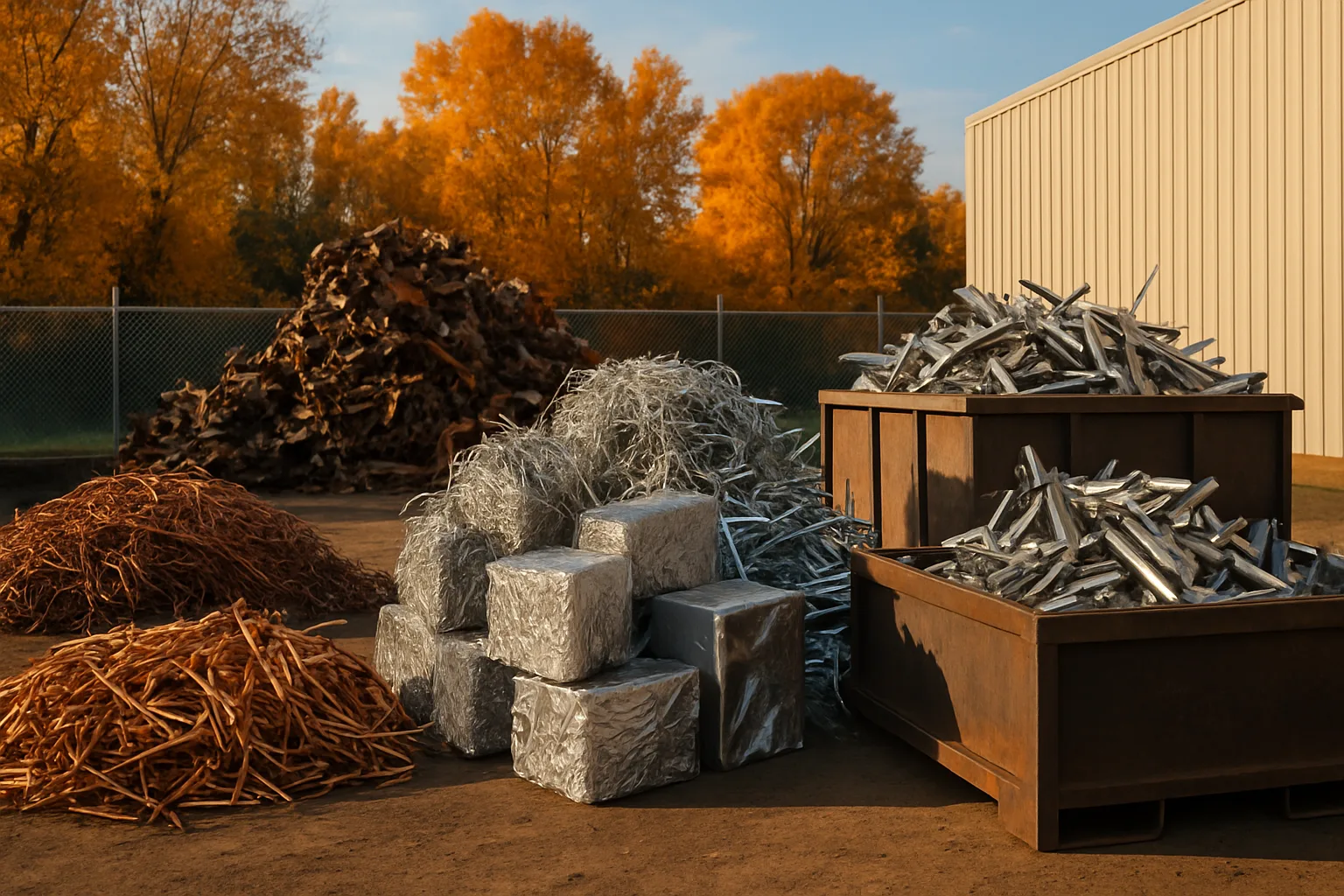
Most people hauling stainless steel to a recycling yard have no idea which grade they're holding — and that gap in knowledge costs them money. Stainless steel isn't one material. It's a family of alloys, each with different nickel, chromium, and molybdenum content, and buyers price them very differently. If you're doing scrap metal recycling in Charlottetown or anywhere else in Canada, understanding what you've got before you sell is the difference between a fair price and leaving cash on the table.
This guide breaks down the most common stainless steel scrap grades, how they're priced, and how to make sure you're getting a competitive return — whether you're a homeowner clearing out old appliances or a shop moving industrial offcuts.
---Why Stainless Steel Scrap Grades Matter So Much
Steel is steel, right? Not even close. The stainless steel family includes dozens of grades, but in the scrap world, a handful dominate. The grade determines the nickel content, and nickel is expensive. That's what drives the price spread between a Grade 304 sink and a Grade 201 refrigerator shell — sometimes by a significant margin per pound.
Buyers sort stainless into grades because they're selling it back into the melt market, where mills pay specifically for alloy chemistry. Mix grades together, and you dilute value. Know your grades, keep them separated, and you walk out with more money. It's that straightforward.
- Grade 304 — The most common. Think kitchen sinks, restaurant equipment, food-grade tanks, and industrial tubing. Contains roughly 18% chromium and 8% nickel. This is the benchmark grade most yards price first.
- Grade 316 — Higher value than 304. Contains molybdenum in addition to nickel and chromium, making it corrosion-resistant in marine and chemical environments. Look for it in marine hardware, medical equipment, and chemical processing gear.
- Grade 201 — Lower nickel content, sometimes manganese-substituted. Common in consumer appliances, budget cookware, and decorative trim. Prices lower than 304 — sometimes significantly.
- Grade 430 — Ferritic, meaning it's magnetic and contains no nickel. Often found in automotive trim and low-end appliances. Priced much lower than austenitic grades.
- Turnings and mixed stainless — Machine shop swarf, mixed cuts, and contaminated material. Lowest tier. Processed at a discount because sorting and melting costs are higher.
If you're unsure what grade you have, bring a magnet. Grade 304 and 316 are non-magnetic. Grade 430 is magnetic. That one test can immediately tell you whether you're holding higher-value austenitic stainless or lower-value ferritic material. It's not a perfect test, but it's a fast start.
---How Stainless Steel Scrap Is Priced in Canada
Stainless steel scrap pricing follows global nickel markets more closely than iron or steel scrap. When nickel prices move on the London Metal Exchange (LME), stainless scrap prices follow — sometimes within days. This volatility is real, and it means the number you heard last week may not be the number you get today.
Canadian yards price stainless in dollars per pound or per kilogram, depending on the buyer. In 2026, the nickel market has continued to fluctuate based on EV battery demand signals, Indonesian supply, and broader commodity sentiment. That uncertainty makes it even more important to get more than one price before you sell.
General pricing tiers in the Canadian market tend to follow this pattern (always confirm current rates directly — these are reference points, not guarantees):
- Grade 316 — Highest scrap value. Molybdenum content adds a premium over 304.
- Grade 304 — The benchmark. Most common, most liquid, easiest to sell.
- Grade 201 — Discounted relative to 304. Some yards won't take it separately at all.
- Grade 430 — Priced much closer to carbon steel than to 304. Don't let a yard sort your 304 into the 430 pile.
- Mixed or contaminated stainless — Lowest return. Clean and sort before you sell if volume justifies it.
Disclaimer: Stainless steel scrap prices fluctuate based on nickel market conditions, regional supply, and buyer demand. Always check current rates before selling. The tiers above reflect general market structure, not specific dollar amounts.
If you want to get a fair price for your scrap today, the best move is to know your grade, separate your loads, and get competitive quotes rather than defaulting to whoever's closest.
---Selling Stainless Steel Scrap in Charlottetown and Prince Edward Island
Charlottetown's scrap market is smaller than Toronto or Vancouver, but that doesn't mean you're stuck with whatever a single yard offers. If you're in Charlottetown or elsewhere on Prince Edward Island, you have options — especially if you're willing to document what you have and reach buyers outside your immediate geography.
Industrial operations — food processing, marine industries, HVAC and plumbing contractors — generate meaningful volumes of stainless scrap. A restaurant equipment supplier clearing out inventory, a lobster processing facility replacing tanks, or a trades contractor with leftover 316 tubing all have material worth pricing properly. The challenge on PEI is that a single local buyer means no competition, and no competition means no price discovery.
That's exactly the problem platforms like SMASH solve — find the best price for your scrap in Canada. Instead of one phone call to one buyer, you document your load, list it, and let vetted buyers compete. For higher-value material like 316 stainless, the difference between one bid and three bids can be meaningful. For anyone doing scrap metal recycling in Charlottetown with industrial volumes, that kind of price discovery matters.
---How to Prepare Your Stainless Steel for the Best Price
Preparation directly affects your payout. Yards apply discounts for contamination, mixed grades, and loads that require additional sorting. A few practical steps before you sell make a real difference.
- Sort by grade. Keep 304 separate from 201 and 430. If you're unsure, use the magnet test as a first pass.
- Remove attachments. Plastic handles, rubber gaskets, carbon steel bolts, and painted steel sections reduce the value of an otherwise clean load. Strip what you can.
- Document with photos. If you're selling online or through an auction platform, clear photos of your material help buyers bid accurately. This protects you from post-sale disputes and grade disagreements at the dock.
- Weigh it yourself. If you're moving volume, know your approximate weight before you arrive. It gives you a baseline to compare against the yard's scale ticket.
- Bundle turnings separately. Machine shop turnings and swarf have different handling costs. Mixing them with clean sheet or tube stock will pull your average price down.
The effort you put into sorting and documentation pays off most when buyers are competing for your load. A well-documented, grade-separated stainless lot gives buyers more confidence — and more confidence leads to stronger bids. Platforms like SMASH are built around this principle: documented inventory creates better price discovery for sellers.
If you're new to this process and want to understand how Canadians are navigating scrap metal sales, there's a growing body of practical guidance available. Selling scrap metal in Canada on SellYourScrap is a good starting point if you want to understand your options before picking up the phone.
---Stainless vs. Other Scrap Metals: Where It Fits in a Broader Load
Many sellers come in with mixed loads — copper pipe alongside stainless fittings, aluminum sheeting next to 304 tube stock. Understanding how stainless compares to other metals helps you prioritize what to sort and what to let the yard handle.
Copper consistently commands the highest price per pound in the non-ferrous scrap world. If you have copper and stainless in the same load, separating your copper is almost always worth the effort. Stainless falls below copper but well above carbon steel and aluminum in most market conditions. Aluminum is high-volume, easy to sell, but lower per-pound value than stainless 304 or 316.
For businesses in Charlottetown managing mixed commercial or industrial scrap, thinking about your load in tiers helps:
- Copper and copper alloys — highest priority to isolate
- Grade 316 stainless — separate from the rest
- Grade 304 stainless — your benchmark load
- Aluminum — worthwhile to separate by alloy if volume allows
- Carbon steel and ferrous — sell by weight, lowest per-pound value
The point isn't to obsess over every bolt. It's to recognize that the top tier of your load — copper, 316 stainless, clean 304 — deserves proper pricing attention. The rest can be handled in bulk.
---Weekly Market Note: Stainless Scrap in July 2026
As of this week, stainless scrap markets in Canada are navigating a mixed signals environment. Nickel has faced continued pressure from Indonesian supply volumes, but downstream demand from food equipment and medical manufacturing has kept 304 and 316 flows relatively steady. No dramatic price swings this week, but sellers holding significant 316 volume should watch LME nickel closely — any upward move translates quickly into better yard offers.
For sellers on Prince Edward Island and across Atlantic Canada, the practical takeaway is this: document your stainless now, know your grade, and don't sit on a large load assuming prices will recover in 30 days. Markets move in both directions. Sell into competitive demand when it's there.
Market commentary reflects general conditions as of July 2026 and should not be taken as price guarantees. Always confirm current rates with buyers before selling.
---Frequently Asked Questions
Q: How do I know if my stainless steel scrap is Grade 304 or 430?
Use a magnet. Grade 304 is non-magnetic (or very weakly magnetic at welds). Grade 430 is magnetic. This won't distinguish 304 from 316, but it's a fast way to separate higher-value austenitic grades from lower-value ferritic material before you go to the yard.
Q: Where can I sell stainless steel scrap in Charlottetown?
Local scrap yards in and around Charlottetown accept stainless, but pricing varies. For larger or higher-grade loads, listing through an online platform that connects you to multiple vetted buyers — like SMASH — can help you get competitive pricing rather than a single take-it-or-leave-it offer.
Q: Does stainless steel scrap price differ from regular steel scrap?
Significantly. Stainless scrap is priced based on its nickel and alloy content, not just its weight. A Grade 304 load will pay several times more per pound than carbon steel scrap. Treating stainless like ordinary steel — or letting a yard lump it in with ferrous — is one of the most common and costly mistakes sellers make.
Q: Can I sell scrap metal online from Prince Edward Island?
Yes. Platforms like SMASH allow sellers across Canada — including Prince Edward Island — to list documented loads and receive bids from vetted buyers. This is especially useful for higher-value materials like stainless 316 or copper, where the price difference between one buyer and three buyers is worth the extra step.
Q: How often do stainless steel scrap prices change?
Stainless scrap prices can change weekly or even daily, driven by nickel prices on the London Metal Exchange, regional demand, and overall scrap market conditions. Checking current rates before you sell — rather than relying on last month's number — is always worth the effort.
---If you've got stainless, copper, or any other scrap sitting in your yard, shop, or facility, don't guess at what it's worth. Know your grades, separate your loads, and get more than one price. Sell your scrap metal in Canada on SellYourScrap and find out what your material is actually worth in today's market — not last month's.
Stay current on scrap market conditions, pricing trends, and industry news by following SMASH on LinkedIn: follow SMASH on LinkedIn for weekly updates and insights from inside the scrap metal industry.