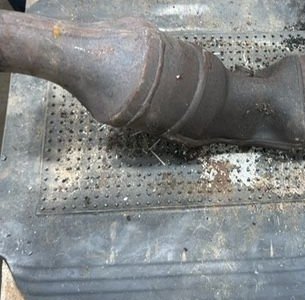
Your catalytic converter is worth money. Serious money, in some cases. But ask three different scrap yards what they'll pay for it and you might get three completely different answers — sometimes hundreds of dollars apart. That price gap isn't random. It comes down to chemistry, market conditions, and whether the buyer actually knows what they're looking at. If you're sitting on a cat or two and wondering what to do next, this breakdown will help you understand exactly what drives the value and how to make sure you're not leaving cash on the table.
This is your November 2026 weekly market recap — focused on catalytic converter recycling, how it connects to the copper scrap price today, and what sellers across Canada need to know right now.
---What's Actually Inside a Catalytic Converter
Most people know a catalytic converter has value. Fewer people understand why. The short answer: it contains platinum group metals — specifically platinum (Pt), palladium (Pd), and rhodium (Rh). These metals are rare, expensive to mine, and critical for industrial and manufacturing processes. That makes recovered cats a genuinely valuable commodity on the global metals market.
The converter itself is a steel or stainless steel housing wrapped around a ceramic or metallic substrate. That substrate is coated with the precious metal catalyst — usually a few grams per unit, but those few grams can be worth a significant amount depending on the metals market on any given day. Some high-end vehicles carry converters with notably higher loadings. Diesel particulate filters (DPFs) are a separate category and often carry different values than standard gasoline converters.
Here's what the inside of a typical cat contains:
- Steel shell — contributes to scrap weight but not the high-value portion
- Ceramic substrate (monolith) — the honeycomb structure coated in PGMs
- Platinum — used for oxidation reactions, present in most gas converters
- Palladium — the dominant PGM in modern gasoline catalysts
- Rhodium — present in smaller quantities but often the most valuable per gram
Understanding this matters because the steel housing — the part you can see — tells you almost nothing about the actual value. The value lives inside, invisible to the naked eye.
---How the Recycling Process Actually Works
Once a used converter reaches a recycling facility, the process isn't just "melt it down." Catalytic converter recycling is a multi-step industrial process that requires specialized equipment and assaying to determine actual PGM content.
Here's the general flow:
- Collection and sorting — Converters are sorted by type, vehicle make, and age. Experienced processors can often identify high-value units by series number or physical characteristics.
- Decanning — The steel shell is cut away to extract the ceramic or metallic substrate inside.
- Milling — The substrate is ground into a fine powder, which ensures uniform distribution of PGMs for accurate sampling.
- Assaying — Samples of the powder are sent to a laboratory (or processed on-site at large facilities) to determine the exact concentration of platinum, palladium, and rhodium.
- Smelting and refining — The milled material is processed through high-temperature smelting to recover the actual metals, which are then refined to commodity-grade purity.
- Settlement — The seller is paid based on the assay results and prevailing market prices for PGMs at the time of settlement.
This process is why there's often a lag between dropping off your converters and receiving final payment — the assay process takes time. Processors who offer "spot buy" pricing are buying the risk of the assay result themselves, which is why spot prices are typically discounted from assay-based settlement values.
If you want to sell your scrap metal in Canada on SellYourScrap and get a fair return on your converters, understanding this process gives you real negotiating leverage.
---Why Catalytic Converter Prices Vary — The Real Explanation
If you've ever gotten wildly different quotes on the same converter, you're not imagining things. Several real factors drive those gaps — and knowing them helps you avoid getting low-balled.
1. PGM market prices fluctuate daily. Palladium in particular has been volatile over the past several years. The price you get for a cat on a Monday can be meaningfully different from what you'd get on a Friday. This is directly analogous to the copper scrap price today — base metal and precious metal prices both move with global supply and demand, and scrap payouts follow.
2. Vehicle-specific loadings vary significantly. A converter from a Toyota Prius carries different PGM content than one from a domestic pickup truck. High-end European vehicles often have higher loadings. Diesel DPFs have a different profile entirely. Buyers who know this can offer more accurate pricing. Buyers who don't — or who don't want you to know — often just offer a flat low number.
3. Serial number identification matters. Most legitimate processors use serial numbers or physical identification to cross-reference known assay data. If a buyer can't or won't identify your specific converter type, that's a red flag. Platforms like SMASH Recycling — where verified buyers bid on your metal use documented inventory and serial tracking, which means buyers have the information they need to bid accurately.
4. Single-buyer pricing vs. competitive pricing. This is the big one. If you call one yard, you get one number — their number. They set it knowing you may not have anything to compare it to. Competition changes everything. More informed buyers bidding against each other means better price discovery. That's not just a theory — it's basic market mechanics.
5. Condition and completeness. Cracked substrates, crushed housings, or missing end caps can reduce value. Photo documentation of your converters before selling gives buyers confidence and protects you from after-the-fact deductions.
---Scrap Metal Recycling in Brampton — What Local Sellers Should Know
Brampton and the broader Ontario market see a consistent flow of catalytic converters — from auto recyclers, repair shops, and individual sellers with end-of-life vehicles. Scrap metal recycling in Brampton has grown significantly as more businesses recognize the value sitting in their inventory.
If you're in Brampton or the surrounding Ontario region and you're holding converters, a few things are worth knowing going into November 2026:
- PGM prices remain sensitive to EV adoption trends and automotive production cycles — follow the market before you sell.
- Local yard pricing for converters often doesn't reflect the full assay-based value. Shopping your load — or using a competitive auction format — gives you better data.
- Scrap metal pickup services are widely available in Brampton for larger volumes. Many offer free scrap metal pickup for qualifying loads, which eliminates your transport cost entirely.
- Documentation matters even more for converters than for bulk non-ferrous. Serial numbers, photos, and weight records all support a cleaner transaction.
Whether you're an individual with one converter from a traded-in vehicle or a shop moving a pallet of cores, the fundamentals are the same: know what you have, document it, and don't settle for the first number you hear.
You can also explore Canadian scrap metal guides for more detail on how different metals are graded and priced across the country.
---Copper, Aluminum, and How Base Metal Prices Connect to Your Cat
You might be wondering what the copper scrap price today has to do with catalytic converters. The connection is indirect but real. Base metals like copper and aluminum are priced on global commodity exchanges — primarily the London Metal Exchange (LME). PGMs follow their own spot markets, but the same forces that move copper prices (industrial demand, currency shifts, supply disruptions) also influence palladium and platinum.
When copper prices rise, it's often a signal of broader industrial demand strength — which tends to support PGM prices as well. When you're tracking scrap metal prices — whether for copper, aluminum, or cats — the underlying market driver is the same: what global industry needs right now.
For sellers in markets like scrap metal prices Edmonton today searches or buyers and sellers across the Ontario region, the key takeaway is consistent: don't sell blind. Know the market direction before you commit to a price.
SMASH brings competition to this process. Instead of one buyer naming one price, vetted buyers bid — and that competition does the work of price discovery for you. If you want to get a fair price for your scrap today, that's the model that works.
---How to Prepare Your Catalytic Converters Before Selling
Walking in with a properly prepared and documented load gets better results than showing up with an unmarked pile. Here's what experienced sellers do before they sell:
- Record serial numbers — visible on the converter body or end pipe in most cases. Cross-reference with known databases if possible.
- Photograph each unit — front, back, and any serial markings. This protects you and gives buyers the information they need to bid with confidence.
- Separate by type — gas converters, diesel DPFs, and foil-type converters are different products with different values. Don't mix them in one undifferentiated pile.
- Note the vehicle source — if you know the make, model, and year, that's useful data. Some buyers will pay more when they can verify the source vehicle.
- Weigh your load — get a baseline weight before you go anywhere. It's basic due diligence.
Preparation signals to buyers that you're a serious seller who knows the market. That alone can shift the conversation.
---Frequently Asked Questions
Q: How does the copper scrap price today affect what I get for my catalytic converter?
The copper scrap price and catalytic converter prices both move with global commodity markets. They don't move in lockstep — PGMs have their own pricing — but broader industrial demand trends affect both. When metals markets are strong, scrap payouts across categories, including cats, tend to improve. Always check current market conditions before committing to a sale.
Q: Where can I sell catalytic converters for a fair price in Brampton?
Several scrap yards and processors in Brampton and across Ontario buy catalytic converters. For the best result, avoid accepting the first offer you receive. Platforms like SMASH connect sellers with multiple verified buyers, which helps reveal the real market value of your load rather than one yard's single number.
Q: Why does one buyer quote me $50 and another quote $300 for the same converter?
Because converter value depends on PGM content, vehicle type, current market prices, and how well-informed the buyer is. Some buyers offer flat low prices to capture margin from uninformed sellers. Documentation, serial number identification, and competitive bidding all help close that gap in your favour.
Q: Is free scrap metal pickup available in Brampton and Ontario for catalytic converters?
Yes — many processors and platforms offer free scrap metal pickup for qualifying loads, particularly for commercial volumes. Individual converters may require drop-off, but shops or dismantlers with larger quantities can often arrange collection at no cost. Contact sellers directly to confirm minimums and logistics.
Q: How long does it take to get paid for catalytic converters?
It depends on the pricing model. Spot-buy transactions pay on the day of sale. Assay-based settlements — which often yield higher payouts — can take several days to a few weeks depending on the processor's lab turnaround. Understand the terms before you hand over your load.
---Catalytic converter recycling isn't complicated once you understand what's driving the price. Know your metal, document your load, and don't accept the first number you're offered. The market is bigger and more competitive than a single yard's quote suggests. If you're ready to move your scrap, sell your scrap metal in Canada — request a pickup at sellyourscrap.ca and find out what your load is actually worth.
Stay sharp on market movements by following SMASH on LinkedIn for weekly scrap metal market insights and industry updates: SMASH on LinkedIn.
Disclaimer: Metal prices fluctuate daily based on global market conditions. All price references in this article are general and informational. Check current rates before making any selling decisions.