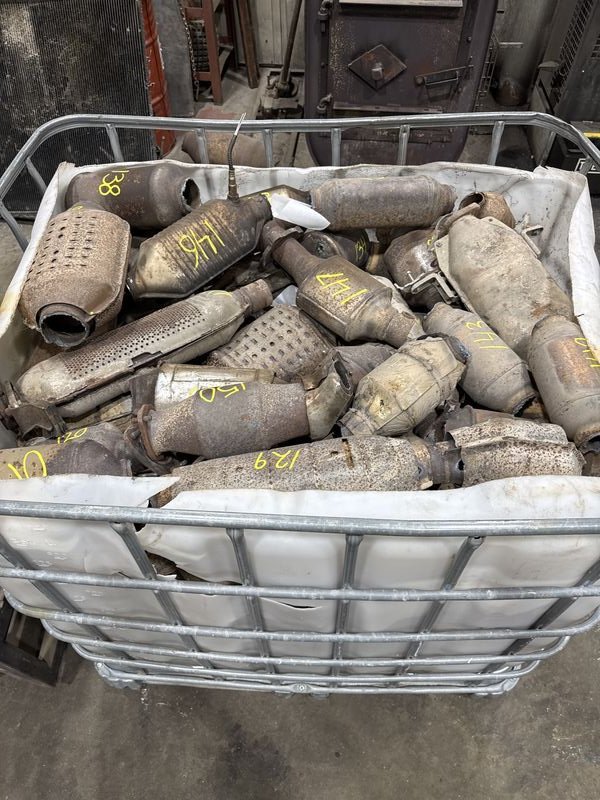
Your catalytic converter might be worth more than you think — and most people selling scrap metal have no idea why the price changes week to week. If you've ever searched copper scrap price today and come back more confused than when you started, you're not alone. Cat prices are notoriously volatile, and the reasons behind that volatility are worth understanding before you walk up to a buyer's window.
This article breaks down exactly how catalytic converter recycling works, what drives price swings, and how to make sure you're getting a fair deal — whether you're in Yorkton, Saskatchewan or anywhere else in Canada.
What's Actually Inside a Catalytic Converter?
The value in a catalytic converter has nothing to do with the steel shell. It's what's inside that matters: a ceramic or metallic substrate coated with platinum group metals (PGMs). These include platinum, palladium, and rhodium — three of the most valuable metals on the planet, ounce for ounce.
When a recycler buys your cat, they're essentially buying access to those PGMs. The converter gets assayed (tested) to determine the exact concentration of each metal in the substrate. That's why two converters that look nearly identical on the outside can pay out very differently. The PGM content varies significantly by vehicle make, model, year, and engine size.
- Platinum: Found in most diesel converters and older gasoline units
- Palladium: Dominant in modern gasoline catalytic converters
- Rhodium: Present in smaller concentrations but historically the most valuable of the three
- Ceramic substrate: The carrier material — valuable in bulk but not the primary driver
Understanding this is step one. When you know what you're selling, you can have a real conversation with a buyer instead of just accepting the first number you hear.
How the Catalytic Converter Recycling Process Works
Recycling a catalytic converter isn't a simple melt-and-pour operation. It's a multi-step industrial process that begins the moment the unit leaves your hands and ends at a precious metals refinery — often weeks later.
Here's the typical chain:
- Collection: You sell to a local yard, auto wrecker, or through a platform. The converter is logged, photographed, and catalogued by serial number or vehicle application.
- Sorting and grading: Cats are sorted by type — domestic, foreign, aftermarket, diesel, small foreign, large foreign, etc. Each category carries a different base value.
- Decanning: The steel shell is cut away to expose the substrate. The steel goes to the ferrous pile. The substrate moves forward.
- Sampling and assay: The substrate is crushed, sampled, and sent to an assay lab. This test reveals the exact PGM content per unit of weight.
- Refining: The assayed material is processed at a precious metals refinery to extract the platinum, palladium, and rhodium.
- Settlement: The refinery pays the processor based on actual recovered metal, minus processing fees and treatment charges.
That entire chain takes time. Which is why most buyers quote you based on current spot prices and an estimated PGM yield — not a guaranteed final number. The market can shift between when they buy your converter and when the refinery settles. That's built into the spread they offer you.
Why Catalytic Converter Prices Vary So Much — and Why It Matters for Scrap Metal Recycling in Canada
If you've ever gotten a quote on a Monday and called back on Thursday to find the price dropped, you've experienced PGM volatility firsthand. This is the single biggest factor that confuses sellers and makes scrap metal recycling Canada-wide feel inconsistent.
Several forces drive cat prices up and down:
- Spot prices for platinum, palladium, and rhodium: These metals trade on global commodity markets. They respond to mining output (heavily concentrated in South Africa and Russia), industrial demand from automakers, and investor sentiment. Rhodium in particular has seen wild swings — from under $1,000 USD/oz to over $20,000 USD/oz within recent memory.
- Exchange rates: Because PGMs price in USD globally, the CAD/USD exchange rate directly affects what Canadian sellers receive in real terms. A weaker Canadian dollar can cut into your payout even if spot prices hold steady.
- Vehicle type and model year: A high-load converter from a full-size truck or SUV contains significantly more PGMs than a small foreign unit from a compact sedan. Buyers use databases — some tied to VIN lookup tools — to identify converters and estimate yields.
- Aftermarket vs. OEM: Aftermarket converters use far less PGM content. They look the same but pay a fraction of what an original equipment unit fetches.
- Supply pressure from theft: Catalytic converter theft remains a serious issue across Canada. Law enforcement crackdowns and tighter documentation requirements in several provinces affect how yards buy and report these units. Legitimate sellers with documented vehicles are in a better position than they might think.
All of this means that searching copper scrap price today near me won't always give you what you need when it comes to cats. PGM prices require their own research — and a buyer who can actually explain what they're offering and why.
For scrap metal recycling Yorkton sellers specifically, access to multiple buyers can make a real difference. Rural markets sometimes mean fewer competitive quotes, which is exactly where platforms that open up the buyer pool start to matter.
The Connection Between Copper Scrap Prices and Catalytic Converter Markets
You might wonder what the copper scrap price today has to do with catalytic converters. The answer: more than most people realize.
Copper is the bellwether metal for the entire scrap market. When copper prices move, they signal shifts in industrial demand, global manufacturing activity, and commodity market sentiment. Those same forces — Chinese manufacturing output, EV adoption, infrastructure spending — also affect palladium and platinum demand, since automakers are the largest industrial consumers of PGMs.
When the auto sector is strong and vehicle production is up, PGM demand rises and cat prices tend to follow. When manufacturing slows, demand cools. Watching copper as a leading indicator can help you time when to sell — though nobody can call the market perfectly, and prices can move fast.
This is also why mixing your metals knowledge pays off. If you're sitting on a load of scrap copper wire alongside some used converters, understanding both markets helps you make smarter decisions about timing and who you sell to. Platforms like Canada's B2B scrap recycling marketplace SMASH are built around exactly this kind of multi-material, competitive selling environment — where documented loads get in front of vetted buyers rather than one phone call to one yard.
How to Get a Fair Price for Your Catalytic Converters in Saskatchewan
Getting a fair price isn't complicated, but it does require a bit of preparation. Walking in blind almost always costs you money. Here's what makes the difference:
- Know what you have. If you have the vehicle's VIN, use it. VIN lookup tools can identify the converter application and give you a starting point for PGM yield estimates. Serial numbers on the converter itself are also useful.
- Document everything. Photo documentation of each unit — including serial numbers — gives buyers confidence and reduces the risk of a lowball offer based on uncertainty. A well-documented lot is easier to sell.
- Get more than one quote. This sounds obvious, but most sellers in smaller markets like Yorkton don't do it. One buyer, one price. That's how sellers leave money on the table.
- Understand the offer structure. Is the buyer quoting spot-based or fixed? What are their processing fees? A higher headline number with heavy fees can net you less than a modest quote with transparent terms.
- Sell through competitive channels when volume allows. For larger lots — multiple converters from a fleet, an auto wrecker's inventory, or a salvage operation — auction-style selling through a platform like SMASH can surface real market competition instead of relying on a single buyer's discretion.
If you're ready to sell your scrap metal in Canada on SellYourScrap, the process is straightforward. You document your material, submit your load, and let buyers compete rather than accepting the first number that comes your way.
What the Market Looks Like in September 2026
As of September 2026, PGM markets remain sensitive to global auto production forecasts and ongoing supply chain pressures in southern Africa. Palladium has seen increased pressure as battery electric vehicle penetration cuts into traditional combustion engine volumes — reducing long-term demand expectations even as near-term supply remains tight. Rhodium remains well off its historic highs but continues to trade at levels that make quality domestic and foreign converters worth selling rather than stockpiling.
For Canadian sellers, the CAD/USD rate continues to be a real factor in final payouts. It's worth tracking both the commodity price and the exchange rate before committing to a sale, especially on larger lots.
Disclaimer: Metal prices fluctuate daily and sometimes hourly. The information above reflects general market conditions as of September 2026. Always check current rates directly with buyers or through a live pricing platform before selling.
Saskatchewan sellers — whether in Yorkton or across the province — should factor in transportation costs when comparing buyer quotes. A buyer offering slightly more per unit in a distant centre might net you less once you account for freight. That's another reason to explore Canadian scrap metal guides and understand your full cost picture before choosing where to sell.
If you've got catalytic converters to move, don't guess your way through it. Document your load, get competitive quotes, and use every tool available to understand what you actually have. When you're ready, get a fair price for your scrap today through a process that's built around transparency — not one buyer, one call, and one number that you either take or leave.
Frequently Asked Questions
Q: How is the copper scrap price today related to what I get for my catalytic converter?
Copper prices signal broader commodity market trends that also affect platinum, palladium, and rhodium — the metals inside your catalytic converter. When industrial demand is strong and copper prices rise, PGM prices often follow the same direction. Monitoring copper can give you a general sense of where the scrap market is heading, but catalytic converter prices are ultimately driven by PGM spot prices specifically.
Q: Why do two catalytic converters that look the same pay out differently?
The PGM content varies significantly based on vehicle make, model, year, engine size, and whether the converter is OEM or aftermarket. Two identical-looking shells can contain very different concentrations of platinum, palladium, and rhodium. Buyers use serial numbers, VIN data, and assay databases to distinguish between them — which is why documentation matters when you're selling.
Q: Is scrap metal recycling in Yorkton, Saskatchewan competitive enough to get a fair price?
Smaller markets can mean fewer local buyer options, which is a real challenge for sellers in Yorkton and across rural Saskatchewan. Using a platform that connects you with multiple vetted buyers — rather than relying on a single local yard — is one of the most effective ways to improve price discovery without having to drive to a larger centre.
Q: How do I know if my catalytic converter is OEM or aftermarket?
OEM (original equipment manufacturer) converters come from the vehicle's factory and contain the highest PGM loading. Aftermarket units are replacement converters installed during repair — they're built to pass emissions tests at lower cost, which means significantly less precious metal content. If you're unsure, a serial number lookup or VIN-based identification can help clarify what you have before you sell.
Q: Do I need paperwork to sell catalytic converters in Canada?
Documentation requirements vary by province and are tightening across Canada in response to converter theft. In Saskatchewan and most other provinces, sellers should be prepared to provide identification and proof of vehicle ownership. Yards and platforms with strong documentation practices — photo evidence, serial tracking, VIN lookup — protect legitimate sellers and are becoming the industry standard for responsible recycling.
Follow SMASH on LinkedIn for ongoing scrap metal market updates, PGM price insights, and industry news across Canada.